Iran has presented a sweeping 10-point proposal to end its ongoing conflict with the United States, setting out military, economic and geopolitical conditions as both sides move toward talks following a fragile ceasefire.
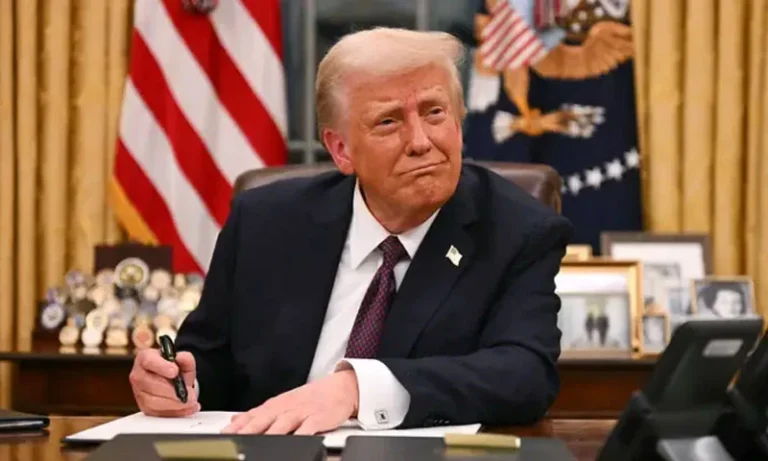
The framework was shared through mediators, including Pakistan, after US President Donald Trump agreed to pause military action for two weeks, just hours before a deadline for major strikes.
Iran’s Supreme National Security Council said negotiations based on the plan are expected to begin in Islamabad, marking a critical diplomatic push to de-escalate tensions in one of the most volatile conflicts in recent years.
The United States has described the proposal as a “workable basis” for talks, suggesting cautious optimism despite deep differences between the two sides.
With the greatest humility, I am pleased to announce that the Islamic Republic of Iran and the United States of America, along with their allies, have agreed to an immediate ceasefire everywhere including Lebanon and elsewhere, EFFECTIVE IMMEDIATELY.
I warmly welcome the…
— Shehbaz Sharif (@CMShehbaz) April 7, 2026
start=”1144″ data-end=”1181″>Iran’s demands for ending the war
The 10-point plan outlines Tehran’s core conditions for a permanent end to hostilities:
- “Controlled passage through the Strait of Hormuz in coordination with the Iranian armed forces, which would grant Iran a unique economic and geopolitical position,”
- “the necessity of ending the war against all elements of the axis of resistance,”
- “the withdrawal of US combat forces from all bases and deployment points in the region,”
- “the establishment of a safe transit protocol in the Strait of Hormuz in a way that guarantees Iran’s dominance according to the agreed protocol,”
- “full payment of Iran’s damages according to estimates,”
- “the lifting of all primary and secondary sanctions, “
- “removal of resolutions imposed by international bodies, including oversight authorities,”
- “the release of all Iranian assets and properties frozen abroad,”
- “acceptance of Iran’s uranium enrichment programme as part of the agreement,”
- “and finally the ratification of all these matters in a binding Security Council resolution.”
Analysts say the demands reflect Iran’s attempt to secure long-term strategic guarantees rather than a temporary ceasefire, including control over the Strait of Hormuz, a key global oil chokepoint.
Read More: Diplomatic Push Intensifies for Iran Ceasefire: China, Pakistan Demand End to Hostilities
High stakes diplomacy amid fragile ceasefire
The proposal comes at a time when both sides remain under pressure to de-escalate. The conflict has disrupted global energy markets and raised fears of wider regional instability.
Iran has indicated it is willing to halt counter-attacks and ensure safe passage through the Strait of Hormuz if its conditions are met, while US officials have signalled openness to negotiations without committing to the full set of demands.
🚨 President Donald J. Trump makes a statement on Iran: pic.twitter.com/9mqTayL0Q3
— The White House (@WhiteHouse) April 7, 2026
Experts note that several points in the proposal, particularly those related to sanctions removal, US military withdrawal and recognition of Iran’s nuclear programme, are likely to be contentious.
At the same time, the inclusion of compensation demands and a binding United Nations resolution underscores Tehran’s push for a comprehensive settlement rather than a temporary pause in hostilities.
The talks, expected to begin in Islamabad, are being closely watched by global powers, with Pakistan playing a key mediating role in bringing both sides to the negotiating table.
Read More: Iran Thanks Pakistan for Mediation, Denies Refusing Talks
While the ceasefire offers a brief window for diplomacy, analysts warn that the gap between the two sides remains wide.
For now, Iran’s 10-point plan has set the stage for what could be one of the most consequential negotiations in recent Middle East history, with outcomes likely to shape regional stability and global energy markets in the months ahead.