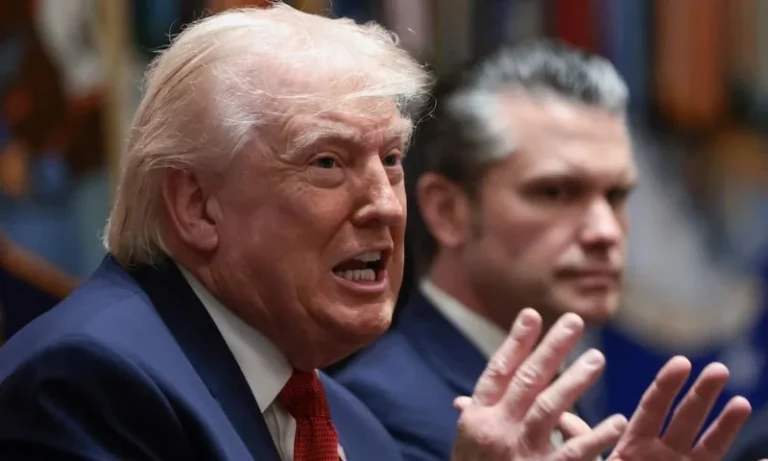
Since the start of the Iran war, statements from Donald Trump have followed a pattern that analysts say is as striking as it is confusing.
Over a span of just a few weeks, Trump’s remarks have swung between declaring victory, demanding military escalation, threatening allies, rejecting help, and then seeking cooperation. The rapidly changing tone has raised concerns among diplomats and observers about clarity in US messaging during a volatile geopolitical moment.
From early declarations of victory to later warnings and contradictory positions on NATO and Iran, the timeline reflects what experts describe as a highly inconsistent communication strategy.
A timeline of contradictions
The sequence of statements paints a picture of shifting priorities and messaging, sometimes within the same day:
Mar 3: “We won the war.”
Mar 7: “We defeated Iran.”
Mar 9: “We must attack Iran.”
Mar 9: “The war is ending almost completely, and very beautifully.”
Mar 11: “You never like to say too early you won. We won. In the first hour it was over.”
Mar 12: “We did win, but we haven’t won completely yet.”
Mar 13: “We won the war.”
Mar 14: “Please help us.”
Mar 15: “If you don’t help us, I will certainly remember it.”
Mar 16: “Actually, we don’t need any help at all.”
Mar 16: “I was just testing to see who’s listening to me.”
Mar 16: “If NATO doesn’t help, they will suffer something very bad.”
Mar 17: “We neither need nor want NATO’s help.”
Mar 17: “I don’t need Congressional approval to withdraw from NATO.”
Mar 18: “Our allies must cooperate in reopening the Strait of Hormuz.”
Mar 19: “US allies need to get a grip – step up and help open the Strait of Hormuz.”
Mar 20: “NATO are cowards.”
Mar 21: “The Strait of Hormuz must be protected by the countries that use it. We don’t use it, we don’t need to open it.”
Mar 22: “This is the last time. I will give Iran 48 hours. Open the strait”
Mar 22: “Iran is Dead”
Mar 23: “We had very good and productive talks with Iran.”
Mar 24: “We’re making progress.”
Mar 25: “They gave us a present and the present arrived today. And it was a very big present worth a tremendous amount of money. I’m not going to tell you what that present is, but it was a very significant prize.”
Mar 26: “Make a deal, or we’ll just keep blowing them away.”
Mar 27: “We don’t have to be there for NATO.”
Mar 28: No major quote
Mar 29: Claimed talks were progressing
Mar 30: “Open the Strait of Hormuz immediately, or face devastating consequences.”
Mar 31: Claimed a deal was “very close” and that Iran would “do the right thing”
Apr 1: “We’ll see what happens very soon.”
Apr 2: Repeated that a deal was likely, while warning of continued strikes if not
Apr 3: “Something big is going to happen.”
Apr 4: Said Iran must comply “immediately” or face further consequences.
Apr 5: “Open the fuckin’ Strait, you crazy bastards, or you’ll be living in Hell – JUST WATCH! Praise be to Allah.”
From victory claims to uncertainty
What stands out is not just the tone, but the speed at which positions change. On multiple occasions, Trump declared victory over Iran, only to later suggest the war was ongoing or incomplete.
Within days, his messaging shifted from rejecting NATO’s involvement to demanding support, and then again dismissing the alliance altogether. His comments on the Strait of Hormuz also varied sharply, from insisting allies must act to later saying the US did not need to be involved.
Diplomatic observers say such fluctuations risk undermining credibility during sensitive negotiations.
“This kind of messaging creates confusion not just for the public, but for allies and adversaries trying to interpret US policy,” said one foreign policy analyst based in Washington.
Strategy or chaos
Some supporters argue that the unpredictability is deliberate, part of a strategy to keep opponents off balance. Others see it as a lack of coherent policy communication during a critical geopolitical crisis.
The mix of threats, declarations of victory, and references to ongoing negotiations has made it difficult to assess the actual state of the conflict or diplomacy.
By late March and early April, Trump’s tone began to oscillate between optimism about a deal and warnings of further escalation, culminating in increasingly aggressive rhetoric.
For now, the timeline of statements has become a story in itself, reflecting a communication style that continues to defy traditional diplomatic norms.