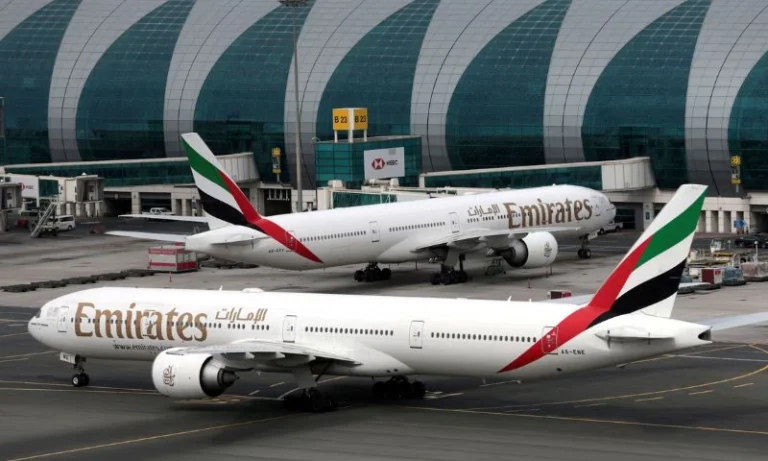
Airline ticket prices between Asia and Europe have soared sharply as key Gulf airports remain closed because of the widening US-Israel conflict with Iran. The closures have severely reduced flight capacity on major international routes, pushing fares to unprecedented levels and leaving many passengers scrambling for alternatives.
Major hubs including Dubai International Airport, Doha’s Hamad International, and Abu Dhabi Airport have remained shut for several days, slashing the usual flow of flights connecting Asia and Europe via the Gulf. These airports typically handle thousands of flights every week, making them crucial transit points for global travel.
As a result, traditional routes are virtually inaccessible. Flights are being rerouted north via the Caucasus, through Africa, or across North America, increasing distance, fuel usage, and overall travel costs. Industry analysts say this has led to a dramatic spike in ticket prices and disruptions across multiple continents.
Fares Jump Drastically on Key Routes
Surveys of airline websites show flight costs on popular Asia-Europe routes rising sharply:
A one-way ticket from Hong Kong to London has been listed at over HK$21,000 (about US$2,705), far above normal levels. (turn0search9)
Sydney to London economy seats are unavailable until mid-March, with limited bookings appearing at approximately A$3,129 (US$2,220) one-way.
Analysts say this surge reflects both scarcity of seats and longer travel routes, as alternative corridors can add hours to flight times and increase fuel consumption. The price of jet fuel has also climbed amid the conflict, adding to airlines’ operational costs.
Travelers Forced to Seek Alternatives
Travel agents report heavy demand for flights that avoid the closed Gulf airspace. Australia’s Flight Centre Travel Group said inquiries have jumped by 75 per cent, with agents helping customers find routes via China, Singapore or North America to reach Europe. “Australians are … rebooking flights to the U.K./Europe via alternative routes via China, Singapore, and other Asian hubs,” its global managing director said.
Passengers are also exploring different transit points in Europe or Africa to bypass disrupted corridors. But experts warn these workarounds significantly increase travel time and costs, which may deter some travelers or lead to longer layovers.
Longer Delays and Wider Disruption
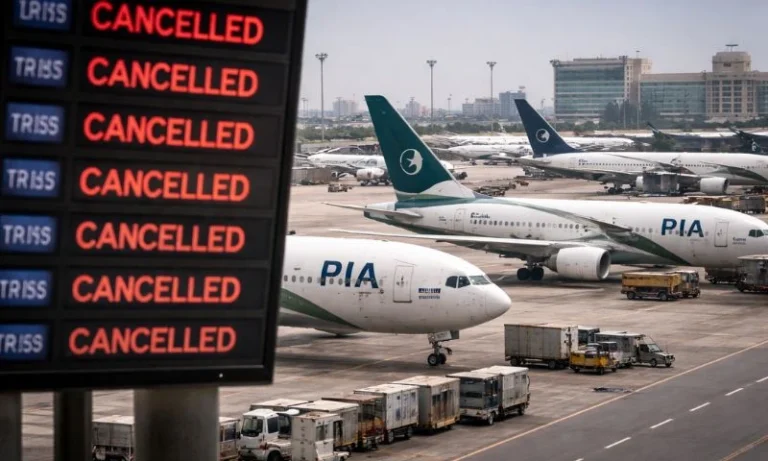
The Gulf closures are part of broader airspace disruptions triggered by ongoing conflict. Major Middle Eastern and nearby countries including Iran, Qatar, Iraq, and the UAE have closed or restricted airspace. This has forced thousands of flights to be rerouted, delayed or cancelled, contributing to travel chaos across Asia, Europe, Africa, and North America.
In some markets, economy fares have doubled or more as airlines adjust capacity and travelers look for limited seats outside the conflict zones. In India, for example, airfares from Hyderabad to London and Frankfurt have surged dramatically, reflecting the broader global pressure on flight costs.
Winners and Losers in the Aviation Sector
While some airlines struggle with the disruption, others may benefit temporarily. Carriers that already operate alternative direct routes between Asia and Europe such as Cathay Pacific, Singapore Airlines, Turkish Airlines, and EVA Airways are experiencing high demand and may book short-term gains. However, longer routes and higher fuel costs could erode profits over time.
Some budget airlines like Ryanair have reported increased bookings for European travel as passengers avoid connections through the Middle East. Still, broader industry indicators such as stock prices and travel shares are under pressure due to ongoing cancellations and uncertainty.