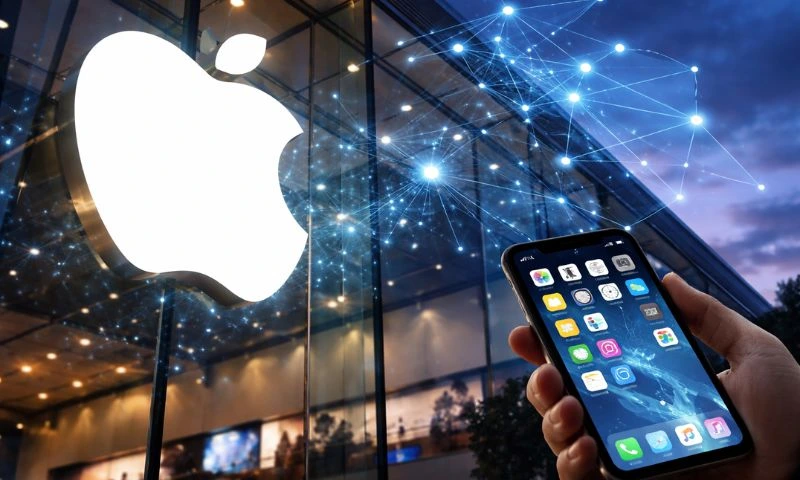
As Apple Inc. marks its 50th anniversary, the tech giant is confronting what many analysts describe as its most critical challenge yet: proving it can lead in the rapidly evolving field of artificial intelligence.
Founded in 1976 by Steve Jobs and Steve Wozniak, Apple revolutionised personal computing, music, and mobile technology with products like the Mac, iPod, and iPhone. Today, the company is valued at over $3.6 trillion and maintains a global influence that few corporations can match.
A Legacy of Innovation Under Pressure
Over five decades, Apple has built a reputation for delivering culture-shaping innovations that redefine industries. From the rise of smartphones to wearable technology like the Apple Watch, the company has cultivated a loyal global following.
However, the emergence of generative AI tools has created a new competitive landscape. Rivals such as Google and Microsoft have moved aggressively into AI-powered services, raising questions about whether Apple can maintain its innovation edge.
Industry observers note that Apple’s traditional strategy has focused on refining and integrating technologies rather than being first to market. This approach is now being tested as AI evolves at an unprecedented pace.
Apple’s AI Push Gains Momentum
Apple has already entered the AI space with its in-house system known as Apple Intelligence, which integrates features such as writing assistance, image editing, and notification summaries across its devices.
The company is also reportedly investing heavily in on-device AI processing, aiming to differentiate itself through privacy-focused innovation. Unlike competitors that rely heavily on cloud-based systems, Apple’s strategy emphasises keeping user data secure by processing information directly on devices.
Executives believe that AI will enhance existing products rather than replace them. The iPhone, for example, is expected to remain central to Apple’s ecosystem even as AI capabilities expand.
Challenges in a Fast-Moving AI Race
Despite these efforts, Apple faces mounting pressure. Analysts argue that the company was relatively slow to respond to the generative AI boom sparked by tools like ChatGPT, forcing it to accelerate its development plans.
The competition is fierce, with tech giants racing to dominate AI infrastructure, software, and consumer applications. At the same time, Apple is dealing with broader challenges, including regulatory scrutiny, shifting global supply chains, and slowing hardware growth.
Some experts believe that Apple’s success in AI will depend on its ability to deliver a seamless user experience rather than simply matching competitors feature for feature.
A Defining Moment for the Next 50 Years
As Apple enters its sixth decade, the stakes are high. The company must demonstrate that it can once again reshape the tech landscape, this time through artificial intelligence.
The transition from hardware-driven innovation to AI-powered ecosystems could define Apple’s future. If successful, it may reinforce its dominance for decades to come. If not, it risks falling behind in one of the most transformative technological shifts in modern history.
For a company built on redefining industries, the AI era represents both its greatest opportunity and its toughest test yet.