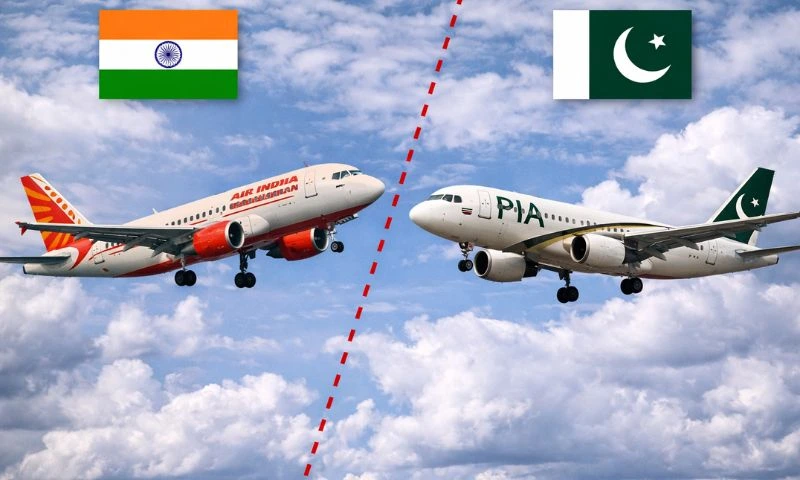
Pakistan has extended its airspace ban on Indian aircraft until March 23, 2026, as tensions with New Delhi continue to affect aviation and diplomacy between the neighbouring nuclear-armed states. The extension was confirmed through a fresh Notice to Airmen (NOTAM) issued by the Pakistan Airports Authority (PAA). The restriction covers all aircraft registered in India, including civilian, military, leased or operated by Indian airlines.
Ongoing Restrictions and Context
The airspace ban first took effect on April 24, 2025, after a deadly attack in Indian-administered Kashmir’s Pahalgam killed 26 people, prompting India to blame Pakistan without presenting clear evidence. Pakistan rejected those claims and offered cooperation for a neutral investigation.
Following the escalation, both countries engaged in military confrontations, including cross-border engagements and aerial activity. A ceasefire brokered with U.S. mediation later eased direct hostilities, but restrictions like the airspace closure have remained in place for months.
Under the latest NOTAM, the ban applies to both major Pakistani Flight Information Regions (FIRs) — Karachi (OPKR) and Lahore (OPLR) — ensuring that Indian-registered flights cannot traverse Pakistan’s airspace at any altitude.
Read More: PIA Finally Restores Islamabad-London Flights After Six Years
Reciprocal Closures and Regional Impact
India has also closed its airspace to Pakistani aircraft at various times, most recently from April 30 to May 23, 2025, in response to Pakistan’s earlier actions. These reciprocal bans, updated through official notices on both sides, have now entered their eleventh consecutive month of mutual airspace closures.
The restrictions have significant implications for both countries’ aviation sectors, but Indian carriers bear the brunt due to their broader international network. Major Indian airlines such as Air India, IndiGo, Akasa Air, Air India Express and SpiceJet previously relied on Pakistani airspace for routes to the Middle East, Europe, Central Asia and North America. With the ban in place, many flights have to take longer and costlier detours.
The Indian Express estimates that around 800 weekly flights operated by Indian carriers have faced route changes, with journey times extended by anywhere from 15 minutes to several hours depending on the destination. These operational shifts have increased fuel consumption and disrupted crew and flight scheduling.
Economic and Strategic Implications
India’s flag carrier Air India is believed to face substantial financial losses due to prolonged detours and increased operating costs. Local reports suggest that if the airspace ban continues for a full year, the airline could incur losses in the billions of rupees. These financial pressures have prompted discussions about alternate flight corridors, including the possibility of using airspace over China’s Xinjiang region to mitigate route inefficiencies.
For Pakistan, maintaining the ban also comes at a cost. Historically, revenue from overflight charges contributed significantly to the Pakistan Airports Authority’s (PAA) income. Prolonged restrictions have reduced overflight traffic and damaged the country’s reputation as a reliable air transit corridor.
Read More: Pakistan–Bangladesh Direct Flights Resume After 14 Years With Dhaka–Karachi Route
Outlook and Diplomatic Signals
With the ban extended to March 23, the airspace dispute remains tied to broader diplomatic and security issues between Pakistan and India. Analysts say the closures reflect ongoing mistrust, unresolved diplomatic differences and the absence of effective crisis-management mechanisms between the two neighbours.
Both governments may continue extending their airspace bans until mutual security conditions or diplomatic breakthroughs occur. In the meantime, airlines and travellers must adapt to continued disruptions in the South Asian aviation landscape.