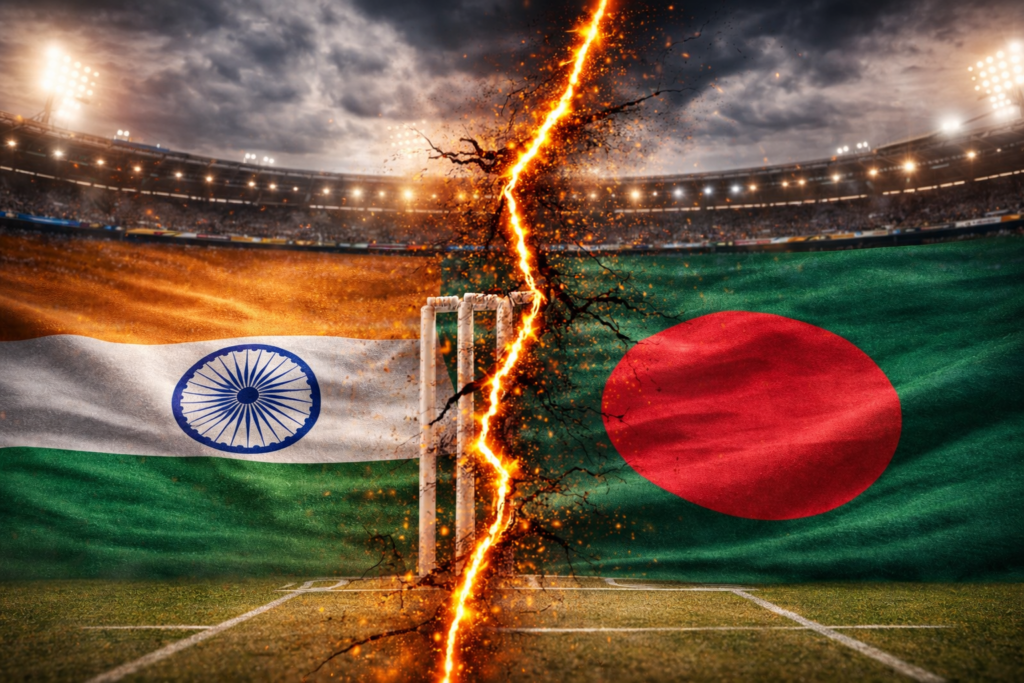
A growing diplomatic chill between Bangladesh and India has now spilled into international cricket, after Bangladesh’s board sought to avoid playing its scheduled ICC Men’s T20 World Cup 2026 matches in India—an escalation tied to a chain of events that began months earlier and later intensified around Bangladeshi fast bowler Mustafizur Rahman.
The first spark: a killing and a surge of anger
The deterioration in public sentiment accelerated after the death of a prominent Bangladeshi youth leader, which triggered unrest and violent protests in multiple cities. Reuters reported that the killing set off demonstrations and attacks on sites including media offices and political locations, as the government urged calm.
In the aftermath, some political groups and activists in Bangladesh alleged Indian involvement, a claim that circulated widely in protests and online messaging, further worsening public emotions—though such allegations have been disputed and were not presented as established fact in credible reporting.
Pressure builds: incidents and reactions across the border
As unrest grew, bilateral tensions widened. Reuters later noted that the relationship was already strained due to other developments, including communal incidents and protests, and broader political complications involving Bangladesh’s former leader Sheikh Hasina being in India.
This atmosphere, analysts say, created a new risk: that sport—usually kept separate—would become a public arena for anger and retaliation.
The turning point: Mustafizur Rahman and Kolkata Knight Riders
That risk became real when Mustafizur Rahman’s IPL participation turned into a controversy. Multiple outlets reported that the BCCI instructed Kolkata Knight Riders (KKR) to release Mustafizur from their IPL plans, linking the instruction to “recent developments” connected to the wider political situation.
In Bangladesh, the decision was widely perceived as humiliating and politically driven. Some commentary framed it as the result of pressure from hardline groups and nationalist sentiment in India—though KKR and Indian cricket authorities publicly emphasized administrative and security considerations rather than street pressure narratives.
The World Cup fallout: Bangladesh asks to move matches out of India
Soon after, Bangladesh’s position hardened. Reuters reported Bangladesh would not play its scheduled T20 World Cup matches in India, citing security concerns, and that the BCB formally asked the ICC to relocate matches to a neutral venue, with Sri Lanka named as a preferred option.
The report linked the cricket decision to the Mustafizur episode and worsening bilateral climate, showing how quickly a franchise-league move can trigger international consequences when relations are already tense.
Why this matters
World Cups run on fixed logistics: venues, visas, broadcasting, and security planning. A relocation request forces the ICC into a sensitive space—balancing safety, fairness, and tournament integrity—while both countries face intense public scrutiny at home.