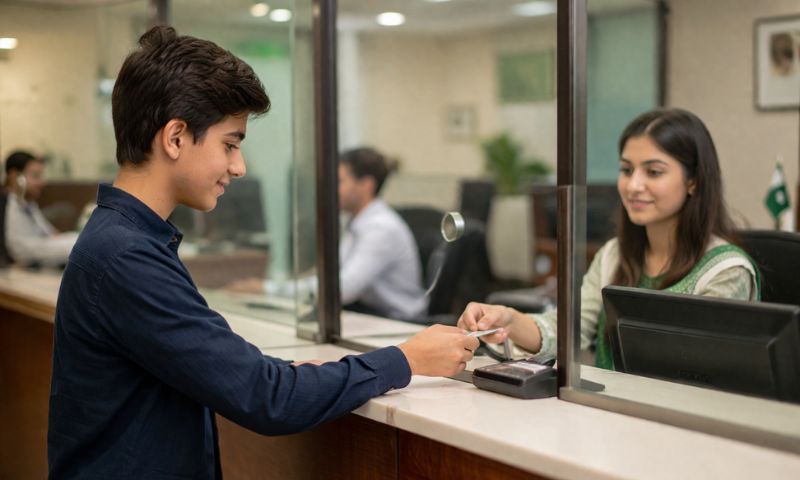
In a landmark move aimed at boosting financial inclusion, the State Bank of Pakistan has introduced a new framework allowing teenagers to independently open and operate bank accounts and digital wallets across the country.
New Framework for Youth Banking
According to reports, the initiative enables individuals aged 13 to 18 to manage their own bank accounts without relying on parents or guardians, a shift from the previous system where minors were largely limited to joint or supervised accounts.
The central bank said the policy is designed to give young people direct access to financial services and help them build practical money management skills from an early age.
In its official statement, SBP said the initiative aims to “foster meaningful participation of teenagers in the economy.”
Bridging a Longstanding Gap
Officials noted that while banking access among adults in Pakistan has improved significantly, teenagers have remained largely excluded from the formal financial system.
“While overall account ownership of the adult population has risen to 67 per cent, teenagers have largely been confined to joint or parent-controlled accounts,” the central bank said.
Pakistan has an estimated 26 million individuals between the ages of 13 and 18, making youth financial inclusion a critical area for policy intervention.
The SBP described the framework as a step toward addressing this gap and integrating young citizens into the country’s financial ecosystem.
Key Features of the Teen Account System
Under the new framework, teenagers will be able to own and operate bank accounts and digital wallets independently, while still being protected under a regulated and secure banking environment.
The system introduces structured access to financial services, ensuring safeguards such as identity verification and transaction monitoring remain in place.
The initiative is also expected to expose young users to digital payments, savings tools, and online banking platforms, helping them adapt to an increasingly digital economy.
Building Financial Literacy and Digital Skills
The SBP believes that early access to banking will help develop a financially responsible and digitally aware generation.
The central bank stated that the framework is intended to nurture youth who are “financially literate, digitally adept, and capable of driving future growth.”
Experts say that introducing financial tools at a young age can improve saving habits, encourage responsible spending, and prepare individuals for long-term economic participation.
Part of Broader Financial Inclusion Strategy
The move aligns with Pakistan’s broader financial inclusion goals under the National Financial Inclusion Strategy and the SBP Strategic Plan 2023 to 2028, both of which emphasize expanding access to banking services for underserved segments, including youth.
The initiative also builds on Pakistan’s growing focus on digital banking and fintech adoption, as the country continues to modernise its financial infrastructure.
A Step Toward a More Inclusive Economy
Calling it more than just a new banking product, the SBP described the framework as a strategic step toward a more inclusive financial system.
By empowering teenagers with independent financial access, policymakers hope to strengthen economic participation and prepare the next generation for a rapidly evolving financial landscape.