
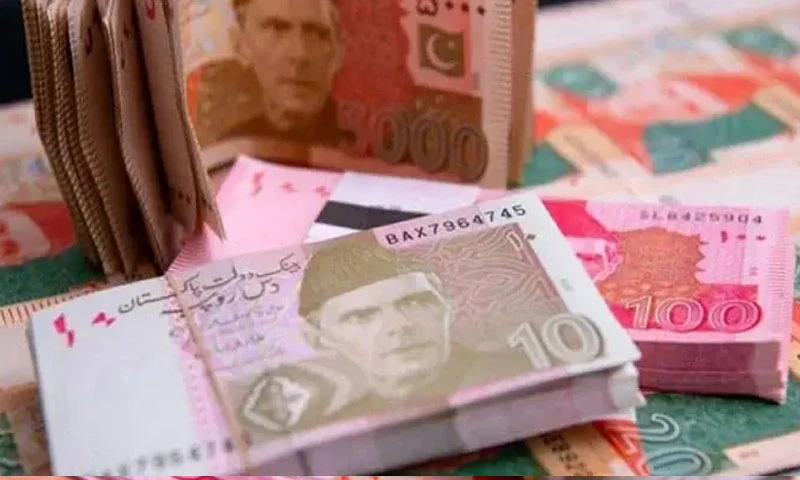
As Eid-ul-Fitr 2026 approaches, many families across Pakistan are preparing to continue the long standing tradition of giving Eidi, where elders gift money to children and relatives. Because of this tradition, the demand for fresh currency notes rises significantly every year during Ramadan. Banks across the country typically see long queues during the last days of Ramadan as people try to secure crisp notes for the festive occasion. Although digital payments are becoming more common, the tradition of distributing physical cash remains popular. Banks to Distribute Fresh Notes Through Thousands of Branches To facilitate the public, the State Bank of Pakistan distributes fresh currency notes through commercial banks across the country during Ramadan. These notes are supplied to around 17,000 bank branches, allowing people to obtain clean currency for Eid celebrations. Citizens can usually visit their bank branch with their CNIC and request fresh notes. The distribution often operates on a first come, first served basis, meaning early visitors have a better chance of obtaining new currency bundles. Banks also allow customers to exchange their existing notes for fresh ones at a one to one exchange rate, ensuring the same value is returned in new notes. SMS Service and Other Ways to Secure Fresh Notes In previous years, the State Bank has also introduced an SMS based system to help people reserve fresh notes. Under this method, citizens send their CNIC number and bank branch code to 8877 and receive a confirmation message before collecting the notes from the designated bank branch. Customers with active bank accounts sometimes receive additional assistance from their branch managers, who may allocate a small quota of fresh notes for regular customers. ATMs may also dispense clean notes shortly before the Eid holidays. New Currency Designs Under Preparation Meanwhile, Pakistan is preparing to introduce a new series of redesigned banknotes aimed at improving security and modernizing the financial system. The upcoming notes will feature advanced security threads, holograms, micro text and improved durability to reduce counterfeit currency. The State Bank has finalized many of the design elements and submitted them to the federal cabinet for approval. Once approved, the notes will be printed by the Pakistan Security Printing Corporation before entering circulation. However, experts say the redesigned notes are unlikely to be available before Eid-ul-Fitr 2026 because the printing process alone may take several months. Current Currency Notes Remain Valid Pakistan’s official currency is the Pakistani rupee, issued by the State Bank of Pakistan and available in several denominations ranging from Rs10 to Rs5,000. Even when the redesigned banknotes are eventually introduced, existing notes will remain legal tender. The new series is expected to enter circulation gradually so that both old and new notes can be used simultaneously. For now, citizens planning to distribute Eidi during Eid-ul-Fitr are advised to contact their bank branches early to secure fresh currency notes before stocks run out.
Will Pakistan Issue New Currency Notes Before Eid? SBP Responds
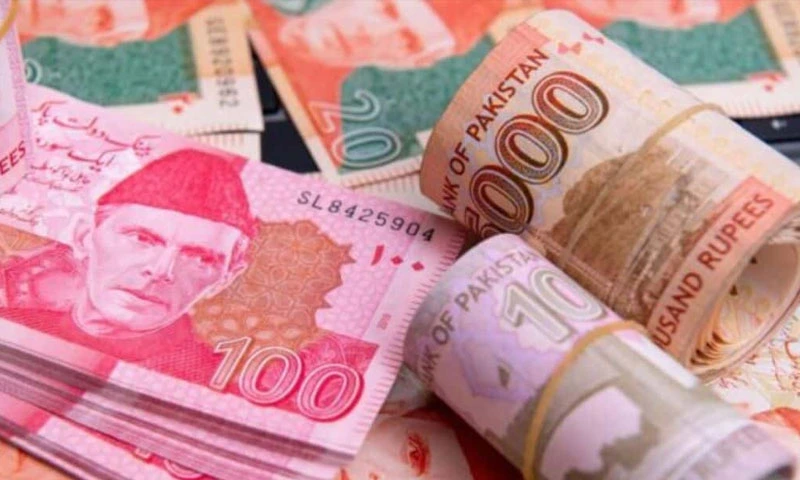
As Eid-ul-Fitr approaches, many Pakistanis traditionally look for fresh banknotes to give as Eidi to children and relatives. In recent days, social media posts claimed that the State Bank of Pakistan would issue newly designed currency notes before Eid-ul-Fitr 2026. However, the central bank has now clarified the situation and addressed the rumors circulating online. According to reports, the State Bank of Pakistan has not announced the release of newly redesigned banknotes before Eid-ul-Fitr 2026. The viral claims suggesting otherwise are misleading and have created confusion among the public. Newly Designed Currency Notes Not Ready Yet Officials explained that Pakistan is preparing to introduce a new series of redesigned banknotes with improved security features. These updated notes will include modern designs and stronger protections against counterfeit currency. However, the rollout of the new banknotes requires formal approval from the federal cabinet before printing can begin. Because this process is still pending, the redesigned currency will not be available before Eid-ul-Fitr 2026. Experts say printing, inspection and distribution of new banknotes can take several months once approval is granted. Therefore, the introduction of the new currency series will likely happen gradually after the necessary approvals. Fresh Existing Notes Will Still Be Available Although newly redesigned notes will not be issued before Eid, the State Bank continues its long standing practice of providing fresh bundles of existing banknotes through commercial banks. Every year during Ramadan, banks receive clean currency notes so the public can obtain fresh cash for Eid celebrations. Commercial bank branches distribute these notes across the country. Authorities also ensure that ATM networks dispense clean and usable notes during the festive period to meet increased demand. Why Pakistan Is Introducing New Currency Designs Pakistan’s central bank has been working on a redesign of its currency as part of efforts to modernize the financial system. The upcoming banknotes are expected to include several advanced security features. These improvements may include watermarks, embedded security threads, color shifting ink and micro text. Such measures make counterfeit currency harder to produce and easier to detect. The new designs also aim to make banknotes more durable and easier to identify. Old Notes Will Remain Valid Officials have stressed that the redesign does not mean old currency will become invalid. Existing notes will remain legal tender and continue circulating even after new notes are introduced. The State Bank plans to introduce the new series gradually to avoid disruption in daily transactions. During the transition period, both old and new notes will circulate together. For now, citizens are advised to rely on official announcements from the central bank and avoid unverified claims spreading on social media.
KSE-100 Records Historic 15,000-Point Crash as Geopolitical Fears Rattle Markets
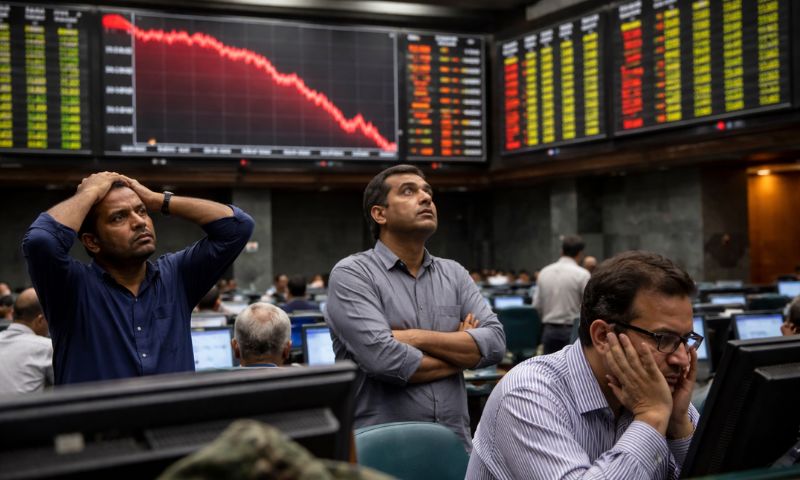
The Pakistan Stock Exchange (PSX) witnessed one of the most dramatic sell-offs in its history on Monday as the benchmark KSE-100 Index plunged more than 15,000 points shortly after the market opened. Trading commenced normally in Karachi, but panic selling quickly swept across sectors within minutes, sending shockwaves through the investor community. Sharp Drop Triggers Trading Suspension Shortly after the opening bell, the KSE-100 index fell by over 15,000 points, representing a decline of nearly 9 percent compared to its previous close of 168,062.16 points. This steep fall triggered an automatic trading suspension under PSX market rules, designed to halt activity when extreme volatility occurs and to prevent further panic-driven losses. When trading eventually resumed around 10:30 am, the index was still down by 12,334.88 points from the previous close, marking a 7.34 percent drop, before marginal recovery efforts brought it back within more moderate losses later in the morning session. Read More: PSX Sees Intense Volatility as KSE-100 Declines Over 1,600 Points All Sectors Hit Hard Investors saw heavy declines across multiple sectors, with fewer than five companies remaining in positive territory during the early session. The vast majority of stocks registered sharp losses as shareholders rushed to exit positions amid the sudden downturn. Data from trading summaries shows other market indexes and indices also suffered, with the KSE-100 dropping to around 152,991 points during the most intense phase of the sell-off. Geopolitical Tensions and Oil Prices Analysts and market observers have largely attributed the extreme turbulence in the Pakistan market to escalating geopolitical tensions in the Middle East. Reports indicate that rising conflict in the region has riled global markets and sparked risk aversion among investors. At the same time, Brent crude oil prices surged sharply, rising by approximately 10 percent to around $80 per barrel amid concerns that widening conflict could disrupt supply. Such spikes in commodity prices often elevate uncertainty in emerging markets like Pakistan. Read More: Oil Prices Surge 10% as Iran Conflict Threatens Key Supply Routes, Analysts Warn $100 Oil Possible Local Market Context Just weeks ago, the KSE-100 had shown more stabilized conditions, with occasional rallies and declines typical of stock market cycles. For example, in mid-February, after days of selling pressure, the index managed to result in positive gains due to renewed buying interest. Despite these intermittent positives, the broader trend over the previous month was downward even before Monday’s crash, with the KSE-100 shedding nearly 10.8 percent month-to-date, according to historical data. What This Means for Investors The sudden crash and trading halt have left many investors concerned about near-term market stability. Trading suspensions are used globally in such situations but also reflect the severity of selling pressure and investor sentiment during periods of high uncertainty. Financial analysts caution that external shocks such as geo-political conflict and oil price volatility can sharply affect risk appetite among both domestic and international investors. How the market will respond in the next sessions remains closely watched by traders

Oil Prices Surge 10% as Iran Conflict Threatens Key Supply Routes, Analysts Warn $100 Oil Possible
Oil prices climbed sharply after renewed conflict in the Middle East sparked by U.S. and Israeli military strikes on Iran, prompting traders and analysts to warn of major supply disruptions and a potential surge in global crude oil costs. Brent crude rose about 10 percent to roughly $80 a barrel on Sunday, its highest level in months, reflecting fears that the crisis could cut off key supply routes. Threats to the Strait of Hormuz Drive Market Jitters A critical factor behind the price climb is concern over the Strait of Hormuz, the narrow waterway through which roughly 20 percent of the world’s oil trade passes. After the attacks, many tanker owners and energy traders halted shipments through the strait amid warnings from Iranian authorities and ongoing retaliatory strikes in the region. Analysts said if the strait’s closure persists or worsens, the impact on physical supply could be severe. “While the military attacks are themselves supportive for oil prices, the key factor here is the closing of the Strait of Hormuz,” said Ajay Parmar, director of energy and refining at ICIS, underscoring how vital the route is for global crude flows. Analysts Warn Prices Could Break $100 a Barrel Industry experts are now projecting that oil prices could climb even higher if the conflict continues and maritime transport remains disrupted. Some analysts foresee prices opening “much closer to $100 a barrel” when markets reopen, particularly if the strait remains effectively blocked for an extended period. Helima Croft, Head of Commodities Research at RBC Capital, noted that regional leaders had warned Washington that “a war on Iran could lead to oil prices jumping to more than $100 a barrel,” indicating how sharply markets are reacting to the unfolding geopolitical tensions. OPEC+ Production Increase Likely Too Small to Offset Disruption In response to market volatility, the OPEC+ group of oil-producing countries agreed to a modest production increase of 206,000 barrels per day beginning in April. However, analysts caution that this is unlikely to offset the potential loss of millions of barrels per day should shipping through the Strait of Hormuz remain constrained. Even with alternative pipelines in Saudi Arabia and the UAE available, analysts from Rystad Energy note that net supply could be reduced by 8 million to 10 million barrels per day, given the scale of exports that normally transit the strait. Global Supply Chains and Imports Adapt to New Risks The crisis has prompted governments and energy firms especially in Asia to reassess their stockpiles and seek alternative sources of crude. India, one of the world’s largest oil importers, is evaluating increased Russian oil purchases to bridge potential shortfalls resulting from Middle East supply disruptions. Investors are now watching closely, with oil futures reflecting elevated risk premiums tied to geopolitical events. The situation underscores how political instability in a key production area can ripple outward, affecting not just energy markets but broader financial and economic conditions worldwide.
Rs10 Note Could Be Discontinued in Pakistan: Here’s the Reason
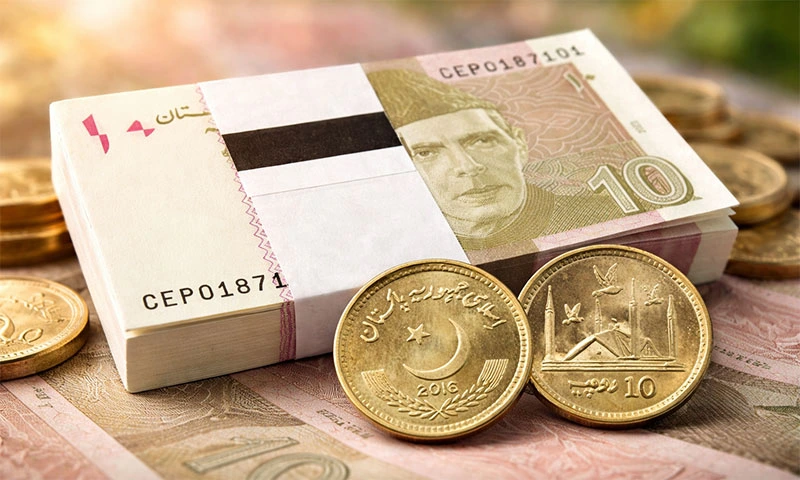
The federal cabinet is reviewing a plan to phase out the Rs10 banknote and replace it with a coin in a cost-saving measure that could benefit Pakistan’s economy. A high-level committee led by the finance minister presented a detailed currency management report to the cabinet, suggesting coins may be more efficient than paper notes. The proposal has drawn attention due to its potential to save billions of rupees over the long term. According to the report, prepared jointly by the State Bank of Pakistan (SBP) and the Security Printing Corporation of Pakistan, the average lifespan of a Rs10 note is a short six to nine months. In contrast, a Rs10 coin can remain in circulation for 20 to 30 years. Because the Rs10 denomination accounts for more than a third of all notes printed annually, its frequent replacement places significant strain on currency production costs. Massive Cost Savings Expected Officials estimate that shifting from notes to coins for this denomination could save between Rs40 billion and Rs50 billion over the next decade. That is because the current annual cost of printing, replacing and managing Rs10 notes stands at an estimated Rs8 billion to Rs10 billion every year. While the initial cost of minting coins is higher, they do not require frequent replacement and offer far greater durability. A committee recommendation expects the SBP to gradually stop printing Rs10 notes over a three-year transition period under the legal framework of the State Bank Act. During this period, the number of coins in circulation would steadily increase to meet demand. Why This Matters for Pakistan’s Economy The Rs10 note features in countless daily transactions, from bus fares to small purchases at markets and tea stalls nationwide. Its short lifespan means frequent reprinting, which increases pressure on printing facilities and administrative overheads. If coins replace notes, recurring printing costs will fall sharply and long-term savings could strengthen Pakistan’s currency management system. Experts also say this measure aligns with broader currency management and sustainability goals. Coins reduce long-term operational expenses and help in streamlining cash handling logistics for banks and merchants alike. Several countries including the United Kingdom, Canada and Australia have already transitioned lower-denomination notes to coins, citing similar benefits. Public Awareness and Transition Challenges Public adaptation to coins remains a consideration. The Rs10 coin was first issued by SBP in 2016, but it has not always gained widespread acceptance among the public. Many consumers continued to prefer notes even though coins are legally valid tender. As coins become more prominent, awareness campaigns may be needed to ensure smooth public acceptance. Next Steps The federal cabinet will review the report and decide whether to formally approve the phase-out of the Rs10 note. If approved, the transition is expected to begin soon, gradually reducing dependence on the worn-out paper notes and leveraging long-lasting coins to improve currency efficiency and reduce recurring costs.
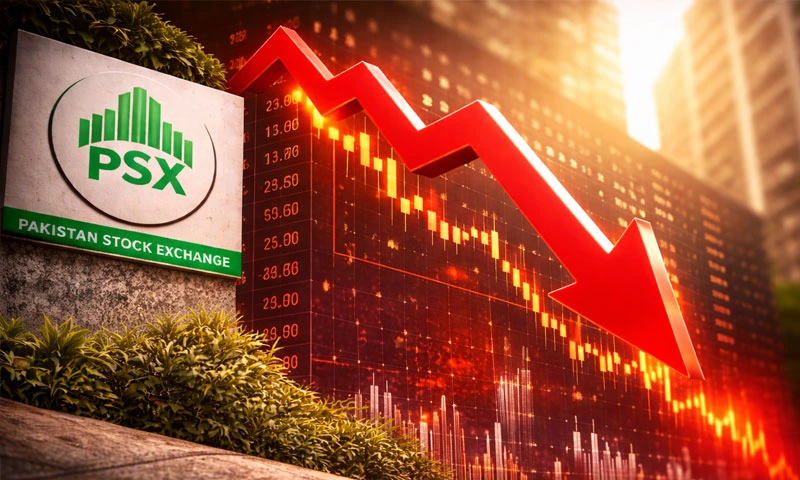
PSX Sees Intense Volatility as KSE-100 Declines Over 1,600 Points
Pakistan’s benchmark stock index, the KSE-100, closed sharply in negative territory on Wednesday, plunging 1,632.25 points from its previous close amid sustained selling pressure and weak investor sentiment. The Pakistan Stock Exchange (PSX) finished the session at 166,626 points, reflecting heightened market volatility and cautious trading behaviour among investors. The market session began with optimism as the index even hit an early high of 168,191.64 points, but that momentum did not last. Increasing sell orders, particularly in heavyweight sectors including oil and gas, banking and cement stocks, pushed the market downward as the day progressed. Total traded volume remained significant, with 619 million shares exchanged. Recent Trends Show Deepening Correction Wednesday’s decline is part of a prolonged correction phase at the PSX. Earlier in the week, the index had seen sharp losses including a drop of over 5,400 points and a 1,432-point decline during a previous session. Analysts at brokerage firms have described this period as a market correction rather than a sustained bear market. Mohammad Sohail, CEO of Topline Securities, said the recent sell-off “appears to be driven by above-average foreign selling, concerns linked to policy uncertainty, soft corporate earnings, and unwinding of stock futures.” Markets have been volatile in recent weeks, with intense swings from gains to heavy losses. Earlier sessions saw the index gain more than 1,500 points early in trading before reversing sharply, illustrating how mixed investor sentiment remains. Such fluctuations highlight the ongoing risk aversion among traders. Why the Market Is Under Pressure Multiple factors have contributed to the recent PSX downturn. Rising global commodity prices, particularly oil, increase input costs for businesses and dampen profitability expectations. Rising imports and widening current account deficits also affect macroeconomic confidence, leading investors to re-allocate capital away from equities. Markets across Asia remain sensitive to external economic data and trade policies, which feed into local equity performance. Foreign investor participation has also been subdued, with net selling in recent sessions. When foreign capital exits emerging markets like Pakistan, liquidity drops and selling pressure increases. A slowdown in corporate earnings results and muted economic growth projections add to caution among institutional and retail investors. Historical performance shows that the KSE-100 index has weathered varying cycles of growth and downturns over decades, reflecting how markets respond to macroeconomic shifts and global shocks. The benchmark index reached record highs in previous years but remains vulnerable to external and internal risk factors. What It Means for Investors and Economy For investors, a sharp drop in the KSE-100 signals caution and heightened risk, potentially leading to more conservative strategies focused on defensive stocks or fixed-income alternatives. For the broader economy, persistent volatility at the PSX may impact confidence in the financial sector and can signal broader concerns about investment flows and economic stability. Economists say that for recovery to be sustained, clearer policy direction, stabilization in foreign exchange markets, and stronger corporate performance data will be essential to rebuild confidence and encourage renewed inflows into Pakistan’s equity markets.
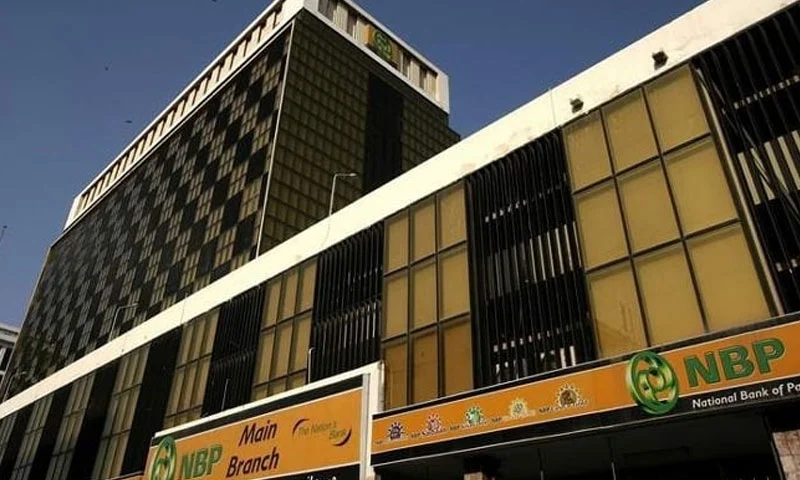
National Bank of Pakistan Profits Soar Rs859bn as Bank Reports Record Growth
National Bank of Pakistan (NBP), one of the country’s largest and most influential commercial banks, reported a remarkable 224 percent increase in profit after tax (PAT) for the year ending December 31, 2025, registering an impressive Rs859 billion in net profit, according to its latest annual financial report. This marks one of the most significant profit surges in recent years for the banking sector in Pakistan. The surge reflects a combination of strong core banking performance, improved income from non-fund sources, and enhanced financial management, positioning NBP as a standout performer in the nation’s financial landscape. NBP, majority-owned by the State Bank of Pakistan and headquartered in Karachi, has consistently played a central role in commercial and public sector banking services across the country. Drivers Behind Profit Growth Analysts attribute the robust performance to multiple factors: 1. Higher Net Interest Income: Despite a general trend in banking of reduced gross interest earnings, NBP’s net interest income grew significantly due to lower cost of funds and improved spreads, supporting higher income from lending and treasury operations. This trend reflects broader economic conditions, including recent interest rate cuts by the State Bank of Pakistan that have improved lending spreads. 2. Growth in Fee and Commission Income: The bank reported strong growth in fee-based services, including account maintenance, trade services and corporate banking fees. The expansion of services to individual and business customers helped diversify its revenue base and reduce reliance solely on interest income. 3. Improved Non-Fund Income: NBP recorded larger gains on securities and foreign exchange operations compared with previous years, contributing significantly to overall profitability. The bank also demonstrated resilience in managing credit loss provisions, strengthening overall profitability metrics. Comparison With Previous Performance The annual profit figure of Rs859 billion reflects a dramatic turnaround compared with prior years, where the bank reported much lower profits and recorded volatile profits driven in part by fluctuating interest rates and high credit loss provisioning. Mid-year reports showed NBP’s profit after tax at Rs43.5 billion for the first half of 2025, a massive increase from the prior year’s figures. Quarterly performance also saw strong acceleration, with profit after tax climbing to Rs23.3 billion in the third quarter of 2025, an increase of over 650% compared with the same period of the previous year. Why This Matters for Pakistan’s Economy NBP’s extraordinary profit growth comes at a time when Pakistan’s economy is gradually stabilizing after years of volatility. Recent macroeconomic trends show inflation declining and foreign exchange reserves strengthening, supported by policy measures that aim to improve financial stability. For everyday consumers and businesses, stronger bank profitability can signal a more resilient financial system. It can encourage credit availability, support lending to businesses, and foster confidence among foreign investors who monitor the banking sector as an indicator of economic health. Outlook and Future Prospects Going forward, NBP’s leadership has emphasized its commitment to sustainable growth, expanded digital services, and enhanced customer offerings across retail, corporate and treasury services. Its performance in 2025 sets a solid foundation for further expansion in 2026, with expectations of continued strategic focus on profitability and financial inclusion.
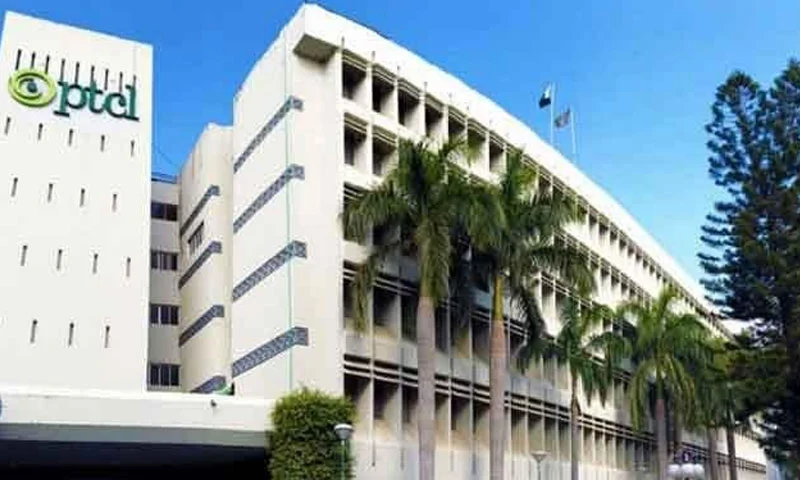
PTCL Reports 12% Revenue Growth in FY2025, Completes Telenor Pakistan Acquisition
Pakistan Telecommunication Company Limited (PTCL), the country’s leading telecom and ICT services provider, has announced its consolidated financial results for the year ended December 31, 2025, reporting strong year-on-year revenue growth and significant operational improvement across key segments. Strong Revenue Growth and Operational Performance PTCL’s consolidated revenue increased by 12% year on year, driven by robust performance in fixed broadband, enterprise, wholesale and mobile services. Consolidated operating profit surged by 216% compared to the previous year, reflecting strengthened operational efficiency. However, the Group recorded a net loss of Rs. 9.7 billion, primarily due to accelerated Expected Credit Loss provisioning at Ubank following revisions to Prudential Regulations. Read More: PTCL Flash Fiber Wins Top Ookla Awards for Best Network in Pakistan On a standalone basis, PTCL’s revenue also grew by 12% year on year. Flash Fiber led the growth with a 50% increase, while Business Solutions expanded by 16% compared to the previous financial year. Carrier and Wholesale maintained momentum with 28% growth, and the international segment recorded a 3% revenue increase. PTCL’s operating profit reached Rs. 18.2 billion, up 49% year on year. The company posted a net profit of Rs. 1.4 billion despite a one-off additional pension liability booking of Rs. 6.9 billion following a decision by the Honourable Supreme Court of Pakistan. Ufone’s revenue grew by 14% year on year, driven by retail and corporate segments. Its operating profit reached PKR 17.6 billion, reflecting 283% growth, while net losses were reduced by 89%. Landmark Acquisition of Telenor Pakistan PTCL completed the acquisition of Telenor Pakistan on December 31, 2025, after receiving all required regulatory approvals. Operational results of Telenor Pakistan will be consolidated from January 1, 2026. With Telenor Pakistan and Orion Towers now wholly owned subsidiaries, the transaction marks one of Pakistan’s most significant telecom consolidations. PTCL has initiated the planned amalgamation of Telenor Pakistan and Ufone, subject to regulatory approvals. The integration aims to enhance nationwide coverage, improve operational efficiencies, strengthen market competitiveness and support long-term strategic priorities in connectivity and digital services. Broadband, Digital and Enterprise Expansion PTCL Flash Fiber maintained market leadership with 50% year-on-year growth and the highest subscriber market share of 33%. The ‘Tez Raftaar’ offer expanded access to affordable high-speed internet. Read More: IMF Confirms Review Mission to Pakistan From February 25 After Economic Reform Gains Digital services delivered strong results. UPaisa’s 30-day active users exceeded 1.5 million. Transactions grew 57% year on year, reaching a monthly peak of 13.2 million. Throughput increased 33% to a record monthly level of PKR 21.9 billion. The UPTCL self-care app surpassed 5.7 million monthly active users. Ufone’s digital sub-brand Onic crossed 406,000 subscribers, achieving 169% growth through a fully digital operating model. PTCL Smart Cloud expanded significantly, onboarding digital banks, fintechs, enterprises and government institutions. AI-ready data center infrastructure was upgraded, while the wholesale segment grew IP bandwidth and managed capacity through strategic partnerships with mobile operators and satellite providers. Internationally, PTCL strengthened its carrier wholesale leadership through a diversified submarine cable network and resilient national fiber infrastructure. The company secured major ICT and telecom projects across banking, education, aviation, healthcare and public-sector organizations. It also delivered Pakistan’s first 5G-ready smart residential community and became the first operator in Pakistan to enable end-to-end bill payments and monthly PDF billing via WhatsApp. PTCL partnered with Mercantile, Apple’s authorised distributor in Pakistan, to launch the iPhone 17 series bundled with Ufone and PTCL Flash Fiber offers in Karachi, Lahore and Islamabad. Awards and Social Impact PTCL received Gold recognition at the Dragons of Pakistan 2025 Awards and Dragons of Asia 2025 Awards for its clean water access campaign under the ‘Dil Se’ platform. Read More: PTCL Beats Competition to Lead Broadband Rankings Under Tech 4 Inclusion, Tech 4 Social Innovation and Act of Kindness pillars, aligned with the UN Sustainable Development Goals, PTCL expanded digital inclusion initiatives. The Ba-Ikhtiar program graduated 79 women who launched independent ventures. The initiative expanded to 23 cities and gained visibility through BBC Urdu and Pashto coverage. In partnership with ConnectHear, PTCL and Ufone launched the world’s first AI-powered sign-language early warning system for the Deaf community, supported by the GSMA Innovation Fund and showcased at Gitex Global 2025. The company supported UNICEF’s polio awareness campaigns, provided connectivity in flood-affected districts and expanded clean water access in Thar and Umerkot. A new MoU with PPAF will extend water interventions across South Punjab and Thar, benefiting over 200,000 people. These initiatives underscore PTCL’s focus on delivering measurable social impact alongside sustained business growth.
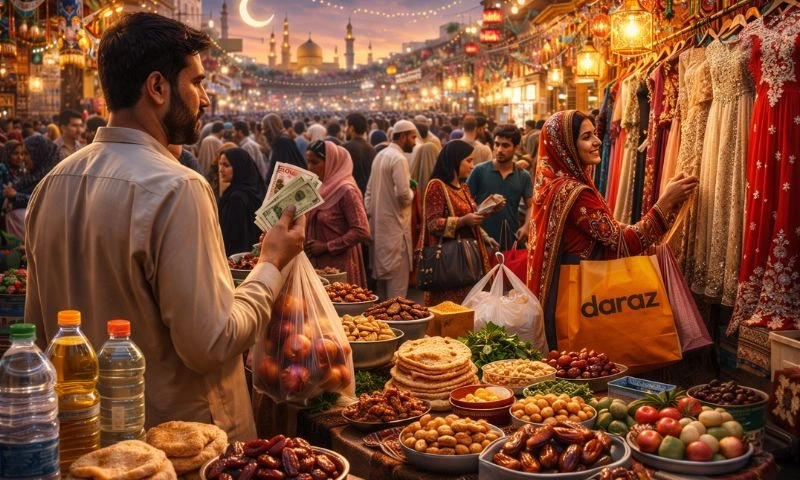
Ramadan Retail Boom in Pakistan: Why Markets Explode Every Year
Ramadan is not just a spiritual month in Pakistan. It is also the country’s biggest retail season, stretching from pre-Ramadan stocking to the Eid shopping rush. Ramazan is the busiest month for markets, with household spending rising over 40% above routine levels across social classes. This demand surge shows up everywhere: packed bazaars, longer traffic jams, and higher online orders. It also changes what people buy. Groceries and kitchen staples lead early. Clothing, footwear, beauty, and gifts peak as Eid gets closer. What Pakistanis Buy More and Why Retail demand in Ramadan tends to concentrate in three buckets. First is food and beverages, driven by iftar hosting and home cooking. Second is charitable giving, which indirectly supports consumption for lower-income households. Third is Eid preparation, which pulls spending into apparel, shoes, accessories, and small home upgrades. Research shared by the State Bank of Pakistan referencing a published study concluded: “Muslim consumers spend around 40pc more money during the holy month of Ramadan.” Even when wallets are tight, the seasonal effect stays powerful. In 2023, Reuters reported Pakistan’s Eid retail sales were weaker than usual due to high inflation, with retailers describing a visible drop in buying compared to earlier years. Read More: Zong vs Ufone vs Jazz: The Ramadan Bundles Everyone Talks About Subsidies, Price Controls, and the Inflation Factor Ramadan also forces the state to respond. In March 2024, the federal government launched a Rs7.5 billion Ramadan relief package, including subsidies on 19 essential items. But market expansion is not guaranteed. Ajmal Baloch, president of All Pakistan Anjuman-e-Tajiran, said: “Market expansion is a function of citizens’ disposable income and its purchasing power.” E-Commerce and Payments Get a Ramadan Boost Digital retail competes hard during Ramadan. Daraz campaigns and flash deals have become a key channel for household and Eid shopping. In Feb 2025, APP reported Daraz Pakistan promoted “grand savings” with discounts up to 80% off, including time-limited deals. Remittances also help fuel consumption. Reuters, citing Pakistan’s finance ministry outlook, said remittances often rise due to seasonal factors like Ramadan and Eid, as overseas Pakistanis send extra money home. Read More: The Resilience of Ramadan: How Faith Survives Conflict and Loss The Bottom Line Ramadan acts like a national demand shock. It lifts grocery volumes, accelerates Eid retail, and pulls more transactions online. When inflation eases and remittances rise, the retail boom becomes even louder. When prices spike, demand shifts toward discounts, subsidies, and value packs, but the season still dominates Pakistan’s retail calendar.

Pakistan Pushes for Expanded US Investment Ahead of March Trade Forum
Pakistan’s Finance Minister Senator Muhammad Aurangzeb led a high-level delegation to Washington, DC, for intensive discussions with US Commerce Secretary Howard A. Lutnick aimed at enhancing bilateral trade and investment ties between the two countries. The meetings reflected both sides’ desire to expand economic cooperation beyond traditional areas and to explore new opportunities for mutual growth. The talks, held at the US Department of Commerce, brought together senior officials from Pakistan’s commerce and finance ministries, the Pakistani Ambassador to the United States, and key American counterparts. Both delegations discussed ways to strengthen trade linkages, address market access issues, and attract greater US investment into the Pakistani economy. A Focus on Investment and Emerging Sectors During the meeting, Aurangzeb and Lutnick highlighted promising sectors for collaboration, including information and communications technology (ICT), mining, minerals and energy, where both nations see significant growth potential. Aurangzeb expressed Pakistan’s interest in drawing US firms into these areas, saying the partnership could benefit from the US’s technological expertise and capital resources. Aurangzeb also appreciated the role of the US Chamber of Commerce in organising the upcoming US-Pakistan Trade and Investment Forum scheduled for March 31, 2026. He expressed hope that the office of the US Commerce Secretary would participate in the event, which is expected to attract leading companies and investors from both countries. The discussions build on months of ongoing negotiations and high-level engagements. Last year, Pakistan and the United States concluded a landmark trade deal aimed at reducing reciprocal tariffs, particularly on Pakistani exports, and broadening access to US markets. Officials described the agreement as a major step forward in economic cooperation, with potential to spur investment in energy, mining, IT and digital sectors. Economists say enhancing Pakistan-US trade ties could help reduce trade imbalances, create jobs, and boost exports of value-added products. The US remains one of Pakistan’s largest trading partners, with thousands of US companies already doing business in Pakistan or looking for opportunities in its large consumer market. Reform Agenda and Economic Stability Aurangzeb has repeatedly emphasised that continued economic reforms in taxation, energy and trade policy are central to making Pakistan a more attractive destination for foreign investment. Previously, he noted that both sides agreed to expand engagement beyond immediate trade issues and focus on longer-term investment opportunities that could be “a real game changer” for Pakistan’s economy. The Pakistani delegation’s visit coincides with broader efforts to strengthen strategic ties with the United States as part of a reset in diplomatic and economic relations. Recent visits by senior Pakistani officials have addressed issues ranging from joint investment projects to regional stability and security cooperation. The high-profile meetings in Washington signal both countries’ commitment to deepening economic partnership. Observers expect that the momentum generated by these talks will carry through to the upcoming trade forum at the end of March, potentially laying the groundwork for expanded bilateral investment and enhanced market access.
