
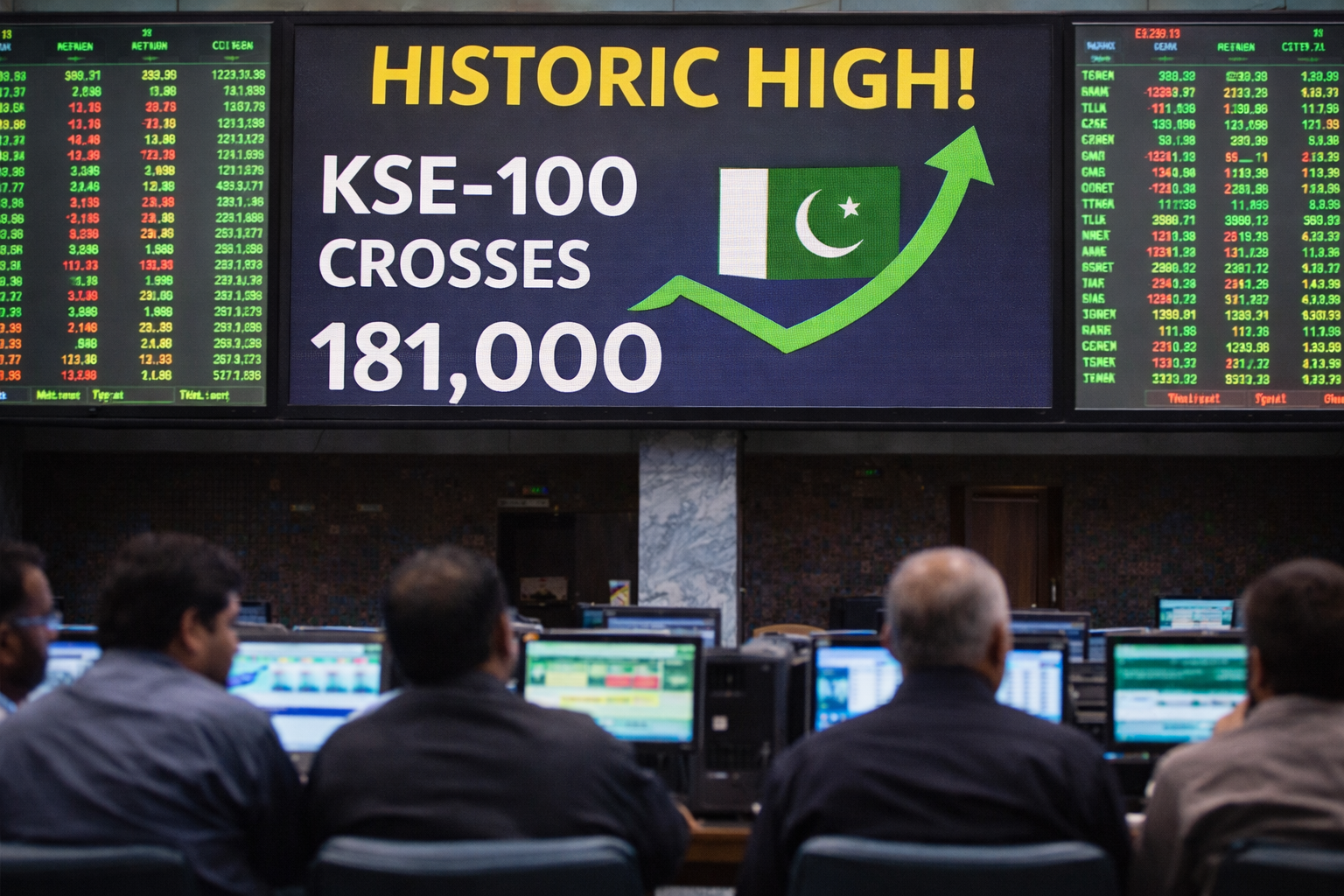
Pakistan’s stock market opened the week on a powerful note as the KSE-100 Index surged past the 181,000-point mark, setting a new all-time high in early trading. The strong start reflects growing investor confidence, driven by steady buying across major sectors and optimism around the broader economic outlook. Market activity remained upbeat from the opening bell, with banking, oil and gas, cement, and power stocks leading the rally. Analysts noted that buying interest was widespread, suggesting participation from both institutional investors and retail traders. The index’s rapid climb past a major psychological level added momentum and reinforced the bullish mood on the trading floor. Several factors appear to be fueling the surge. Expectations of improved corporate earnings have played a key role, especially among large-cap companies with strong balance sheets. Investors are also reacting positively to signs of macroeconomic stability, including easing inflation pressures and a relatively stable exchange rate. These indicators have helped reduce uncertainty and improve risk appetite. Another contributor has been the expectation that Pakistan could see stronger capital inflows if economic reforms stay on track. Market observers say investors are closely watching fiscal discipline, monetary policy signals, and progress on external financing. Any clarity in these areas often reflects quickly in equity prices. According to market analysts, the KSE-100’s performance also highlights a shift toward value-based investing, with traders favoring stocks that offer consistent dividends and long-term growth potential. This trend has helped sustain gains rather than limit them to short-term speculation. Despite the celebratory mood, experts urge caution. Stock markets can change direction quickly, especially if global conditions turn volatile. Developments related to interest rates, energy prices, and geopolitical tensions could still influence sentiment. Investors are advised to stay informed and avoid emotional decision-making. For now, the record-breaking move sends a strong signal. Crossing 181,000 points underscores renewed faith in Pakistan’s equity market and positions it as one of the more closely watched emerging markets in the region. If momentum holds, analysts believe the market could continue testing new highs in the near term.

FBR Labels Manual Tax Filers ‘Inactive’ And What It Means for You
Pakistan’s tax system has hit a major snag as the Federal Board of Revenue (FBR) recently marked thousands of taxpayers who submitted their manual income tax returns as “inactive”, denying them the benefits of being on the Active Taxpayer List (ATL). This move has sparked confusion, frustration, and criticism from tax experts and filers alike. Under Pakistan’s tax rules, a taxpayer normally earns active status by filing an income tax return on time or by applying for an approved extension. Active filers enjoy lower withholding tax rates on key transactions such as property transfers and bank transactions, along with easier access to loans and financial services. But the latest development has left many who filed manual returns for Tax Year 2024 in limbo. The FBR refused to grant these taxpayers active status, citing its efforts to fully digitalize tax filing. Experts say the agency has effectively imposed penalties on people compliant with the law. Many taxpayers had applied for filing extensions before deadlines, but the FBR allegedly declared them inactive regardless. Critics argue that this contradicts formal directions and existing tax circulars. For example, FBR Circular No. 6 of 2025-26 had expressly extended the deadline for manual filers to November 30, 2025 and required field offices to provide legal and technical assistance. A prominent tax lawyer called the recent actions “deliberate and contemptuous,” saying officials ignored clear legal instructions and even the orders of the Federal Tax Ombudsman (FTO). In response to public pressure and confusion, the FBR clarified that taxpayers who submitted extension applications within the prescribed time will not lose active status, and that manual filing will be phased out in favor of digital e-filing. Special facilitation cells have been set up in tax offices across the country to help taxpayers transition to e-filing smoothly. Still, many in Pakistan’s business community believe the row highlights deeper problems in the tax administration — from inconsistent communication to delayed system updates. The debate has reignited calls for clearer rules, better digital tools, and stronger safeguards for taxpayer rights.
Saudi-Pakistan Ties Deepen: Inside Pakistan’s Big Plan at the Future Minerals Forum in Riyadh
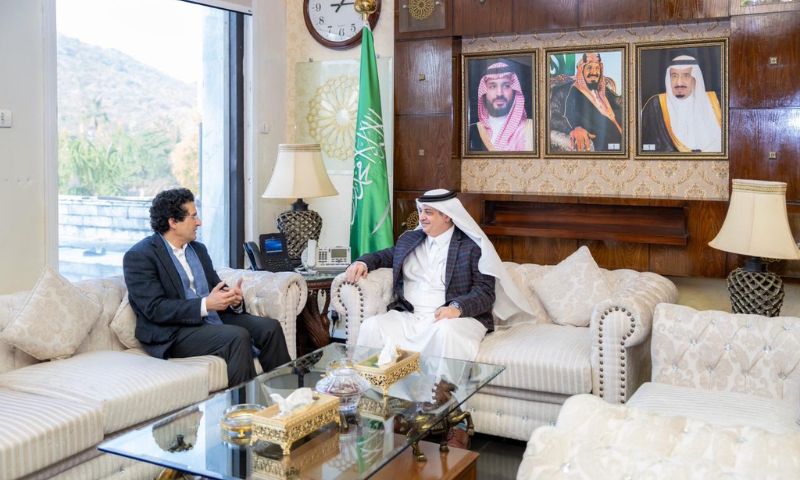
Pakistan is preparing to make a strong impression at the Future Minerals Forum (FMF) 2026 in Riyadh, Saudi Arabia, marking a focused step toward boosting investment and cooperation in the minerals and energy sectors. Federal Minister for Petroleum Ali Pervaiz Malik recently met with H.E. Nawaf bin Saeed Ahmad Al-Malkiy, Ambassador of Saudi Arabia to Pakistan, to discuss areas of mutual interest and stronger bilateral ties. During the meeting, Malik expressed deep respect for Crown Prince Mohammed bin Salman and highlighted the long-standing shared cultural and religious ties that bind the two nations. At the invitation of the Saudi government, Pakistan confirmed its full participation in the FMF, which will run from January 13–15, 2026 in Riyadh. The forum has grown into one of the world’s premier platforms for mineral industry dialogue, bringing together ministers, investors, and innovators to shape the future of mineral supply chains and sustainable development. Pakistan will unveil a dedicated pavilion titled “Pakistan – The Mineral Marvel” to showcase the nation’s rich geological endowment. The pavilion aims to draw global investors and industry professionals to explore opportunities in Pakistan’s untapped mineral sector. Leading the Pakistani delegation, Minister Malik will join executives from 13 state-owned and private mineral companies. A key highlight at the FMF will be a 90-minute Country Showcase Session under the theme “Unleashing Potential: Accelerating Pakistan’s Mineral Revolution.” This session will include CEOs, foreign investors, and international experts who will discuss strategies for accelerating development in Pakistan’s mineral industry. Officials say the pavilion’s role goes beyond Riyadh. It will serve as a prelude to the Pakistan Mineral Investment Forum (PMIF) 2026, planned for April in Islamabad, where the focus will be on attracting even broader international engagement. Saudi Ambassador Al-Malkiy warmly welcomed Pakistan’s participation and reiterated the potential for cooperation in minerals and energy sectors. He emphasized FMF’s role as a key platform to expand strategic ties between Pakistan and the Kingdom. As global demand for critical minerals grows especially for technology, energy transition, and infrastructure. Pakistan’s entry onto this stage signals a renewed drive to convert natural wealth into economic growth.
Mobilink Bank Gets Major Backing as VEON Drives Pakistan’s Fintech Growth
Global digital operator VEON Group has doubled down on its commitment to Pakistan’s digital banking future with a fresh $20 million investment in Mobilink Bank, aiming to accelerate the expansion of digital and Islamic banking across the country. This latest capital injection builds on a $15 million investment made in early 2025, demonstrating growing confidence in the bank’s growth and potential. Mobilink Bank, a subsidiary of VEON Group, is part of a broader digital financial ecosystem that includes JazzCash, one of Pakistan’s largest mobile financial services platforms with millions of customers and a nationwide agent network. Together, these units are helping reshape how Pakistanis access financial services — especially in underserved communities where traditional banking has limited reach. The new funds will be used to scale the bank’s micro, small and medium enterprise (MSME) financing portfolio and to expand its Shariah-compliant Islamic banking offerings. This focus on Islamic banking reflects strong local demand, following Mobilink Bank’s launch of dedicated Islamic banking services in late 2025 after receiving its licence from the State Bank of Pakistan. The bank has since opened its first Islamic banking branch in Karachi and plans further expansion nationwide. Mobilink Bank’s leadership says the investment will help more entrepreneurs and small business owners formalise their financial activities, move away from informal cash systems, and access regulated credit — a key factor in building economic resilience. The bank’s products also include women-centric financial services and green financing initiatives, which aim to support long-term growth while addressing climate and economic challenges. VEON’s investment comes at a time when Pakistan’s digital financial sector is gaining momentum. With rising smartphone use and mobile internet penetration, more people are turning to online financial solutions for payments, savings, and credit. JazzCash itself has processed transaction volumes in the trillions of rupees, underlining the scale and impact of fintech growth in Pakistan. Aamir Ibrahim, VEON Group Executive Committee Member and Chairman of Mobilink Bank, said the continuous flow of capital reflects long-term confidence in Pakistan’s digital finance ecosystem. He reaffirmed that the investment strengthens both infrastructure and strategic execution, enabling Mobilink Bank and JazzCash to deliver more inclusive, technology-driven financial solutions across the country. With this substantial backing, Mobilink Bank is poised to play a bigger role in Pakistan’s financial transformation, supporting small businesses, advancing financial inclusion, and cementing the country’s position in the rapidly evolving digital economy.
From Startups to Style: Mera Brand Pakistan Opens Today in Karachi
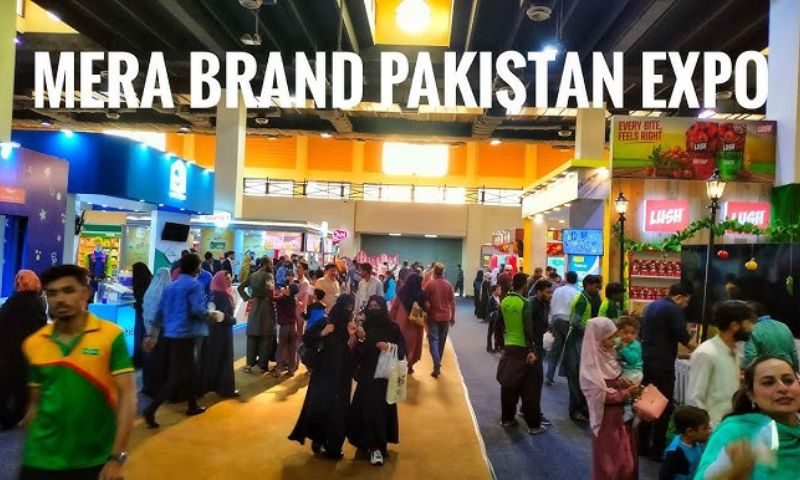
Karachi’s entrepreneurial and family lifestyle scene is set to come alive today as the Mera Brand Pakistan flagship exhibition opens its doors to the public, positioning itself as one of the most vibrant showcases of local innovation, small businesses, and emerging consumer brands in the country. The 4th Mera Brand Pakistan Karachi Family Expo, starting today and running through the weekend, brings together hundreds of Pakistani brands under one roof. Hosted at the Expo Centre Karachi, the event blends shopping, food, entertainment, and entrepreneurship into a single family-friendly experience. Organisers say the goal is simple: give Pakistani brands the visibility they deserve while offering families an engaging space to explore homegrown products. This year’s expo features a wide mix of categories, including fashion, beauty, home décor, food and beverages, kids’ products, handicrafts, wellness items, and tech-enabled startups. Many of the participating brands are women-led or home-based ventures that have grown through social media and word of mouth. For them, mera brand is not just an exhibition. It is a launchpad. Beyond shopping, the expo has been designed as an experience. Visitors can expect live activities, food stalls, interactive zones for children, and special attractions aimed at encouraging families to spend several hours at the venue. Organisers say the family-centric format has been key to the expo’s growing popularity in Karachi. The rise of platforms like Mera Brand Pakistan reflects a broader shift in Pakistan’s retail and startup ecosystem. With rising costs of traditional retail space and growing digital exposure, physical expos have become critical touchpoints where online brands meet customers face to face. Industry observers note that such events help small businesses build trust, test products, and scale faster. According to organisers, this edition has drawn strong interest from startups, lifestyle brands, and returning exhibitors who credit earlier expos for helping them expand their customer base. The timing is also significant, as consumer activity traditionally picks up during seasonal shopping cycles. As the expo kicks off today, footfall is expected to remain strong over the coming days, driven by families, young shoppers, and supporters of local businesses. In a market often dominated by imported products, mera brand continues to carve out space for Pakistani creativity, resilience, and ambition proving that local brands are not just surviving, but thriving.
K-Electric Reports Steady Gains in 2025 as Karachi’s Power Demand Hits New Highs
K-Electric reported steady progress across generation, transmission, distribution, and customer services in 2025, as the country witnessed signs of economic stabilisation. In its year-end performance review, the utility highlighted improvements in grid resilience, renewable energy integration, customer facilitation, and digital transformation, while continuing efforts to curb electricity theft and expand industrial connectivity in Karachi. Speaking on the occasion, Moonis Alvi, Chief Executive Officer of K-Electric, said the company remained committed to customer satisfaction and reliable power supply for the city. “Karachi is our responsibility. We will continue to serve the city with full dedication,” Alvi said, adding that while the revised Multi-Year Tariff (MYT) presented challenges, KE would work to balance the interests of both the city and the company. Peak Demand and Supply Stability During the peak summer of June 2025, Karachi recorded its highest electricity demand at 3,563 megawatts (MW), which was met with a peak supply of 3,545 MW, underscoring the resilience of KE’s power network. Average demand between January and November stood at 2,353 MW, with winter demand averaging around 1,470 MW and summer demand reaching approximately 2,920 MW, reflecting seasonal consumption patterns and growing urban activity. Generation and Clean Energy Push KE’s generation portfolio supported the city’s fluctuating energy needs throughout the year. Alongside optimising existing assets, the utility advanced planning and regulatory processes for future capacity additions aligned with affordability and sustainability. Through competitive bidding, KE secured Pakistan’s lowest renewable energy tariffs, ranging from PKR 8.9 to PKR 11.6 per unit for 640 MW of clean energy projects. Bid Evaluation Reports for projects at Dhabeji, Winder, and Bela were approved by National Electric Power Regulatory Authority (NEPRA) in May 2025, subject to further regulatory clearances. Transmission Expansion and Grid Access KE continued strengthening Karachi’s transmission infrastructure, enabling access to up to 2,000 MW of power from the national grid through the KKI grid and associated interconnections. The move enhanced system stability while facilitating the wheeling of lower-cost electricity to Pakistan’s largest economic hub. Crackdown on Power Theft Addressing losses remained a priority. During 2025, KE conducted over 25,000 kunda removal drives, removing nearly 320,000 kilograms of illegal wiring across its service territory by November-end. Customer Facilitation and Recoveries As part of its customer-centric approach, KE organised 310 facilitation camps across Karachi, offering assistance with billing, payments, new connections, and meter-related issues. These initiatives helped generate recoveries of approximately PKR 409 million. Industrial Growth and Net Metering Supporting Karachi’s industrial base, KE provided 339 new industrial connections, adding a sanctioned load of 136.4 MW by November. These connections catered to manufacturing, textiles, FMCG, ports, and export-oriented industries. The utility also expanded net-metering facilities, connecting 9,676 customers between January and November 2025 and adding over 230 MW of distributed renewable capacity to the grid. Digital Transformation and Customer Engagement KE continued to invest in digitisation, launching Kineto, Pakistan’s first generative AI-powered chatbot by a power utility, now handling nearly 3,000 customer interactions daily. The company also implemented SAP S/4HANA RISE, strengthening cybersecurity, transparency, and data-driven operations. Digitally connected customers increased to 2.7 million in 2025 from 1.94 million the previous year, while e-billing adoption rose to 13 percent. Nearly 70 percent of bills were paid through digital channels. KE’s digital initiatives earned industry recognition, including the Grand Prix for Campaign of the Year at the Effie Awards Pakistan 2025 for its energy conservation campaign Farq Parta Hai. Innovation and Regulatory Developments In June 2025, KE hosted the Energy Progress & Innovation Challenge (EPIC), attracting over 250 entries from entrepreneurs, researchers, and academia, focused on AI-driven forecasting, asset health diagnostics, theft detection, and renewable integration. During the year, KE’s MYT was approved but later revised downward by NEPRA. The revision has been challenged in court and remains under adjudication. Separately, NEPRA approved write-off claims of approximately PKR 50 billion for FY2017–2023, recognising them as legitimate costs. As it enters 2026, K-Electric said it remains focused on strengthening infrastructure, supporting industrial growth, improving recoveries, and expanding digital access, while balancing affordability, reliability, and regulatory compliance.
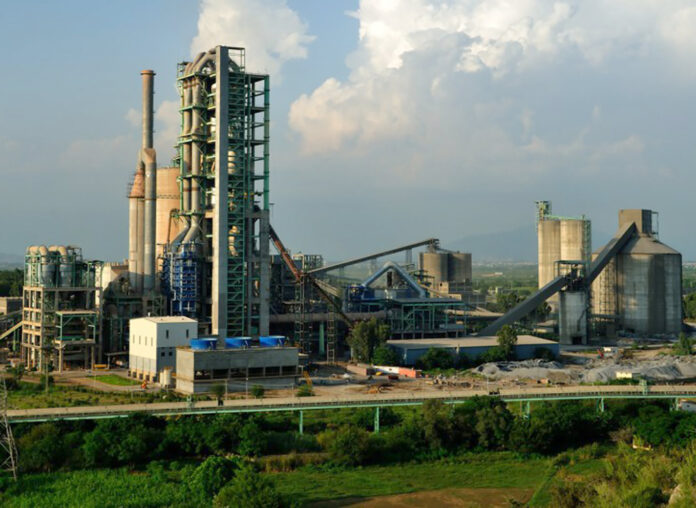
Pakistan Cement Industry Growth: DGKC’s 11,000 TPD Clinker Line Signals Big Gains Ahead
Pakistan’s cement industry is gearing up for a major transformation as D.G. Khan Cement Company (DGKC) announced plans to build the largest single clinker production line in the country. The ground-breaking initiative will significantly boost the company’s production capacity and modernise its manufacturing footprint, reinforcing Pakistan’s position as a regional leader in cement manufacturing. The key ingredient in cement, clinker is essential for meeting rising demand across residential and infrastructure projects nationwide. DGKC’s new clinker line will have a capacity of 11,000 tonnes per day (TPD), a remarkable scale compared with existing facilities. Once fully operational, the plant will contribute to increased domestic output, helping stabilise prices and reduce reliance on imports of clinker and other raw materials. The company has already issued a letter of credit (LC) for critical machinery and equipment, signalling that procurement and project mobilisation are underway. Executives at DGKC say the investment reflects confidence in Pakistan’s construction sector and long-term economic prospects. Cement demand remains robust due to ongoing public works, housing projects and the China-Pakistan Economic Corridor (CPEC) initiatives. A higher clinker production rate helps the company achieve economies of scale, lower per-unit costs, and improve competitiveness both locally and internationally. The announcement also underscores a broader trend in Pakistan’s industrial sectors toward capacity expansion and technology upgrades. Local manufacturers increasingly invest in state-of-the-art plants to enhance productivity and align with global best practices. In DGKC’s case, integrating modern automation and energy-efficient systems into the new line will likely reduce carbon intensity and promote more sustainable production which is a growing priority for industrial players worldwide. Industry analysts believe that expanding clinker production can relieve capacity bottlenecks that occasionally drive price volatility. Pakistan’s cement sector has experienced steady growth in recent years, with production and dispatch figures rising due to rapid urbanisation and infrastructure spending. However, domestic clinker shortages have at times forced companies to import raw materials or operate less efficient lines, adding to costs. Enhancing local capacity could ease these pressures. DGKC’s project may also attract ancillary economic benefits. Increased production requires specialised logistics, skilled workers, and support services, potentially creating jobs and stimulating activity in related sectors. Moreover, as the company enhances its export potential, it could contribute to improving Pakistan’s trade balance in building materials. For customers and stakeholders, the message is clear: DGKC is placing strategic bets on capacity expansion and resilience. The new clinker line is not just an industrial upgrade. It’s a stride toward meeting Pakistan’s evolving construction needs and supporting long-term infrastructure growth.

Digital Channels Now Handle 90% of Retail Payments, SBP Reveals
The State Bank of Pakistan has reported a strong surge in digital payments, underscoring rapid progress in the country’s payment infrastructure during the first quarter of fiscal year 2025–26. In its latest Quarterly Report on Payment Systems, the central bank said overall payment activity reached 2.8 billion transactions in the quarter, up 10% from the previous three months. The total value of retail payments climbed to Rs166 trillion, reflecting a 6% quarter-on-quarter increase, largely fuelled by the growing popularity of mobile app–based banking. Digital channels continued to dominate Pakistan’s payments landscape. Transactions conducted through digital platforms rose to 2.5 billion, accounting for 90% of all retail payments, compared with 87% in the same period last year. The value of these digital transactions stood at Rs55 trillion, highlighting wider acceptance of cashless payments across the economy. Mobile applications remained the backbone of digital payments. Banks, branchless banking operators and electronic money institutions collectively processed 2.0 billion transactions through mobile apps during the quarter. These made up 81% of all digital transactions and were valued at Rs33.7 trillion. According to the SBP, consumers increasingly rely on mobile apps for person-to-person transfers, utility bill payments, and both account- and wallet-based merchant payments across e-commerce platforms and physical retail stores. Internet banking usage also continued its upward trend, supported by a steady rise in online users. Meanwhile, the total number of payment cards in circulation grew to 61.3 million, with debit cards accounting for 90% and credit cards for 4% of the total. The Raast Instant Payment System posted particularly robust growth. Person-to-person payments via Raast surged to 535 million transactions, up 31%, with a combined value of Rs11.3 trillion. Person-to-merchant transactions more than doubled to 4.3 million, amounting to Rs17.0 billion. Overall, Raast handled 544 million transactions worth Rs12.8 trillion during the quarter. Card-based payments and digital commerce also expanded further. On average, 1.5 million card transactions were processed daily at point-of-sale terminals and online merchants. In parallel, Pakistan’s ATM network—comprising 20,527 machines nationwide—facilitated 267 million transactions with a total value of Rs4.5 trillion, reflecting continued reliance on cash withdrawals alongside rising digital adoption.
PSX Starts 2026 on a High as KSE-100 Jumps Over 700 Points in Early Trade
The Pakistan Stock Exchange began the new year on a firm footing as bullish sentiment lifted equities in early Thursday trading, pushing the benchmark KSE-100 Index sharply higher within minutes of the opening bell. By 9:35am, the index had climbed to 174,755.54 points, up 701.22 points, representing a 0.40% increase from the previous close. The early rally reflected renewed investor confidence after profit-taking weighed on the market in the final session of last year. Gains were broad-based, with strong buying interest seen in commercial banks, oil and gas exploration firms, and oil marketing companies (OMCs). Heavyweight stocks such as OGDC, Pakistan Oilfields, PPL, PSO, MCB Bank, and UBL all traded in positive territory, providing significant support to the index. Despite the upbeat market start, concerns lingered on the fiscal front. Provisional data showed that the Federal Board of Revenue (FBR) collected Rs6,154 billion during the first half of the current fiscal year (July–December 2025–26), falling short of the Rs6,490 billion target by Rs336 billion. The revenue gap, particularly weak December collections, could compel the government to implement contingency measures under its agreement with the International Monetary Fund. The strong opening followed a subdued close on Wednesday, when the PSX ended the year lower amid profit-booking. The KSE-100 Index had shed 418.45 points to close at 174,054.32 in the final trading session of 2025. Global cues remained mixed. US equities ended lower overnight, with Wall Street benchmarks easing on the last trading day of the year amid thin volumes. Investors locked in profits after a volatile 12 months marked by geopolitical tensions, fluctuating tariff risks, currency weakness, and intense enthusiasm around artificial intelligence stocks. While US markets posted solid annual and quarterly gains, modest declines were recorded in the S&P 500 and Nasdaq for the month, underscoring a cautious finish to an otherwise resilient year for global equities.
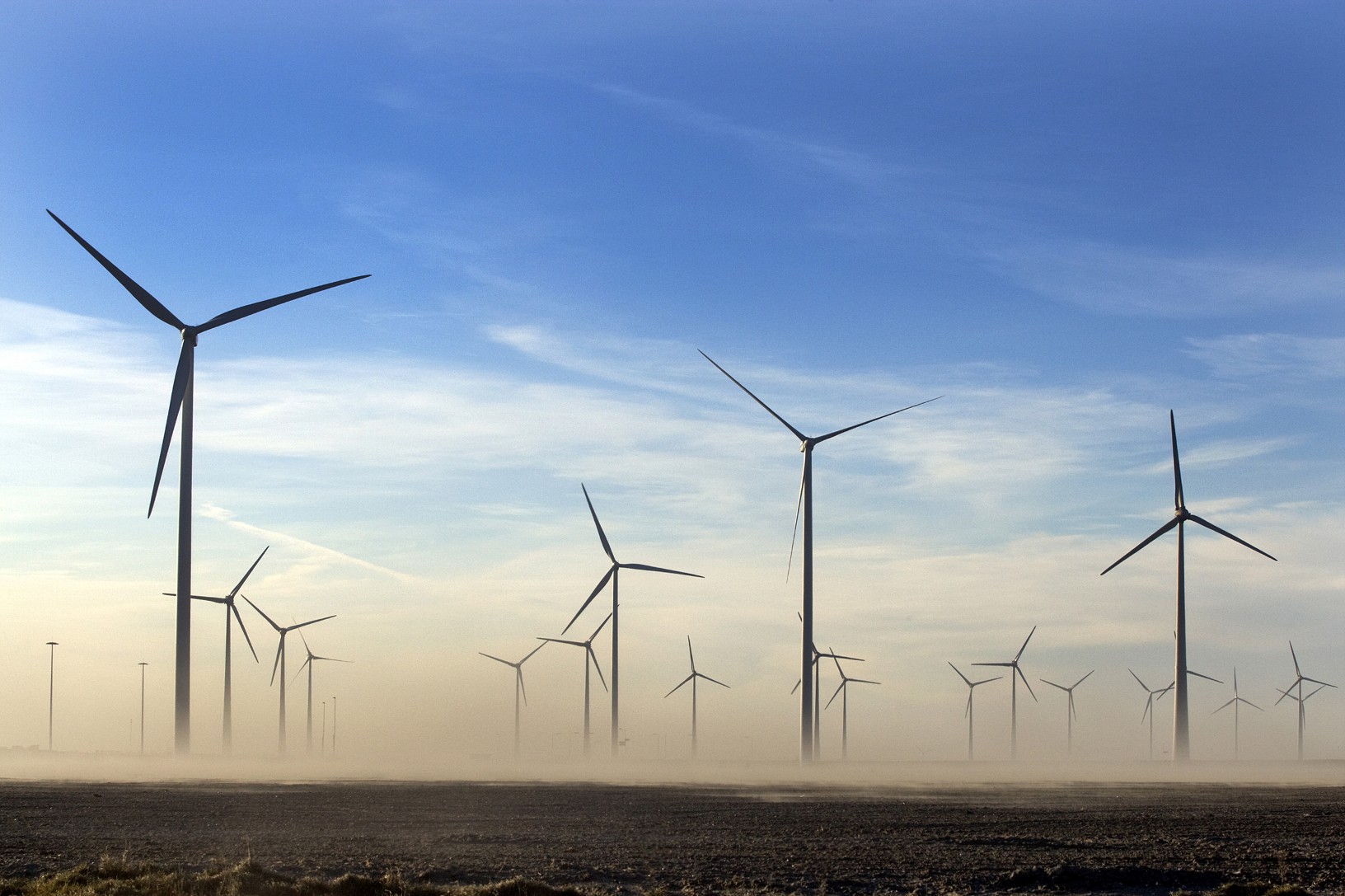
New Wind Power Expansion Cuts Costs and Emissions for Thatta Cement
Thatta Cement Company has taken a significant step toward cleaner energy as it greenlights a new 7.5 MW wind power project, raising its total renewable capacity to 17.3 MW. The board’s approval comes as part of the company’s long-term strategy to reduce dependence on fossil fuels, cut operational costs, and align with Pakistan’s broader push for sustainable energy solutions. The project will be developed in the coastal district of Thatta, Sindh, a region already known for strong and consistent wind speeds that make it ideal for wind power generation. Thatta Cement’s renewable journey began with the commissioning of its first wind energy installations several years ago. The addition of the 7.5 MW capacity marks the second phase of expansion and is expected to further lower the company’s reliance on grid power and high-cost diesel generators, which are common in Pakistan’s energy-intensive industrial sectors. When fully operational, the new wind turbines will supply a larger share of the plant’s electricity needs directly from clean sources. In board discussions, executives highlighted both environmental and economic benefits. With rising energy prices and supply volatility affecting industries nationwide, investing in captive renewable energy helps stabilise long-term production costs. Cement manufacturing is historically energy-intensive, so integrating wind power can deliver meaningful savings while supporting Pakistan’s targets under its Alternative and Renewable Energy Policy. This policy encourages private sector participation in green energy projects to reduce overall emissions and promote energy security. Industry analysts also point out that wind energy investments are becoming increasingly attractive due to incentives such as tax breaks and preferential tariffs offered by the government. This trend is visible across Pakistan’s industrial landscape, where large manufacturers in sectors like chemicals, textiles, and cement are now exploring captive solar and wind farms as part of their energy strategies. In Sindh, in particular, wind corridors along the coastal belt have spurred significant investments from independent power producers and industrial consumers alike. Independent projects like the Jhimpir and Gharo wind farms have already demonstrated the viability of large-scale renewable installations in the same geography. Local renewable advocates commend Thatta Cement’s move as a signal that Pakistan’s private sector is warming to sustainability not just as corporate responsibility but as a core business decision. By reducing carbon intensity and improving energy resilience, companies like Thatta Cement may help shape a more sustainable industrial future. As the new turbines go up, they’ll not only spin toward profitability but also toward a greener energy mix for the nation.
