

Pakistan’s tourism sector is witnessing significant progress, driven by the government-backed Green Tourism Pakistan initiative, which continues to transform the country into a more accessible and globally recognized travel destination. According to official reports, the initiative’s practical strategy has played a key role in revitalizing tourism, improving infrastructure, and enhancing the overall visitor experience across the country. Surge in International Tourist Arrivals One of the most notable developments is the sharp increase in foreign tourist arrivals. Pakistan welcomed more than one million international tourists last year, reflecting an extraordinary 820 percent growth compared to previous years. This surge highlights growing global confidence in Pakistan as a safe and attractive travel destination, supported by improved security conditions and targeted tourism promotion campaigns. Global Recognition Boosts Pakistan’s Image Pakistan’s natural beauty and cultural heritage are gaining increasing international attention. Leading global media outlets such as the BBC and CNN have featured Gilgit-Baltistan among the world’s top 25 tourist destinations. This recognition has significantly enhanced Pakistan’s global tourism profile, especially for adventure tourism, mountain expeditions, and eco-tourism. Visa Reforms Make Travel Easier To further boost tourism, Pakistan has introduced major visa reforms aimed at simplifying travel procedures. The government now offers a “Visa Prior to Arrival” facility for citizens of 126 countries, making it easier for international travelers to plan their visits. In addition, authorities have launched an E-Tourism portal titled “Tourism on the Palm,” designed to streamline travel planning and provide digital access to tourism services. Digital Transformation of Tourism Experience The introduction of digital platforms marks a significant shift in how tourists interact with Pakistan’s travel ecosystem. The E-Tourism portal enables users to access essential services, explore destinations, and plan itineraries more efficiently, reducing bureaucratic hurdles and enhancing convenience for visitors. Role of Green Tourism Initiative Green Tourism Pakistan, launched under broader national development strategies, has emerged as a central driver of tourism growth. The initiative focuses on sustainable tourism, infrastructure development, and attracting both domestic and foreign investment. It also collaborates with multiple government departments and stakeholders to promote Pakistan globally. Experts believe such coordinated efforts are essential for long-term growth, particularly in eco-tourism and responsible travel sectors. Broader Context: Sustainable Tourism Push Pakistan’s tourism strategy aligns with global trends toward sustainability. Programs like the Protected Areas Initiative aim to conserve natural ecosystems while creating jobs and supporting local communities. By integrating sustainability with tourism development, Pakistan is positioning itself as a competitive destination in the global eco-tourism market. Outlook for the Tourism Sector With continued policy support, digital innovation, and international recognition, Pakistan’s tourism sector is expected to grow further in the coming years. Industry experts suggest that improved infrastructure, consistent branding, and ease of travel will remain key factors in sustaining this upward trajectory.

Meesha Shafi Ordered to Pay Rs5 Million in Damages as Court Sides with Ali Zafar
A sessions court in Lahore has ordered singer Meesha Shafi to pay Rs5 million in damages to singer and actor Ali Zafar in a high-profile defamation case stemming from sexual harassment allegations. According to the court’s short order, the statements made by Shafi through a social media post and an interview were declared defamatory and unsubstantiated. The court stated that these claims “contain false, defamatory and injurious imputations against the plaintiff (Zafar)” and that the allegations “have not been proved to be true or made for public good.” The ruling concluded that the accusations constituted actionable defamation under the law. Compensation awarded for reputational damage The court awarded Rs5 million to Ali Zafar as general damages, citing harm to his reputation, dignity, and mental well-being. The order stated, “Accordingly, a sum of Rs5,000,000 … is awarded to the plaintiff as general damages only, recoverable from the defendant.” However, the court did not accept claims for additional or special damages, noting that these were “not proved through cogent and reliable evidence.” Permanent restriction imposed on Meesha Shafi In a significant directive, the court also imposed a permanent restriction on Shafi, barring her from repeating the allegations in any form. The order stated that the defendant is “permanently restrained from repeating, publishing, or causing to be published… the aforesaid defamatory allegations… in any form of media, including print, electronic or social media.” Background of the case The case dates back to 2018, when Meesha Shafi publicly accused Ali Zafar of sexual harassment, claiming that the incidents occurred on multiple occasions. In response, Zafar filed a defamation lawsuit, arguing that the allegations severely damaged his public image and caused distress to him and his family. He initially sought Rs1 billion in damages. The legal battle continued for several years, with both sides presenting arguments and evidence before the court. Arguments presented in court During the final hearings, Zafar’s lawyer, Advocate Umar Tariq Gill, maintained that the allegations were false and had caused significant reputational harm. He argued that no other individual had ever made similar accusations against the singer. On the other hand, Shafi’s counsel, Advocate Saqib Jilani, urged the court to dismiss the case. He argued that no concrete evidence had been presented by the plaintiff and emphasized that Shafi had consistently maintained her account throughout cross-examination. The defence also contended that Shafi should not be penalised for speaking about her personal experiences. Verdict follows conclusion of hearings The court had concluded hearing arguments from both sides a day earlier, signalling that a final verdict would be announced shortly. The judgment delivered on Tuesday brings a major legal development in one of Pakistan’s most closely followed celebrity disputes. Broader context The case became one of the most prominent #MeToo-related controversies in Pakistan, sparking nationwide debate about workplace harassment, defamation laws, and the burden of proof in such cases. Legal experts note that the ruling may have wider implications for how defamation and harassment allegations are handled in Pakistan’s courts, especially when they involve public figures and social media statements.

Fans Shocked as GTA 6 Cost Rumors Cross $3 Billion
Rockstar Games’ highly anticipated title Grand Theft Auto VI is making headlines again, not just for its gameplay but for its staggering reported budget, which could reach an unprecedented $3 billion before the game even launches. The figure, which includes development, marketing, and long-term support, has shocked fans and industry observers alike, with many struggling to comprehend the scale of investment behind the project. A Budget Like No Other If the reported figure proves accurate, GTA 6 would become the most expensive video game ever made by a massive margin. Earlier estimates had already placed the game’s cost between $1 billion and $2 billion, far exceeding previous industry records. The jump toward a potential $3 billion budget reflects the game’s extended development timeline, advanced technology, and massive global marketing campaign. Reports indicate that Rockstar has been working on the project for years, with full-scale production ramping up around 2020. Why GTA 6 Is So Expensive The scale of GTA 6 is one of the biggest factors driving its cost. The game is expected to feature a vast open-world environment, next-generation graphics, advanced artificial intelligence, and a dynamic online ecosystem. Industry experts note that modern AAA games require thousands of developers, years of work, and cutting-edge technology, all of which significantly increase production costs. The marketing budget alone is expected to be enormous, with Rockstar aiming to deliver one of the biggest entertainment launches in history. Analysts say such large investments are justified by the franchise’s track record of generating massive revenue. A Game That Could Redefine the Industry The Grand Theft Auto series has consistently broken records, with GTA V earning over $1 billion within just three days of release. With expectations even higher for GTA 6, analysts predict the game could generate billions in revenue within its first year, potentially recovering its massive development costs quickly. Some projections suggest that the game could earn more than $3 billion in its first year alone, highlighting the enormous commercial potential of the franchise. Fans React to the Massive Budget The reported $3 billion budget has sparked intense discussion among fans on social media, with many expressing disbelief at the scale of investment. While some see it as a sign that Rockstar is pushing boundaries to deliver a groundbreaking experience, others question whether such a massive budget is sustainable for the gaming industry. Experts believe that GTA 6 could set a new benchmark for future AAA games, potentially reshaping how studios approach development and investment. No Official Confirmation Yet Despite widespread reports, Rockstar Games and its parent company Take-Two Interactive have not officially confirmed the $3 billion figure. Previous statements have acknowledged that the game’s budget has already crossed $1 billion, making it the most expensive game ever developed even without the higher estimates. As anticipation builds ahead of its expected release in 2026, GTA 6 continues to dominate headlines, with its rumored budget becoming one of the biggest talking points in the gaming world.

From Zero to Dollars: Freelancing Guide for Pakistanis
Freelancing in Pakistan is rapidly emerging as one of the most accessible and high-potential income streams, especially for students, young professionals, and remote workers seeking global opportunities. With minimal startup costs and growing demand for digital services, freelancing is no longer considered a side hustle but a full-fledged career option. Experts say that with just a laptop, internet connection, and a marketable skill, anyone in Pakistan can tap into international markets and earn in foreign currency. Getting Started: Skills Come First The first step toward freelancing is choosing a skill that is in demand. According to industry insights, popular freelancing skills include web development, graphic design, content writing, digital marketing, and virtual assistance. Experts emphasize specialization over generalization, as clients prefer professionals who excel in a specific niche rather than offering multiple low-quality services. Beginners are advised to focus on one skill and spend at least a few weeks learning and practicing it using free resources such as YouTube, DigiSkills, and online courses. Platforms That Open Global Opportunities Once a skill is developed, freelancers can register on international platforms such as Upwork and Fiverr to connect with clients worldwide. These platforms allow freelancers to offer services on both hourly and project-based models, with Fiverr being considered more beginner-friendly due to its “gig” system. “Choosing the right platform is what defines success in freelancing,” the guide notes. Payments and Financial Setup Receiving payments remains one of the key challenges for Pakistani freelancers, but several reliable solutions are available. Payoneer and Wise are among the most commonly used platforms, allowing freelancers to receive international payments and transfer funds to local bank accounts. Local options such as JazzCash integration and direct bank transfers have further simplified the process. Experts also stress the importance of legal compliance. Freelancers must register for a National Tax Number through the FBR system and declare freelancing as their source of income. “For international clients, a 1% tax applies, reduced to 0.25% with PSEB registration,” the guide explains. Earnings Potential and Growth Freelancing income varies based on skill level and experience. Beginners may earn between Rs20,000 to Rs80,000 within the first few months, while experienced freelancers can generate over Rs300,000 monthly. Pakistan is currently ranked among the top freelancing countries globally, with freelancers contributing significantly to foreign exchange earnings. Role of AI and Future Trends The rise of artificial intelligence is reshaping freelancing, making it easier for beginners to compete globally. Tools such as ChatGPT, Canva AI, and automated design platforms are helping freelancers deliver faster and more efficient work. Experts believe that freelancers who adopt AI tools early will have a competitive advantage in the evolving digital economy. Challenges and Reality Check Despite its potential, freelancing is not an instant success path. Experts warn that it may take weeks or months to secure the first client, requiring patience and consistency. Freelancers must also maintain communication with clients, avoid plagiarism, and continuously upgrade their skills to stay competitive. A Growing Digital Economy With increasing internet penetration, a young population, and rising global demand for remote work, Pakistan’s freelancing sector is expected to grow further in 2026. Industry experts say freelancing offers not only financial independence but also the flexibility to work from anywhere.

Fuel Prices Surge, Expenses Rise: How to Save Money in Tough Times
The ongoing conflict in the Middle East has triggered a fresh wave of global inflation, with rising fuel prices pushing up the cost of goods and services worldwide. From food and transportation to utilities and daily essentials, households across countries, including Pakistan, are feeling the financial strain. Governments and financial experts are increasingly urging citizens to adopt cost-cutting measures and smarter spending habits to navigate the economic pressure. Why Prices Are Rising Across the Board Fuel remains the backbone of global trade and logistics. As oil prices climb due to regional instability, transportation costs surge, leading to a domino effect on food, manufacturing, and retail prices. This ripple effect has made inflation more persistent and harder to control, especially in developing economies. Where Can You Cut Expenses Effectively? While inflation is unavoidable, strategic financial adjustments can significantly reduce its impact. 1. Energy Consumption Electricity and gas bills can be reduced by: Switching to energy-efficient appliances Using LED lighting Limiting peak-hour usage 2. Transportation Fuel costs are one of the biggest contributors to monthly expenses: Carpooling or using public transport Combining errands into fewer trips Maintaining vehicles for better fuel efficiency 3. Food and Groceries Food inflation is rising globally: Buying in bulk for essential items Choosing local and seasonal products Reducing food waste through meal planning 4. Subscriptions and Digital Spending Many households overlook: Unused streaming subscriptions Paid apps and memberships Auto-renewals Cutting these can save a surprising amount monthly. Smart Saving Strategies People Often Ignore 1. “Micro-Saving” Habit Saving small amounts daily or weekly can build significant reserves over time. Even spare change strategies or rounding-off savings can work. 2. Cash-Based Budgeting Using cash instead of digital payments helps control impulsive spending and increases financial awareness. 3. Bulk Utility Planning Prepaid packages, annual subscriptions (when discounted), and shared family plans often reduce long-term costs. 4. Repair Instead of Replace In an inflationary environment, repairing electronics, clothes, and furniture can save substantial money. 5. Community Sharing Economy Borrowing, renting, or sharing tools, appliances, or even rides within communities is becoming a cost-effective trend globally. The Bigger Picture: A Shift Toward Financial Discipline Experts believe that this wave of inflation may persist longer than expected. As a result, households must move beyond temporary cost-cutting and adopt long-term financial discipline. Budget tracking, emergency funds, and conscious spending are no longer optional but essential. In a world where economic shocks are becoming more frequent, adapting smarter financial habits can make the difference between financial stress and stability.

Big Tech Under Fire as Australia Investigates Under-16 Ban Violations
Australia has launched a major investigation into leading technology companies over suspected breaches of its landmark ban on social media access for users under the age of 16, raising pressure on global platforms to comply with strict new regulations. The probe, led by the country’s eSafety Commission, targets major platforms including Facebook, Instagram, Snapchat, TikTok, and YouTube, amid concerns that they have failed to effectively enforce age restrictions. Communications Minister Anika Wells made the government’s stance clear, stating, “Australia’s world-leading social media laws are not failing. But big tech is failing to obey the laws.” She added, “Australia will not let the social media giants take us for mugs,” signaling a tougher enforcement approach moving forward. Concerns Over Weak Enforcement The investigation follows reports that many underage users are still able to access social media platforms despite the ban, highlighting serious gaps in compliance. Australia’s eSafety Commission flagged “significant concerns” about how companies are implementing age verification systems, noting that existing measures remain insufficient. Although more than five million underage accounts have been removed since the law came into force, authorities believe enforcement remains inconsistent, with many minors still bypassing safeguards. Experts say weak verification systems, repeated sign-up attempts, and lack of proactive detection tools have allowed children to continue accessing platforms. Tough Penalties on the Table Under Australia’s Online Safety laws, tech companies face fines of up to Aus$49.5 million for failing to take “reasonable steps” to block underage users. Officials confirmed that decisions on potential penalties could be made by mid-2026, as the government gathers evidence for possible legal action. The eSafety regulator has indicated a shift from cooperation to enforcement, suggesting that companies may soon face court proceedings if compliance does not improve. Industry Response and Challenges Social media companies have acknowledged the challenges of implementing strict age verification systems. Meta, the parent company of Facebook and Instagram, said accurately verifying users’ ages has been “a challenge for the whole industry,” but pledged to continue investing in detection and enforcement tools. Snapchat also stated it was “fully committed to implementing reasonable steps under the legislation,” noting that it has already blocked hundreds of thousands of accounts. However, critics argue that these efforts are not enough, calling for stronger accountability measures. Global Impact and Growing Momentum Australia’s ban, introduced in December 2025, is widely regarded as a world-first policy aimed at protecting children from online harms such as cyberbullying, addiction, and exposure to harmful content. The move has drawn international attention, with countries including Malaysia, France, New Zealand, and Indonesia considering similar measures. Research continues to highlight the negative impact of excessive screen time on young users, adding urgency to regulatory efforts worldwide. What Comes Next As the investigation continues, Australia is signaling that compliance is no longer optional for tech companies operating within its borders. “If these companies want to do business in Australia, they must obey Australian laws,” Wells said. With enforcement tightening and penalties looming, the outcome of this probe could set a global precedent for how governments regulate social media platforms and protect young users.
Spotify Allows Artists to Manage What Appears Under Their Name
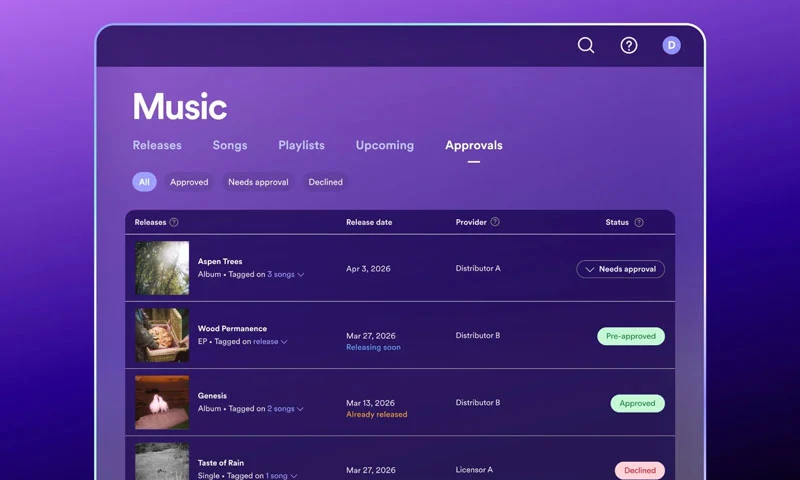
Spotify has introduced a groundbreaking new feature called Artist Profile Protection, giving musicians unprecedented control over what music appears under their name. Now in limited beta, the feature allows artists to review and approve releases before they go live on their profile, addressing a long-standing issue in the streaming industry. For the first time on any major music platform, artists can actively decide which songs are officially associated with them. This move comes as the rise of AI-generated music, metadata errors, and duplicate artist names has led to increasing cases of misattributed tracks appearing on artist profiles. A Growing Problem in the Streaming Era In recent years, artists have faced challenges where music they did not create or approve appeared under their name. This can happen due to incorrect metadata, similar artist names, or even deliberate misuse of identities. Such errors can negatively impact an artist’s catalog, distort streaming statistics, and confuse listeners. In some cases, it may even affect an artist’s credibility and earnings. Recognizing this issue, Spotify has made protecting artist identity a key priority. The new feature introduces a verification step before any release is published under an artist’s profile. How Artist Profile Protection Works The feature is available within Spotify for Artists on both desktop and mobile web platforms. Once enabled, artists receive email notifications whenever a release is submitted using their name. They can then review eligible releases and choose whether to approve or decline them. If approved, the release appears on the artist’s profile at launch and contributes to their stats and recommendations If declined or ignored, the release does not appear on the artist’s page To further streamline the process, Spotify has introduced an artist key, a unique identifier that artists can share with trusted distributors or labels. Releases submitted with this key are automatically approved and published without manual review. A Major Step Toward Artist Control The feature is particularly valuable for artists with common names, those frequently targeted by misattributions, or those seeking tighter control over their digital presence. It ensures that only verified content contributes to an artist’s streaming data and fan engagement, helping maintain accuracy across the platform. Artist Profile Protection is currently in early beta, with Spotify gathering feedback from participating artists. The company plans to refine the feature before rolling it out more widely. Artists who are not part of the beta or choose not to opt in will continue using the platform as usual. However, Spotify has confirmed that existing reporting tools will remain available for correcting misattributed releases. As the music industry continues to evolve with AI and digital distribution, this feature marks a significant step toward giving artists greater ownership and protection over their identity in the streaming ecosystem.

Google’s Future Lies in AI Agents, Says Co-Founder Sergey Brin
Google co-founder Sergey Brin has told employees that artificial intelligence agents will play a defining role in the company’s future, marking a significant shift in how work is carried out inside one of the world’s largest technology firms. Speaking at a recent internal town hall, Brin emphasized that 2026 will be a pivotal year for AI-driven transformation at Google, with advanced “agentic” systems expected to reshape workflows, coding, and productivity across teams. AI Agents Take Center Stage Brin highlighted that AI agents, which can operate autonomously and execute tasks with minimal human input, will be central to Google’s strategy this year. These systems go beyond traditional AI tools by planning, managing, and completing complex workflows independently. At the heart of this transformation is an internal tool called “Agent Smith,” which has quickly gained popularity among employees. The system is designed to automate tasks such as coding, retrieve documents, and manage workflows across multiple platforms. Built on Google’s internal coding platform known as Antigravity, the tool operates asynchronously, meaning it can continue working even when users are offline or away from their devices. Tool So Popular Access Had to Be Limited The rapid adoption of Agent Smith has created such high demand that Google was forced to restrict access to manage usage levels. Unlike earlier AI assistants, the system can interact with internal tools, access employee-linked data, and execute multi-step tasks autonomously. Employees can even control it via mobile devices, reflecting a shift toward more flexible and integrated work environments. Brin’s remarks suggest that such tools are no longer experimental but are becoming essential components of daily operations within the company. AI Adoption Becoming Essential The message from Google leadership is clear: AI adoption is no longer optional. Employees are increasingly expected to integrate AI tools into their workflows to improve efficiency and productivity. This push reflects broader trends across the tech industry, where companies are racing to develop and deploy advanced AI systems following the rapid rise of generative AI technologies. Brin, who stepped back from day-to-day operations in 2019 but returned to focus on AI development, has been closely involved in shaping Google’s response to intensifying competition in the AI space. Competition Driving Urgency The urgency behind Google’s AI push can be traced back to the surge in popularity of tools like ChatGPT, which triggered a major shift in priorities within the company. Since then, Google has accelerated its AI initiatives, including the development of its Gemini models and internal tools designed to enhance productivity and innovation. Industry analysts say the rise of AI agents represents the next phase of this evolution, moving from simple assistants to systems capable of independent decision-making and execution. A Defining Year Ahead Brin’s comments underscore that 2026 could be a turning point not only for Google but for the broader technology sector. As AI agents become more sophisticated, they are expected to transform how companies operate, reducing manual workloads and enabling faster innovation. For Google, the challenge will be to maintain its leadership in an increasingly competitive AI landscape, where speed, efficiency, and adaptability are becoming critical. The growing role of tools like Agent Smith suggests that the future workplace may rely heavily on collaboration between humans and autonomous AI systems, redefining productivity in the years ahead.

Honda Announces Bold $20M Investment in Pakistan’s Bike Market
Atlas Honda Limited has announced a major expansion plan, approving a capital investment of approximately $20 million to increase its motorcycle production capacity and improve operational efficiency in Pakistan. The decision was disclosed in a notice submitted to the Pakistan Stock Exchange, where the company confirmed that its board had approved a capital expenditure of Rs5.3 billion for the upcoming financial year. Expansion to Boost Production Capacity According to the company, the investment will focus on enhancing manufacturing capacity, automation, and overall productivity. The expansion is expected to significantly increase Atlas Honda’s annual production capacity to two million units. “This investment will be made to enhance capacity, automation and productivity,” the company stated in its official communication. Industry analysts say this marks a major expansion of roughly 39 percent, which is likely to support future earnings growth and strengthen the company’s market position. Strengthening Market Leadership Atlas Honda is one of Pakistan’s leading motorcycle manufacturers and a joint venture between the Atlas Group and Honda Motor Company of Japan. Established in 1962, the company has maintained a dominant share in the local two-wheeler market for decades. The company primarily manufactures and markets motorcycles and spare parts, catering to a wide customer base across Pakistan. Its strong distribution network and brand reputation have helped it remain resilient even during periods of economic slowdown. Experts believe the expansion comes at a time when demand for motorcycles is gradually recovering after a slowdown caused by inflation, rising interest rates, and declining consumer purchasing power. Responding to Growing Demand Pakistan’s motorcycle market remains one of the largest in the region, driven by the need for affordable transportation solutions. With rising fuel prices and increasing urban congestion, two-wheelers are becoming an increasingly popular option for daily commuters. The expansion is expected to help Atlas Honda meet growing demand while improving production efficiency and reducing operational costs. Industry observers note that automation upgrades could also improve product quality and reduce dependency on manual processes, aligning the company with global manufacturing standards. Industry Outlook and Challenges Despite the positive outlook, the motorcycle industry in Pakistan continues to face several challenges, including high production costs, currency fluctuations, and import restrictions on raw materials. At the same time, the sector is undergoing gradual transformation, with discussions around electric bikes and fuel-efficient alternatives gaining momentum. While Atlas Honda has yet to make a major move into electric mobility, analysts believe such investments could position the company to adapt to future market shifts. Economic Impact The investment is expected to have a broader economic impact by supporting industrial growth, creating employment opportunities, and strengthening the local manufacturing sector. It also reflects renewed business confidence in Pakistan’s industrial landscape, even as the economy navigates external pressures and global uncertainties. As Atlas Honda moves forward with its expansion plans, the company aims to consolidate its leadership in the motorcycle market while preparing for evolving consumer demands and technological advancements.

UK Court Hears Shocking Case of Toddler Starved to Death
A couple has appeared before a London court charged with the murder of their three-year-old daughter, in a case that has shocked the United Kingdom and raised serious concerns about child welfare and neglect. The defendants, Manpreet Jatana, 34, and Jaskirat Singh Opal, 36, appeared at the Old Bailey facing multiple charges, including murder, manslaughter by gross negligence, causing the death of a child, and child cruelty. Allegations of Severe Neglect Prosecutors told the court that the child, Penelope Chandley, died from severe malnutrition after allegedly being subjected to prolonged neglect at the family’s home in Hayes, west London. According to prosecutor Philip McGhee, the case involves “extreme neglect” linked to the parents’ dietary practices, which investigators say were highly restrictive. The court heard that the family’s diet was largely limited to butter, lentils and yoghurt, raising questions about whether the child received adequate nutrition. The girl’s body was discovered at the family home after her mother contacted authorities to report her death. Parents Deny Charges Both defendants, who are of Indian origin, have denied all charges brought against them. In addition to murder, they are also contesting allegations of child cruelty and negligence, with their legal defence expected to challenge the prosecution’s claims about neglect and responsibility. Judge Mark Lucraft ordered that both parents remain in custody ahead of a full trial before a High Court judge. Isolation and Living Conditions Prosecutors also highlighted the family’s circumstances, noting that neither parent was employed at the time of the child’s death. The court was told that the family lived in relative isolation from both relatives and the wider community, a factor investigators believe may have contributed to the child’s condition and the lack of external intervention. Authorities are examining whether warning signs were missed and whether earlier intervention could have prevented the tragedy. Wider Concerns Over Child Protection The case has once again drawn attention to issues surrounding child neglect and safeguarding in the UK. Experts say severe malnutrition cases are rare but often linked to prolonged neglect, isolation, or failure of oversight systems. Child protection agencies across the UK are mandated to intervene in cases where children are at risk, but such tragedies continue to raise questions about detection and response mechanisms. Legal analysts note that convictions in such cases depend heavily on proving intent or gross negligence, making the upcoming trial a critical stage in determining accountability. Trial to Continue The case is expected to proceed in the coming weeks, with further evidence and witness testimony likely to shed more light on the circumstances surrounding the child’s death. As the legal process unfolds, the case has sparked widespread concern and debate about parental responsibility, societal oversight, and the protection of vulnerable children.
