

Ramadan transforms Karachi’s food scene into a lively feast. Restaurants and hotels roll out special iftar buffets with vast spreads, drinks, desserts and traditional favorites. These buffets let families and friends break their fast together in festive, welcoming settings across the city. Buffet prices vary widely by venue and menu style. Some focus on desi BBQ and traditional dishes, while others offer multi-cuisine international spreads. Most buffets include dates, juice/rooh afza, chaat, main courses, desserts and hot drinks prepared for iftar. Ask about tax and reservation requirements before booking. 1. Lal Qila – PKR 2,690+ tax Lal Qila is one of Karachi’s most iconic buffets, known for its authentic Mughlai, barbecue and traditional Pakistani cuisine. Expect plenty of grilled meats, biryanis and desserts in a rich, heritage-style setting. 2. Kolachi (Do Darya) – PKR 2,500–3,000 approx Kolachi’s open-air waterfront location at Do Darya makes it a popular ramadan choice. Its iftar buffet blends Pakistani classics with BBQ and live counters in a scenic sea view setting. 3. Nadia Cafe – PKR 3,500+ tax Nadia Cafe’s buffet offers over 40 curated iftar and dinner items, combining traditional favorites with contemporary dishes for a well-rounded Ramadan feast. 4. Saltanat Restaurant – PKR 2,903 card / 3,134 cash Saltanat’s lavish iftar spread includes 70+ dishes with BBQ specialties, Pakistani mains, desserts, salads and drinks. Children under four eat free, making it family-friendly. 5. Bar B.Q Tonight – PKR 1,800–2,400 This classic Karachi chain offers a hearty Pakistani iftar buffet with pakoras, samosas, BBQ, curries and sweets. Prices vary by branch. 6. La Chine – ~PKR 3,500+ La Chine’s Ramadan buffet features 55+ items spanning Chinese and fusion dishes with Iftar classics like samosas and desserts included in the set. Special reservation discounts are often available. 7. Mizaaj Restaurant – PKR 2,950+ tax Mizaaj serves a blend of 40+ Pakistani and international dishes, featuring biryani, chicken handis, flavored starters and desserts, making it a well-liked Ramadan buffet option. 8. Cocochan – PKR 2,990+ tax Cocochan’s Asian-leaning iftar offers Chinese, Thai and Japanese variety along with classic Iftar items. Kids’ prices are often lower. 9. Clock Tower Restaurant – PKR 2,980+ tax This restaurant hosts a diverse buffet featuring samosas, kebabs, BBQ fish, soups, and desserts. Its views and ambiance make it a favorite for Ramadan gatherings. 10. Zameer Ansari – PKR 1,499+ tax A budget-friendly option with over 80 items, focusing on BBQ, desi mains, refreshing drinks and desserts in a lively setting. 11. Mailma Restaurant – PKR 2,999+ tax Mailma offers a diverse international and Pakistani buffet with curries, grilled items and desserts in a cozy setting ideal for family iftars. 12. Studio 7Teas – PKR 1,199 Studio 7Teas presents a casual buffet with wraps, sliders, mini pizzas, soups, traditional snacks and refreshing drinks at a very affordable price. 13. Coconut Grove – ~PKR 2,799+ tax Known for its chaat station and dessert bar, Coconut Grove mixes live BBQ, starters and main courses in an open-air setting. 14. Rajdhani Delights – PKR 2,500–3,000 approx Rajdhani’s themed buffet brings Rajasthani and Gujarati flavors along with traditional Iftar items for a unique spread. 15. Ramada Plaza (La Terrasse & Pool BBQ) – ~PKR 4,950+ Ramada’s multi-cuisine buffet and poolside BBQ offer a premium experience, with a broad mix of Pakistani, Chinese, continental and grilled dishes.
PTCL Flash Fiber Wins Top Ookla Awards for Best Network in Pakistan
Pakistan Telecommunication Company Limited’s flagship broadband service, PTCL Flash Fiber, has earned two major honors from Ookla, the global leader in internet testing and performance analytics. The service has been named Best Fixed Network in Pakistan for the full year 2025 and Best ISP Gaming Experience for H2 2025. The awards are based on data from the Speedtest Connectivity Report for Pakistan covering both H1 and H2 2025. They reflect PTCL Flash Fiber’s consistent performance in speed, latency, and overall user experience across the country. Recognition Based on Comprehensive Performance Metrics The Best Fixed Network award is one of Ookla’s highest recognitions in fixed broadband performance. It is determined through a detailed KPI evaluation model that measures download and upload speeds, latency, video streaming quality, and web browsing experience. According to Ookla’s published data, PTCL Flash Fiber demonstrated strong and stable performance throughout 2025. During H1 2025, the service was recognized as the Fastest Provider in four regions of Pakistan. In H2 2025, it further strengthened its position and emerged as the Fastest Provider across the majority of regions. Ookla’s Speedtest Intelligence platform collects billions of real world consumer initiated tests globally. These awards are based on verified user data rather than internal operator reports, which makes the recognition highly credible within the telecom industry. Read More: PTCL Beats Competition to Lead Broadband Rankings Best ISP Gaming Experience in H2 2025 PTCL Flash Fiber also secured the Best ISP Gaming Experience Award for H2 2025. This award highlights network performance for online gaming, including low latency, jitter control, and connection stability. Online gaming requires minimal delay and uninterrupted connectivity. PTCL’s optimized fiber network architecture has focused on reducing latency and improving packet delivery performance. This has helped provide smoother gameplay for competitive and casual gamers across Pakistan. The gaming award reflects PTCL’s investment in fiber infrastructure and network optimization. With the rise of esports and cloud gaming, stable high speed broadband has become essential for households and professional players alike. Read More: Zong vs Ufone vs Jazz: The Ramadan Bundles Everyone Talks About Expanding Fiber Footprint Nationwide PTCL has continued to expand its fiber footprint across major cities and secondary urban centers. The company has invested in next generation fiber to the home infrastructure to meet growing digital demand. Pakistan’s broadband penetration has steadily improved over the past decade, with fiber connections playing a key role in delivering higher speeds compared to legacy copper networks. Industry analysts note that fiber broadband enables faster downloads, better video streaming, and improved remote work capabilities. PTCL’s recognition by Ookla positions it strongly in Pakistan’s competitive fixed broadband market. The company reaffirmed its commitment to delivering world class digital experiences aligned with Pakistan’s growing connectivity needs. As data consumption increases due to streaming, online education, remote work, and gaming, high capacity fiber networks are expected to play an even greater role. With two prestigious Ookla awards in 2025, PTCL Flash Fiber has reinforced its position as a leading broadband provider in Pakistan.

Inclusive Mobility: NOWPDP and Yango Create Livelihood Paths for Disabled Drivers
In a pioneering move to promote inclusion and equal opportunity, Yango Pakistan has entered a strategic partnership with the Network of Organizations Working for People With Disabilities (NOWPDP) to support and empower drivers with disabilities. The collaboration aims to improve accessibility and create livelihood opportunities for people with disabilities who want to work as ride-hailing drivers. Under this initiative, NOWPDP will help identify and train interested candidates while Yango Pakistan provides practical support, platform access, and resources to integrate drivers with disabilities into its ride-hailing ecosystem. The partnership represents a significant step toward inclusive employment in Pakistan’s rapidly growing digital economy. Read More: PSO Launches Nationwide Ramadan Donation Drive at Fuel Stations Breaking Barriers in Ride-Hailing Mobility services around the world have increasingly focused on accessibility for both passengers and drivers. According to the World Health Organization, over one billion people globally experience some form of disability, which affects their access to employment and economic participation. In Pakistan, similar disparities exist, with people with disabilities often facing social, economic, and structural barriers that limit job opportunities and financial independence. Yango Pakistan’s initiative recognizes these challenges. The company’s Country Manager, Andrea Mazza, said the partnership with NOWPDP underscores Yango’s commitment to social inclusion and equal opportunity. Mazza stated, “We believe in creating opportunities that empower individuals, regardless of physical challenges. Together with NOWPDP, we aim to ensure a supportive environment for drivers with disabilities on our platform.” Read More: Tapmad Launches Pakistan’s First-Ever Vertical Viewing Sports Streaming Experience NOWPDP, one of Pakistan’s foremost disability rights organizations, brings decades of experience advocating for accessibility, inclusive education, and equitable employment. The group will guide candidate training, assist with necessary accessibility tools, and help shape Yango’s driver support framework to meet the specific needs of people with disabilities. Training, Support and Platform Integration Through this partnership, drivers with disabilities will receive tailored training that covers ride-hailing operations, app usage, customer service skills, and safe mobility protocols. Yango Pakistan will also offer technical support, assistive technology resources, and mentorship to enable drivers to navigate their roles confidently. Candidates may receive assistance with vehicle modifications as needed, helping them operate effectively and safely. Advocates stress that such inclusive employment initiatives benefit not only individuals but also communities. By supporting drivers with disabilities, Yango Pakistan is fostering a more diverse workforce and setting a benchmark for corporate responsibility in Pakistan’s tech and transportation sectors. Read More: TCS and Nippon Express Partnership: A Game-Changer for Pakistan’s Logistics Sector Yango Pakistan and NOWPDP have said they plan to expand the initiative over time by involving more stakeholders, including organizations that support persons with disabilities and government bodies that promote inclusive economic policies. The partnership signals hope for greater inclusion and economic opportunity for people with disabilities in Pakistan, particularly in the growing ride-hailing and gig economy.
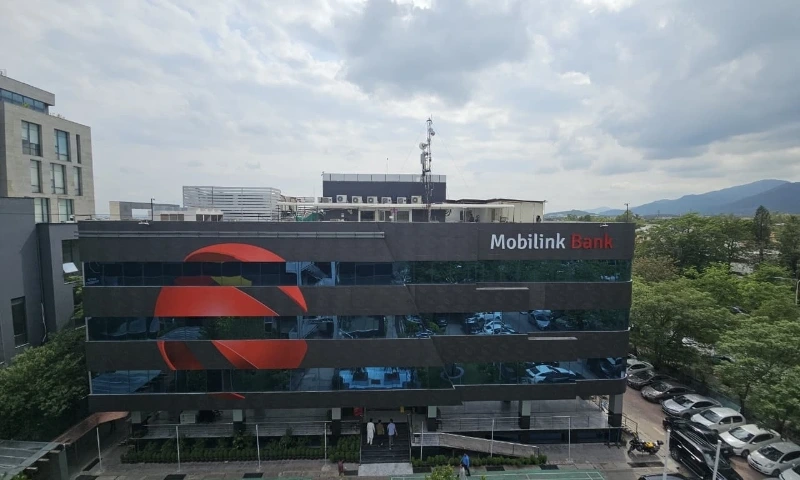
Mobilink Bank Becomes Microfinance Leader with Historic PKR 3.62B Profit
Pakistan’s leading digital microfinance bank, Mobilink Bank has announced its financial results for the year ended December 31, 2025. The bank delivered strong growth across key financial and operational indicators while reinforcing its leadership position in Pakistan’s microfinance banking sector. Mobilink Bank delivered a strong financial turnaround in 2025, with *Profit Before Tax reaching PKR 3.62 billion, reflecting a 217% YoY growth,* while total revenue rose 33% to PKR 89.5 billion. Deposits grew 38% to PKR 214 billion, the highest in the microfinance industry, highlighting strong customer confidence. The Gross Loan Portfolio expanded to PKR 103 billion, up 38%. The Bank also maintained a healthy Capital Adequacy Ratio (CAR) of 19.53% at the year end, underscoring its solid capital position and prudent risk management. In line with its sustainability priorities, the Bank recorded a 55.5% YoY incremental increase in green financing, supporting individuals, households and small businesses in adopting sustainable products/resources. It also continued to advance financial inclusion, with women representing 24.6% of the loan portfolio base, supported through targeted loan offerings and greater digital access. A major highlight of 2025 was the launch of Islamic Banking, which marked a strategic milestone in the Bank’s evolution to be able to cater to diverse social segments. By introducing Shariah-compliant financial solutions, Mobilink Bank broadened access to faith-aligned banking products while reinforcing its position as a responsible and forward-looking microfinance institution. The Bank’s performance reflects its firm commitment to responsible lending, ensuring that all credit decisions are grounded in prudent affordability assessments, transparent pricing, fair collection practices, and full compliance with applicable SBP regulations. It continues to strengthen internal controls to prevent customer over-indebtedness and support sustainable financial inclusion. The Bank’s growth trajectory has been further strengthened by continued shareholder confidence, reinforcing its capital position and supporting its long-term expansion and digital transformation strategy. Commenting on the financials, Haaris Mahmood Chaudhary, President & CEO Mobilink Bank said, “Behind these numbers is a deeper purpose of expanding access to finance for the underserved. As the country’s largest microfinance bank, we are grateful to our customers, regulators, shareholders, and teams whose trust and dedication continue to drive our progress. Our growth reflects the confidence of millions who rely on us to support their livelihoods. We remain focused on empowering small businesses and entrepreneurs through responsible, faith-aligned digital banking that creates lasting opportunity and inclusion across Pakistan.” Commenting on the financials, Adil Ali Abbasi, Chief Financial Officer Mobilink Bank said, “Our 2025 performance reflects a strong focus on financial discipline, improved asset quality, and efficient balance sheet management. The growth in profitability, deposits, and portfolio scale highlights the strength of our core business and our ability to build momentum while maintaining prudent risk and capital positions. As we move forward, we will continue to strengthen our financial foundations, drive operational efficiency, and support the Bank’s long-term growth through sustained investment in digital transformation and innovation.” Moving into 2026, Mobilink Bank remains committed to becoming the number one bank for small businesses powered by digital Islamic Banking solutions.

OGDC Signs Landmark Water Injection Deal with SNF to Boost Output at Kunnar and Pasakhi
Oil and Gas Development Company Limited (OGDC), Pakistan’s leading exploration and production company, on Tuesday signed a landmark contract with SNF S.A., a French specialty chemical company and world leader in polyacrylamide production, for the installation and operation of advanced Water Injection Systems (WIS) at its Kunnar and Pasakhi oil fields located in Hyderabad district, Sindh. The signing ceremony was held at the OGDC Headquarters in Islamabad, marking a significant milestone in the company’s efforts to enhance production performance and promote sustainable energy development. The signing ceremony was attended by Federal Minister for Energy (Petroleum Division) Ali Pervaiz Malik, MD/CEO OGDC Ahmed Hayat Lak, French Ambassador to Pakistan Nicolas Galey, along with senior officials from OGDC and SNF. The project aims to enhance reservoir pressure, optimise oil recovery, and ensure sustainable production performance through the world’s latest water injection technology and global expertise from SNF. The project will be completed in three phases. The first phase will cover installation and commissioning over a period of nine months, including mobilisation, installation, commissioning and testing of the facilities. This will be followed by a two-year operations and maintenance phase, during which O&M services will be provided along with structured training for OGDC professionals. After the completion of the O&M period, the technology and operational control will be transferred to OGDC, allowing the company to independently operate the facilities using the expertise developed during the collaboration. The designed operational life of the installed facilities is approximately 20 years. The project is projected to enhance oil production by approximately 9 million barrels and increase gas production by 3 billion cubic feet. It is also projected to improve the recovery factor of the fields by 8 to 10 percent. The recovery factor refers to the percentage of oil that can be extracted from a reservoir compared to the total volume originally present. With an estimated additional revenue generation of USD 460 million over the life of the fields, the project offers strong economic returns. The initiative also carries significant environmental benefits. By reinjecting treated produced water into reservoir zones, the project ensures safe disposal and reduces environmental risks. It also aligns with sustainable operating practices and international environmental standards. The collaboration underscores OGDC’s commitment to operational excellence, technological advancement, and long-term value creation in Pakistan’s energy sector through partnerships with world-leading service providers.
PSO Reports Resilient Financial Performance Amid Challenge
Pakistan State Oil (PSO), the nation’s energy flagship, announced its financial results for the first half of fiscal year (1HFY26) ended December 31, 2025, demonstrating strong resilience and a continued growth trajectory. The Board of Management reviewed the group’s performance for the period at its meeting held on February 17, 2026. During the period under review, PSO recorded a profit after tax of PKR 12.1 billion for 1HFY26, (PKR 11.2 billion 1HFY25). This translates into earnings per share of PKR 25.82, with gross sales reaching PKR 1.6 trillion. On a consolidated basis, the group posted a profit after tax of PKR 14.7 billion with earnings per share of PKR 31.34. PSO, maintaining its leadership in the white oil segment with a 42.2% market share and total sales of 3,418 KMT while black oil sales declined due to reduced power sector offtake. Notably, the company reinforced its near-total dominance in the aviation sector, maintaining a 99% market share in the jet fuel segment. Also, delivered its highest-ever LPG performance, with record sales of 28.5 KMT, representing a 3.6% increase over the same period last year. Significant progress was made in strengthening the nation’s energy infrastructure. The company successfully rehabilitated 39 KMT of storage capacity across key locations including Mehmoodkot, Keamari, Zulfiqarabad, and Habibabad. Furthermore, the White Oil Pipeline Project reached a major milestone with the federal cabinet’s ratification of the project summary and provisional tariff, moving it toward full implementation. PSO also expanded its physical footprint to 3,638 retail outlets and enhanced its convenience ecosystem through the growth of VIBE stores and the launch of the in-house VIBE Café. Embracing the future of energy, PSO is leading the way in sustainability through PSO Renewable Energy (PSORE). The company has solarized several operational terminals and is on track to add an additional 2.2 MWp of solar capacity by mid-2026. Simultaneously, PSO has established Pakistan’s largest electric vehicle (EV) infrastructure with nine charging stations across major highways and cities. Digital innovation remained a priority, highlighted by the successful launch of the Payvay mobile application and the integration of Raast digital payments through its fintech subsidiary, Cerisma (Pvt.) Limited. Beyond operations, PSO remains committed to social impact, investing PKR 196 million in healthcare, education, and community development, including the PSO Model Village for flood-affected families. While circular debt remains a persistent challenge with receivables at PKR 412 billion, the company continues to engage proactively with the Government for a sustainable solution. PSO remains committed to driving Pakistan’s energy future through innovation and sustainable growth, ensuring long-term value for both shareholders and the nation.
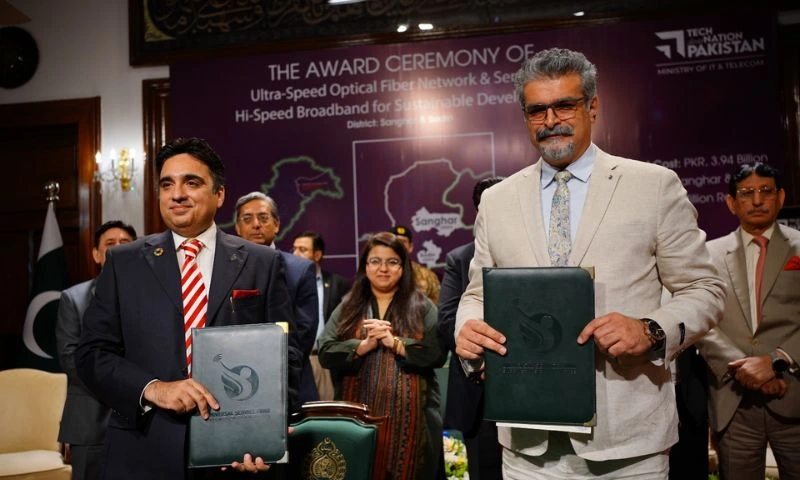
Jazz and Universal Service Fund Sign Badin Project to Expand Digital Connectivity
Jazz and the Universal Service Fund (USF) have taken another step to expand digital connectivity in Sindh with the signing of the Badin Project, aimed at bringing reliable mobile voice and broadband services to underserved communities in District Badin. The agreement, formalized at a ceremony in Karachi, reflects a shared effort to extend meaningful digital access to areas where connectivity has remained limited. The ceremony was attended by the Honorable Governor of Sindh, Mr. Kamran Tessori, and the Federal Minister for IT & Telecom, Ms. Shaza Fatima, as Chief Guests. The project marks continued progress in strengthening telecom infrastructure to support inclusive digital access across the province. The PKR 668 million Badin Project will strengthen telecom access in the district by deploying 45 new telecom sites and upgrading four existing ones, extending reliable voice and high-speed mobile broadband services to 144 unserved and underserved mauzas and reaching an estimated 0.43 million people. The expanded network will support access to digital financial services, online learning, telehealth, and government e-services, while enabling small businesses and farmers with improved digital tools and generating direct and indirect employment during deployment and operations. Commenting on the development, Aamir Ibrahim, CEO JazzWorld, said, “Connectivity is the foundation of inclusive growth. We appreciate the continued support of the Universal Service Fund and the Ministry of IT & Telecom in enabling partnerships that bring high-quality digital services to communities that have long remained on the margins of the digital economy. The Badin Project reflects our shared commitment to ensuring every Pakistani, regardless of geography, can participate in and benefit from the country’s digital future.” Chaudhry Mudassar Naveed, CEO USF, added, “The USF Badin Project reflects our continued partnership with Jazz to bridge the digital divide by delivering reliable connectivity to underserved communities. By expanding broadband access in District Badin, we are enabling socio-economic development, improving access to essential services, and creating new opportunities at the grassroots level.”

How SLM Tyres’ $80 Million Plant Could Transform Pakistan’s Auto Industry
Pakistan’s automotive and manufacturing sectors are set for a major uplift after Service Long March Tyres Limited (SLM) approved a $80 million investment to build a new passenger car radial (PCR) tyre manufacturing facility in Nooriabad, Sindh. The announcement came in a notice to the Pakistan Stock Exchange, marking one of the most significant industrial moves in the country this year. SLM is a Chinese-Pakistani joint venture formed by Service Industries Limited and China’s Chaoyang Long March Tyre Company Ltd. The joint venture has already been producing all-steel radial truck and bus tyres at its Nooriabad plant, and now plans to expand into passenger car tyre production. Service Industries Limited and its subsidiary, Service Global Footwear Limited, hold key equity stakes in SLM, giving Pakistan an important role in driving tyre manufacturing growth. The new PCR facility is expected to serve both domestic and export markets, allowing Pakistan to reduce dependence on imported tyres and generate foreign exchange through exports. This move aligns with broader economic goals to strengthen industrial output and encourage import substitution in critical manufacturing segments. Analysts say that producing tyres locally can also help stabilize prices in the automotive sector, benefiting both consumers and vehicle manufacturers. The investment decision follows earlier expansion plans announced by SLM Tyres. In 2024, the company revealed plans to invest approximately Rs30 billion (around USD108 million) to double production capacity and boost exports to global markets such as the United States and European Union. The new PCR plant adds another layer to this long-term strategy, positioning Pakistan as a regional tyre production hub. Manufacturers say the move could create significant job opportunities in Sindh and across the supply chain. Skills development and new employment in tyre engineering, logistics, and quality testing are among the expected benefits. Experts point out that modern tyre manufacturing requires advanced machine systems and precision engineering, which can create high-value roles and strengthen industrial expertise locally. Pakistan’s tyre industry has historically included companies like Ghandhara Tyre & Rubber Company, which produces millions of tyres annually and holds an established presence in the market. The new facility by SLM Tyres adds competition and capacity, especially in the passenger car segment that has seen growing demand as vehicle sales rise in the domestic market. Service Industries Limited itself has a long history in manufacturing, starting in shoes and expanding into tyres over decades. Its presence in both consumer and industrial goods sectors gives the joint venture strength and access to distribution networks nationwide. The new investment also fits into broader Pakistan-China economic cooperation under frameworks that support industrial collaboration and technology transfer. Officials from both sides welcomed the project, noting its potential to deepen economic ties and support Pakistan’s industrialisation goals. As construction begins in Sindh, industry watchers will be watching closely to see how quickly the plant can come online and begin contributing to production, exports and job creation.
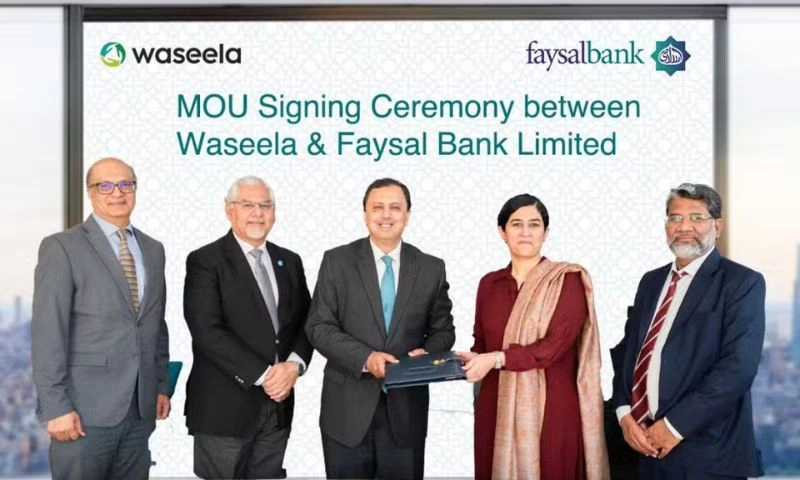
Faysal Bank and Waseela Pakistan Launch Major Islamic Finance Drive for Farmers
In a major move to support Pakistan’s agricultural sector, Faysal Bank Limited has partnered with Waseela Pakistan to provide faster and more accessible Shariah-compliant financing for farmers. The collaboration intends to help small and medium-scale farmers access Islamic financing products to grow their crops, invest in equipment and improve livelihoods. This comes at a time when agricultural financing plays a key role in stabilising rural economies and enhancing productivity. Under the new agreement, Faysal Bank will leverage Waseela Pakistan’s extensive outreach network to reach farmers across the country. Waseela Pakistan, known for its rural connectivity and grassroots initiatives, will help identify potential beneficiaries and ensure that farming communities understand Islamic financing solutions. These solutions are tailored to meet the unique needs of agricultural producers by offering profit-and-loss sharing models, leasing arrangements and working capital support without interest charges. During the signing ceremony, Faysal Bank’s Group Head of Retail and Digital Banking emphasised the importance of financial inclusion for rural populations. He explained that “Shariah-compliant financing should not be limited to urban customers. Our collaboration with Waseela Pakistan will empower farmers to access funds without worrying about interest, helping them invest in seeds, fertilisers and machinery.” This statement reflects a broader trend among Islamic banks to enhance rural access and to support economic growth across all sectors. Agriculture remains a vital part of Pakistan’s economy, contributing around 20 percent of GDP and employing nearly half of the workforce. Many farmers, however, struggle to secure affordable financing due to strict collateral requirements or high interest rates. Islamic banking products offer an alternative by complying with Shariah principles that prohibit interest, instead using profit-sharing and lease-based models that align with the ethical values of many rural communities. Industry experts welcomed the partnership, stating that access to flexible Shariah-compliant financing can boost agricultural productivity and reduce rural poverty. A senior economist specialising in agricultural finance noted that if farmers can secure funds to purchase high-quality seeds and modern equipment, yields can increase significantly, translating into higher income and better food security for the country. The collaboration also aligns with Pakistan’s goal to expand Islamic banking assets, which according to the State Bank of Pakistan, have grown at a steady rate in recent years. This trend shows increasing trust from customers seeking ethical and interest-free financial solutions. As banks introduce more tailored products for underserved sectors like agriculture, rural economies are likely to benefit through greater investment, job creation and enhanced financial resilience. In the months ahead, Faysal Bank and Waseela Pakistan plan to roll out awareness campaigns and training workshops to educate farmers about available products and how to apply for financing. This practical support aims to close gaps in financial knowledge and ensure that farmers are ready to leverage new opportunities.
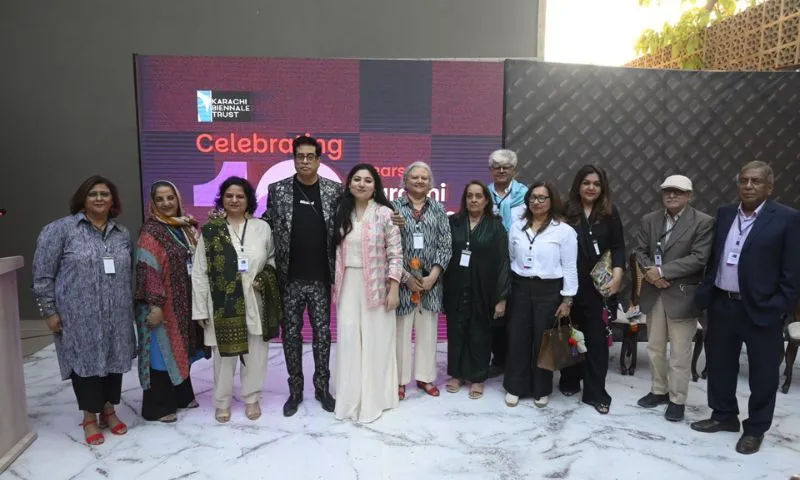
Karachi Biennale Trust Celebrates 10 Years, Announces KB27
The Karachi Biennale Trust celebrated its tenth anniversary today with a major announcement at the Gulgee Museum, unveiling the fifth edition of the Karachi Biennale, scheduled from January 16 to January 31, 2027. The upcoming edition, titled “Kal — Yesterday Tomorrow,” will be curated by Noor Ahmed. The press conference drew leading figures from Karachi’s corporate and art communities along with prominent media representatives. The event highlighted the journey of the Karachi Biennale Trust, founded in 2016 as a non profit platform promoting creativity, innovation and critical discourse in contemporary visual arts. Chairperson Atteqa Malik opened the ceremony, followed by a visual presentation revisiting past biennales. The event also formally introduced the new Managing Trustee Shanaz Ramzi and curator Noor Ahmed. Speaking at the conference, Ramzi said, “At ten years, the Karachi Biennale Trust stands as a testament to what sustained cultural collaboration can build for a city. As we look toward KB27, we reaffirm our commitment to making art publicly accessible while creating global conversations rooted in Karachi’s realities.” Bushra Hussain, Artistic Director of KB27, reflected on previous editions and their impact. Noor Ahmed shared her curatorial vision, expressing her intention to expand the Biennale’s reach while remaining grounded in local narratives. Ahmed is known internationally for her work on transdisciplinary art projects. She co curated River Landscapes between South Asia and Europe and was part of the curatorial team of the Pakistan Pavilion at Dubai Expo 2020, which won a silver award among 192 participating countries. She also led the Digital Curation of Lahore and Taxila Museums, Pakistan’s largest museum digitization initiative supported by the World Bank. Following the press conference, guests attended the exclusive preview of “Aaj Aur Kal,” a one day exhibition curated by Amin Gulgee and Noor Ahmed. The exhibition featured performance, new media and installation works by 72 artists from 18 countries, including Salima Hashmi, RM Naeem, Raqs Media Collective, Meher Afroz, Heide Hatry, Natthaphon Chaiworawat, Richard Humann, Sohail Zuberi and Risham Syed. The exhibition’s title reflects the elasticity of time in South Asian thought, where the word “Kal” signifies both yesterday and tomorrow. The special performance marked the official countdown to KB27. Founded by art professionals and educators, the Karachi Biennale functions as a city wide temporary museum. It presents exhibitions, talks, seminars and public programs across heritage sites and public spaces, all free and open to the public. With strong institutional backing from partners including Vertika Limited, Rafique and Naila Bhimjee, IVS School of Art and Architecture, Starlinks PR and the Gulgee Museum, the Karachi Biennale continues to position Karachi as a vital hub of contemporary art in South Asia.
