
Pakistan Telecommunication Company Limited (PTCL) has been recognised as home to the best fixed internet network in Pakistan, according to the Ookla® Speedtest Connectivity Report for the second half of 2025. This achievement highlights PTCL’s growing strength in broadband services and its continued efforts to improve connectivity across the country. The report shows that PTCL’s Flash Fiber recorded the highest overall Speedtest Connectivity Score among fixed internet service providers (ISPs) in the country, with a score of 61.73, making it the top-performing fixed network during the study period. Although another ISP, Transworld, led in pure speed performance with a median download speed of 34.86 Mbps and upload speed of 30.5 Mbps, PTCL’s balanced performance across key metrics earned it the highest overall rating for network quality and reliability. Ookla’s evaluation covers millions of real-world tests conducted by users across Pakistan. It measures not only raw download and upload speeds but also overall consistency, latency, and user experience. PTCL’s Flash Fiber stood out for delivering dependable internet performance for everyday activities such as video streaming, online work, gaming, and browsing. The report also highlights other achievements in Pakistan’s connectivity landscape. Zong led mobile networks for gaming performance, while cities like Islamabad recorded the fastest fixed median download speeds among urban centres nationwide. PTCL’s broadband portfolio includes a range of high-speed services with options such as GPON fiber optic connectivity, VDSL, and DSL connections that offer customers both high performance and flexibility. These services cater to households, businesses, and online gamers with packages supporting up to 100 Mbps speeds and unlimited data plans. This recognition from Ookla comes as PTCL continues to evolve as a key telecom player in Pakistan. Beyond fixed broadband, PTCL also manages a wide network of telecommunication services that include Smart TV, voice services, and enterprise digital solutions. The company has long played a central role in building connectivity infrastructure nationwide. Experts believe that this benchmark achievement can boost consumer confidence in fixed broadband and encourages further investment in fiber infrastructure across Pakistan. As internet usage grows for remote work, education, and business, networks such as PTCL Flash Fiber will remain crucial for the country’s digital development.

Moody’s Revises Pakistan’s Banking Outlook to Stable: What It Means for the Economy
Global credit rating agency Moody’s Investors Service has revised its outlook on Pakistan’s banking sector from positive to stable, highlighting the country’s gradually recovering economy and more balanced fiscal and external positions. The move comes amid broader improvements in economic indicators but also underscores ongoing challenges facing Pakistan’s financial system. In its February 2026 update, Moody’s said that the banking sector’s operating environment continues to recover, but the improvement is cautious and incremental rather than rapid. “We have changed our outlook on Pakistan’s banking system to stable from positive,” Moody’s said, signalling a less optimistic trajectory than before. Moody’s forecasted real GDP growth of about 3.5 percent in 2026, an improvement from 3.1 percent in 2025, supported by ongoing structural reforms and easing macroeconomic pressures. Despite this, the agency noted that financial performance will likely remain stable but not robust, as banks still face stress from asset quality issues and profitability constraints. Why the Change Matters The shift from positive to stable outlook does not indicate a downgrade in rating, but it means that Moody’s now perceives less acceleration in economic momentum and greater uncertainty about rapid improvement. A positive outlook suggests that future upgrades are more likely, while a stable outlook implies that the current assessment is expected to remain steady over the next one to two years. Moody’s highlighted the close link between banks and the government since Pakistani banks hold a large share of government securities, which are sensitive to the sovereign’s credit strength. Any stress in public finances could therefore directly affect the financial sector’s performance. Economic Context The revised outlook comes against a backdrop of gradual macroeconomic stabilization after years of crisis. Pakistan endured a severe economic downturn from 2021 to 2024, marked by high inflation, currency depreciation, and shrinking foreign exchange reserves. By mid-2025, inflation had slowed significantly from double-digit peaks, and GDP growth returned to positive territory thanks to a combination of monetary easing and structural reforms. Despite these gains, persistent fiscal vulnerabilities and external pressures have restrained more optimistic projections. According to data from the State Bank of Pakistan, the country continued to record a current account deficit in late 2025 and early 2026, and foreign direct investment remained subdued. What Experts Say Economists say Moody’s shift reflects a cautious but realistic assessment of Pakistan’s economic trajectory. Komal Kenneth Shakeel, an economist and Head of Partnerships at Ignite, described the move by Moody’s not as a downgrade cycle but as “a signal that volatility has eased without a strong growth push behind it.” That, she added, means the banking sector is expected to perform steadily but not expand rapidly unless structural reforms gain momentum. Financial analysts emphasise that a stable outlook still offers comfort compared with a negative outlook, which signals deterioration. Stable conditions can help maintain investor confidence, drawing some capital flows and encouraging banks to strengthen their balance sheets. Importance for Pakistan’s Economy Moody’s assessment is significant for Pakistan’s broader economy. The banking sector plays a central role in financing private investment, supporting business activity, and underpinning confidence in financial markets. A stable outlook may help contain borrowing costs and prevent sudden capital outflows, even if it does not immediately unlock cheaper credit or a surge in foreign investment. In a global context where emerging markets compete for investor attention, maintaining a stable rating outlook can reduce the risk of sudden market volatility. Economists say that continued compliance with international financial programmes, including the International Monetary Fund (IMF) Extended Fund Facility, will be essential to bolster sentiment and potentially move the outlook back to positive or higher in the future.

Copper’s Global Boom Is Here: Can Pakistan Turn Reko Diq Into a Billion Dollar Export Engine?
Global demand for copper is accelerating at an unprecedented pace, driven by the rapid expansion of electric vehicles, renewable energy infrastructure, power grids, and data centres supporting artificial intelligence. Industry analysts warn that without major new mining projects, the world could face a severe copper supply deficit within the next two decades — a development that has pushed long-term price forecasts sharply higher. According to S&P Global, global copper demand is expected to increase by nearly 50% by 2040, reaching more than 42 million tonnes annually. The consultancy has cautioned that supply growth is lagging behind demand, potentially creating a shortfall of over 10 million tonnes per year if new projects do not come online in time. This imbalance is already influencing prices, with Goldman Sachs projecting copper prices could rise to $15,000 per tonne by the mid-2030s, compared to current levels that hover around $9,000–$10,000 per tonne. Why Copper Demand Is Surging Copper’s importance lies in its unmatched conductivity and durability. Electric vehicles require up to four times more copper than conventional cars, while solar and wind power systems depend heavily on copper wiring. Power grid upgrades, particularly in Asia, are also copper-intensive. The Asia-Pacific region, led by China, is expected to account for nearly 60% of incremental copper demand growth through 2040. Pakistan’s Copper Potential Against this global backdrop, Pakistan finds itself in a potentially advantageous position. The country hosts one of the world’s largest undeveloped copper-gold deposits at Reko Diq, located in Balochistan’s Chagai district. According to feasibility data released by OGDCL, the project contains an estimated 13.1 million tonnes of copper and 17.9 million ounces of gold on a 100% basis. The project is being developed by Barrick Gold in partnership with the Government of Pakistan and the Government of Balochistan. Phase-1 production is targeted for 2028, with expected annual output of around 200,000 tonnes of copper, while Phase-2 could double that capacity. What Experts Say Pakistan’s Finance Minister Muhammad Aurangzeb has publicly underscored the strategic importance of copper for the country’s future. Speaking at a policy forum last year, he said: “Copper is going to play the most critical role in the global energy transition. Copper is to Pakistan what nickel has been to Indonesia.” Similarly, Mark Bristow, President and CEO of Barrick Gold, has repeatedly highlighted Reko Diq’s long-term value. In an official statement following the project’s feasibility update, Bristow said: “Reko Diq is a world-class copper-gold asset with the potential to generate significant economic benefits for Pakistan over many decades, provided it is developed responsibly and sustainably.” Pakistani economists argue that if managed well, copper exports could diversify Pakistan’s export base beyond textiles. Analysts have noted that mineral exports could help stabilise foreign exchange inflows and reduce balance-of-payments pressure over the long term. Can Copper Change Pakistan’s Economic Trajectory? Experts caution that mineral wealth alone is not enough. Security conditions, infrastructure development, transparent governance, and local value addition will determine how much Pakistan truly benefits. However, with global copper demand structurally rising and supply constrained, Pakistan’s timing could be favourable. If projects like Reko Diq progress as planned, Pakistan could emerge as a significant supplier in a market where copper is fast becoming one of the world’s most strategic metals — potentially reshaping the country’s export profile in the coming decades.

Gold Prices Crash in Pakistan: Tola Falls by Rs35,500 in a Day
Gold prices in Pakistan experienced a significant drop on Friday, with the local bullion market seeing values fall sharply from recent highs amid broader declines in international gold prices. The price of 24-karat gold per tola fell to Rs537,362 after a Rs35,500 decrease during the day, according to the All-Pakistan Gems and Jewellers Sarafa Association (APGJSA). Similarly, the 10-gram rate slipped to Rs460,701 following a Rs30,435 drop. The sharp decline followed a period of strong gains earlier in the week when gold prices had surged to record levels in Pakistan’s domestic market, breaking the Rs570,000 per tola barrier as bullion rallied. On Thursday, gold had reached around Rs572,862 per tola, but profit-taking and shifts in global market conditions triggered a swift reversal. Global Market Influences and Price Drivers Internationally, gold also faced downward pressure. The international rate of gold declined by $355 to about $5,150 per ounce, with spot prices losing nearly 4% as investors reacted to expectations of tighter monetary policy and profit-taking after extended record rallies. Global markets earlier saw gold hit record highs, with prices exceeding $5,500 an ounce on strong demand as investors sought safe-haven assets amid economic uncertainty and geopolitical tensions. However, late-week selling pressure emerged as participants booked profits and reacted to news, causing prices to ease back. Analysts have pointed out that gold’s recent volatility reflects a tug-of-war between strong long-term demand and short-term market dynamics. UBS, for example, raised its gold forecasts for 2026, projecting prices could climb toward $6,200 per ounce, even as prices remain volatile in the near term. Impact on Pakistan’s Local Market In Pakistan, gold prices remain closely tied to international trends, the strength of the Pakistani rupee, and investor sentiment. When global bullion weakens, local prices typically follow suit, even if the world price remains historically elevated. Domestic jewellers and traders monitor both global spot prices and local demand to set market rates each day. The recent drop comes after a period of notable price swings in the local market. Just weeks earlier, gold had declined by Rs2,700 per tola in a previous downturn, showing persistent volatility in the sector. Silver prices also mirrored the downward momentum on Friday, with silver rates falling sharply in tandem with gold due to similar profit-booking and market repositioning by investors. What This Means for Investors Although the recent slide marks a notable correction, gold prices remain well above historical averages. Analysts say that price volatility is not unusual after rapid rallies, and investors often see such retreats as part of normal market cycles. With geopolitical tensions and economic uncertainties still present, gold continues to be regarded as a key safe-haven asset for both retail and institutional investors.
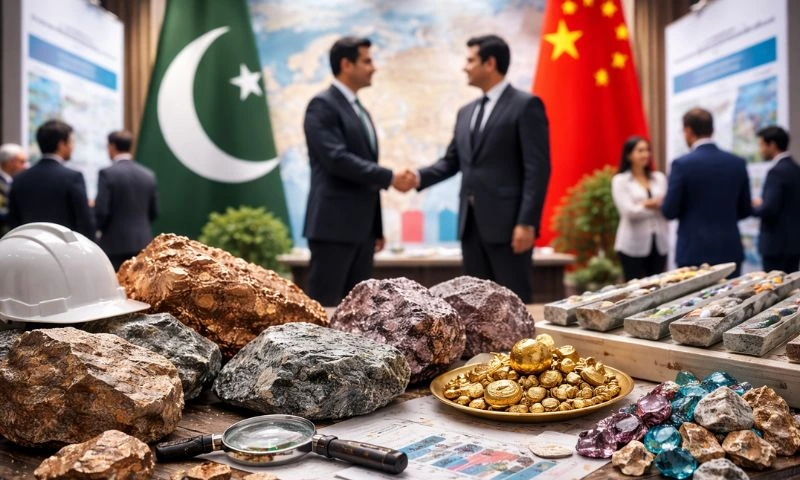
Pakistan Invites Chinese Companies to Pakistan Minerals Investment Forum 2026
Pakistan has formally invited Chinese companies and investors to take part in the upcoming Pakistan Minerals Investment Forum (PMIF) 2026, as the country aims to expand foreign investment in its vast but under-developed mineral sector. The invitation was extended during the Pak–China Mineral Cooperation Forum in Islamabad, where ministers and industry leaders highlighted deepening bilateral cooperation to unlock economic potential. The PMIF 2026 is scheduled for April 8–9, 2026 in Islamabad and will serve as a focused platform for global investors to engage directly with policymakers, regulators and project sponsors in Pakistan’s mining value chain. Minister for Petroleum Ali Pervaiz Malik formally invited Chinese firms and delegates, encouraging them to participate through a country pavilion showcasing mining capabilities, technologies, and equipment. “I extend a formal invitation to all the Chinese companies and delegates present here to participate in the Pakistan Mineral Investment Forum 2026,” Malik said, noting that the forum will support structured engagement with policymakers and industry stakeholders. The federal government underscored the huge potential of Pakistan’s mineral sector, noting that mineral exports could reach USD 6–8 billion annually by the end of the decade through value addition and processing. Planning and Development Minister Ahsan Iqbal said such growth would depend on partnerships that move beyond raw extraction to include downstream value chains, refining and export-oriented industrial clusters. Officials presented Pakistan as richly endowed with strategic resources such as copper, gold, coal, gemstones, rare earth elements and other critical minerals. Still, development of these resources has lagged due to infrastructure gaps, regulatory challenges and limited value-addition capacity. At the cooperation forum, Pakistan and China also launched the ‘Pak–China E-Mining Platform’, a digital initiative designed to boost transparency and ease collaboration between authorities and investors. The platform is intended to improve information sharing, project coordination and efficiency in developing the mineral sector. Chinese Ambassador to Pakistan Jiang Zaidong reaffirmed Beijing’s interest in investing in Pakistan’s mining sector and highlighted China’s strengths in capacity building, technology transfer and sustainable mining practices. He said that long-term cooperation could bring jobs, technology, and development while strengthening industrial linkages. The forum drew participation from more than 70 Chinese companies, over 100 Pakistani firms and about 800 participants, reflecting strong interest on both sides. Government officials emphasised policy stability, regulatory reforms, and facilitation measures to enhance the ease of doing business for foreign investors. The invitation to China at PMIF 2026 signals Pakistan’s push to transform its mineral sector into a major driver of economic growth and export competitiveness, aligning with its broader strategy of attracting foreign direct investment and positioning the country as a key player in the global mining economy.
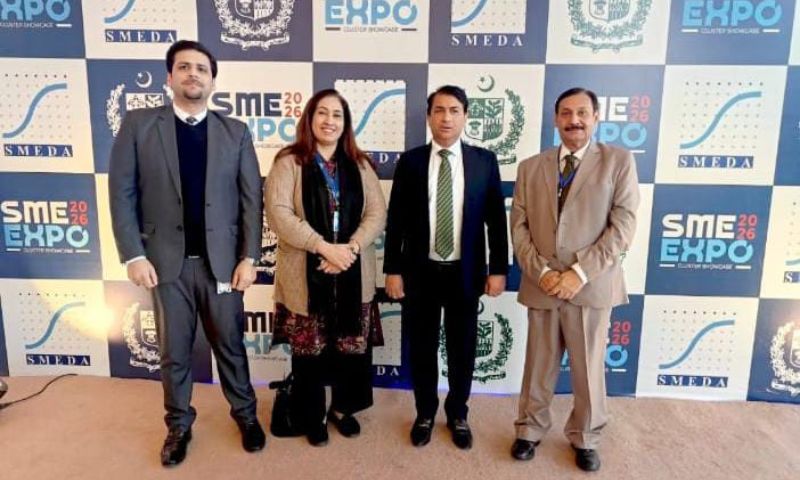
Powering Pakistan’s SMEs: Khushhali Bank’s Business Solutions Shine at Expo
Khushhali Microfinance Bank Limited emerged as one of the standout exhibitors at the SME Made in Pakistan Cluster Showcase Expo 2026, presenting a comprehensive suite of small-business solutions tailored to the needs of Pakistan’s growing SME sector. The expo, organised by the Small and Medium Enterprise Development Authority (SMEDA), brought together leading institutions, platforms, and practitioners working to strengthen small and medium enterprises across the country. With a proven track record and a large, diverse SME client base, Khushhali Microfinance Bank drew significant attention for its Khushhali Karobari Loans portfolio. The programme is designed with multiple categories to address varying business sizes and operational requirements, making it accessible to entrepreneurs across rural, urban, and semi-urban markets. Speaking at the event, Saqib Hussain, Regional Business Head at Khushhali Microfinance Bank, emphasised the bank’s approach to SME financing. “At Khushhali Microfinance Bank, our foremost priority when it comes to SMEs is stability and growth derived with simple tools and methods that help business owners scale their enterprises without risking their assets.” The bank’s exhibit highlighted several flagship offerings within the Karobari Loans portfolio. These included the Running Finance Loan, positioned as a practical solution for day-to-day cash-flow management and working capital continuity; Commercial Vehicle Financing, aimed at enabling expansion through improved logistics, mobility, and distribution capacity; and the Solar Loan for Small Businesses, which supports cost efficiency, energy independence, and long-term operational sustainability. Visitors to the expo responded strongly to these solutions, noting their relevance to real-world SME challenges such as rising energy costs, supply-chain constraints, and limited access to flexible credit. The emphasis on practical financing tools reflected a broader shift in Pakistan’s SME ecosystem toward resilience, efficiency, and sustainable growth. Commenting on the portfolio’s impact, Sadaf Arshad Rana, Senior Area Manager at Khushhali Microfinance Bank, said: “Our Karobari Loans are a testament to our understanding and connection with our customers across a diverse demographic, delivering excellent results and secure growth options across various SME industries.” Pakistan’s SME sector contributes a significant share to employment and economic activity, yet access to tailored financial services remains a challenge for many entrepreneurs. Institutions like Khushhali Microfinance Bank play a critical role by offering niche products, advisory support, and financing models aligned with local business realities. By participating in the Made in Pakistan Cluster Showcase Expo 2026, Khushhali Microfinance Bank reinforced its position as a robust ally of the SME sector. Through continued innovation, targeted lending, and on-ground engagement, the bank aims to support sustainable enterprise growth and strengthen the backbone of Pakistan’s economy.
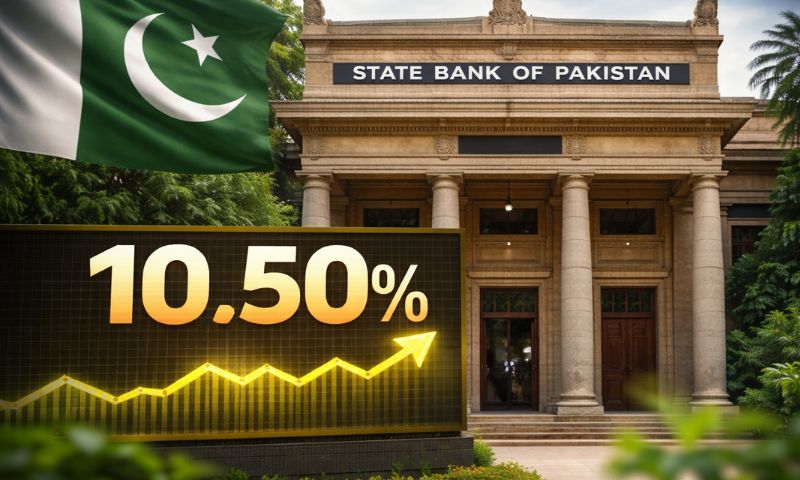
Pakistan’s Central Bank Keeps Key Interest Rate Unchanged Despite Inflation Ease
The State Bank of Pakistan (SBP) surprised markets by keeping its key policy interest rate unchanged at 10.50 percent in its first Monetary Policy Committee (MPC) meeting of 2026. The decision, announced on January 26, 2026, came despite widespread expectations that the central bank would cut rates to stimulate economic activity and lower borrowing costs. The MPC, chaired by SBP Governor Jameel Ahmad, reviewed recent economic data before maintaining the rate, noting that headline inflation stood at 5.6 percent year-on-year in December 2025, comfortably within the SBP’s target range of 5 to 7 percent. However, the committee also highlighted that core inflation remained elevated at around 7.4 percent, suggesting persistent price pressures in non-food sectors. Governor Ahmad said the MPC expected inflation and external accounts to remain broadly stable. He added that economic activity continues to gain pace, supported by stronger performance in large-scale manufacturing and domestic-oriented sectors. The SBP also pointed to resilient remittances and softer global commodity prices as factors that helped cushion economic pressures and keep the current account deficit relatively contained. Market analysts had widely anticipated a rate cut heading into the meeting. A recent survey by financial research firms showed that a significant portion of economists and traders expected the MPC to reduce the rate by between 25 and 100 basis points to further support growth and investment. Many believed that a rate reduction would reduce the cost of borrowing for businesses and consumers, providing momentum to sectors such as housing, manufacturing, and agriculture. Instead, the SBP decided to hold steady. Analysts said the unchanged policy rate reflected the MPC’s cautious outlook, focused on consolidating recent economic gains while guarding against upside inflation risk. Some observers pointed to the improvement in GDP growth projections — which analysts see trending toward the upper half of the government’s estimated 3.25–4.25 percent range for the fiscal year — as underpinning confidence in a stable monetary stance. The Monetary Policy Committee has decided to keep the policy rate unchanged at 10.5 percent in its meeting held on January 26, 2026. For details: https://t.co/IyaTFO6mbh#SBPMonetaryPolicy pic.twitter.com/bWLBgkRliZ — SBP (@StateBank_Pak) January 26, 2026 The SBP’s rate decision follows a surprise reduction of 50 basis points to 10.50 percent in December 2025, which marked the first cut after a long period of steady interest rates. Since mid-2024, the SBP has eased monetary policy significantly, trimming its policy rate from a peak of 22 percent as inflation pressures eased and macroeconomic stability improved. While the unchanged rate was a disappointment to some business groups and borrowers, many economists believe the decision strikes a balance between supporting growth and maintaining price stability. The SBP will review conditions again at its next MPC meeting, scheduled for March 9, 2026.
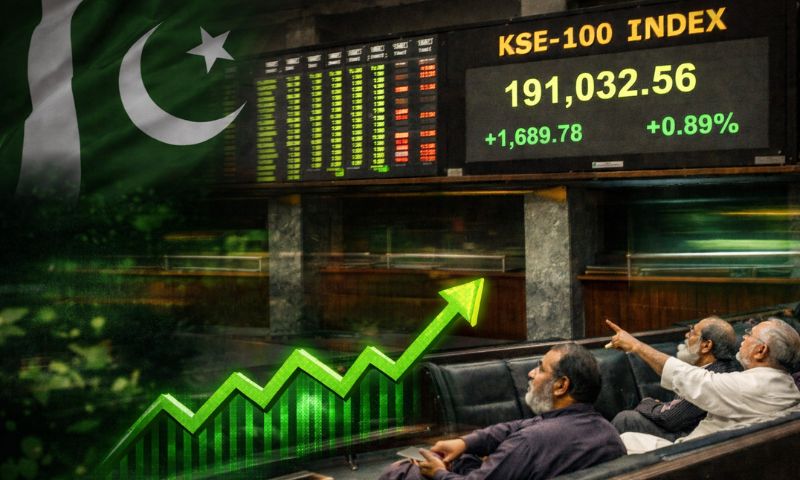
KSE-100 Breaks Record Above 191,000 as Pakistan Stocks Rally on Rate-Cut Hopes
The Pakistan Stock Exchange (PSX) hit a historic milestone on January 26, 2026, as the benchmark KSE-100 Index crossed the 191,000 mark for the first time ever, driven by strong investor optimism ahead of an anticipated policy rate cut by the State Bank of Pakistan Monetary Policy Committee (MPC) meeting scheduled for later that day. The surge reflected renewed confidence in Pakistan’s financial markets after a prolonged period of volatility. By mid-morning trading, the KSE-100 Index was hovering around 190,836.78 points, up 1,669.96 points or 0.88 percent from the previous session, before exceeding 191,000 levels as buying interest deepened. Investors bought heavily across key sectors, with automobile assemblers, cement, fertiliser, oil and gas exploration, and power generation companies leading gains. Large-cap stocks including ARL, HUBCO, MARI, OGDC, FFC, HBL and MCB traded with positive momentum. The market rally has been underpinned by expectations that the MPC will announce another substantial cut in the policy rate — possibly between 50 to 100 basis points — aiming to reduce borrowing costs, stimulate economic activity, and sustain macroeconomic recovery. In its prior meeting on December 15, 2025, the MPC surprised markets by cutting the policy rate by 50 bps to 10.50 percent after inflation remained within the targeted 5–7 percent range. Analysts and fund managers say the anticipated rate cut has boosted sentiment, particularly after recent government treasury bill and Pakistan Investment Bond auctions showed lower yields and the overall economy appeared to gain stability. Domestic and foreign investors are positioning portfolios ahead of the MPC announcement, hoping lower interest rates will enhance returns from equities relative to fixed-income instruments. The strong run for Pakistan equities did not start overnight. In recent weeks, the benchmark index repeatedly breached previous all-time highs. It first crossed the 188,000 mark in mid-January and later climbed above 189,000, driven by broader macroeconomic optimism, improved corporate earnings outlooks, and geopolitical easing. Market watchers also point to an improved external environment, easing inflation pressures, and a softer currency backdrop as supporting factors. According to some brokerage reports, if current trends continue, analysts have speculated that the KSE-100 could eventually approach 200,000 points by the end of 2026, supported by stronger economic fundamentals and sustained inflows. Despite these gains, not all economic indicators are rosy. Experts suggest Pakistan may fall short of the International Monetary Fund’s 3.2 percent GDP growth projection for the fiscal year, with exports and investment growth lagging expectations, underscoring ongoing structural challenges. As the day’s trading unfolds and the MPC decision nears, investors remain hopeful that further monetary easing will reinforce the bullish trend, making 2026 one of the most memorable years for Pakistan’s capital markets.

Nestle Reaffirms Long-Term Commitment to Pakistan with $60m Expansion Plan
Global food giant Nestle has announced a fresh $60 million investment in Pakistan, signalling a major expansion of its local operations and reaffirming its long-term commitment to the country. The announcement was made during a meeting between Finance Minister Muhammad Aurangzeb and Nestle executive vice president and CEO for Asia, Oceania and Africa Remy Ejel, held on the sidelines of the World Economic Forum annual meeting in Davos, according to a statement issued by the Ministry of Finance. The meeting took place during a high-level business roundtable chaired by Aurangzeb, which brought together chief executive officers and senior leaders from leading multinational corporations to discuss Pakistan’s reform agenda, investment climate, and long-term growth prospects. Nestlé Announces USD 60 Million Additional Investment in Pakistan at WEF Business Roundtable Federal Minister for Finance and Revenue, Senator Muhammad Aurangzeb, today chaired a high-level Business Roundtable on the sidelines of the World Economic Forum (WEF) Annual Meeting in… pic.twitter.com/NB5Vp3vOTK— Ministry of Finance, Government of Pakistan (@Financegovpk) January 22, 2026 According to the ministry, the roundtable was part of the government’s broader engagement with global investors aimed at improving policy predictability, accelerating economic formalisation, and promoting sustainable, export-oriented growth. “A key highlight of the discussion was the announcement by Remy Ejel of an additional investment of $60 million in Pakistan,” the statement said. “Nestle will undertake a robust expansion of its operations in the country, reaffirming its long-term commitment to Pakistan.” Ejel also revealed that Nestle plans to use Pakistan as a regional manufacturing and export hub, with the company set to export products to 26 countries from its Pakistani facilities. Expressing confidence in Pakistan’s economic outlook, he said Nestle expects strong growth in its local business in the coming years. The finance ministry noted that the announcement builds on recent engagements between Nestle and the government in Islamabad, where the company outlined a strategy focused on localisation, advanced manufacturing, sustainability, and agricultural transformation. Ejel highlighted that Pakistan’s large and youthful population, rising nutrition needs, and underdeveloped value-added food segments closely resemble growth patterns seen in Southeast Asian markets where Nestle has successfully expanded. Welcoming the announcement, Aurangzeb described the investment as a “strong vote of confidence” in Pakistan’s economic reforms and formalisation drive. He reaffirmed the government’s commitment to strengthening the tax ecosystem, ensuring policy consistency, and facilitating responsible long-term investment. The minister also underscored Pakistan’s potential in affordable nutrition, climate-resilient dairy, local sourcing, and export-oriented manufacturing, reiterating the government’s goal of positioning the country as a competitive base for regional production and global value chains.

Pakistan Cuts Taxes on Used iPhones, Samsung and Google Phones
Pakistan’s Federal Board of Revenue (FBR) has announced a major update to customs valuation rules for used mobile phones, a move that could lower costs for importers and local buyers. The Directorate General of Customs Valuation in Karachi recently issued Valuation Ruling No. 2035 of 2026, adjusting customs values for 62 types of used branded phones including Apple, Samsung, and Google Pixel models. Under the new ruling, customs officials determined fresh values for used mobile phones imported in commercial quantities without packing or accessories. The revision was necessary because the previous valuation was more than a year and a half old and no longer reflected current international market prices. Customs authorities explained that older models of used phones have significantly depreciated, making past valuation figures unrealistic and prone to frequent disputes between importers and tax authorities. The updated list includes popular Apple iPhone variants and many Samsung Galaxy models, along with Google Pixel devices that are widely traded in Pakistan’s used phone market. Most importantly for consumers, the new values affect the Pakistan Telecommunication Authority (PTA) tax, which is calculated on customs valuation. By setting fixed and fair valuations, the FBR aims to reduce the total tax burden on imported used smartphones. This adjustment helps lower the overall landed cost and makes legal imports more affordable. Customs officials also clarified an important condition: to qualify under the new valuation, used phones must have been activated at least six months before export to Pakistan. This rule helps prevent misuse, such as declaring new phones as used solely to benefit from lower tax rates, and enhances market transparency. Market observers expect the update to affect pricing across the used smartphone market, especially for high-demand brands. Industry insiders told local outlets that iPhone and Galaxy devices’ prices in secondary markets could fall noticeably after the new valuations take effect, as lower import taxes eventually filter down to street pricing. The ruling comes as Pakistan’s mobile sector continues to grow, with demand for both new and refurbished devices high among consumers seeking cost-effective options. Used phones often serve middle-income buyers and students seeking premium features without the steep price tag of brand new devices. Previously, customs authorities have similarly revised values for new phone imports, including detailed valuations for iPhone models under separate valuation rulings to align with market trends. By aligning customs values with real-world prices and tightening verification rules, Pakistan’s taxation system may now promote fairer trade practices, reduce grey imports, and improve compliance with import regulations.
