
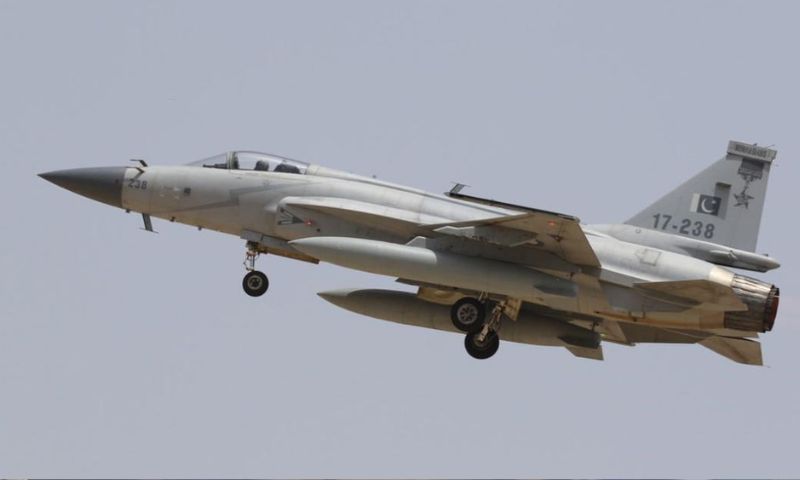
In a fresh sign of strengthening defence ties, Pakistan and Bangladesh are holding detailed talks over the possible sale of JF-17 Thunder fighter jets during a high-level visit to Islamabad. Bangladesh’s Air Chief Marshal Hasan Mahmood Khan led a senior defence delegation to meet with his Pakistani counterpart, Air Chief Marshal Zaheer Ahmed Baber Sidhu, sparking a new chapter in military cooperation between the two neighbouring nations. The discussions focused squarely on the potential procurement of the multi-role JF-17 Thunder aircraft, jointly developed by Pakistan Aeronautical Complex (PAC) and China’s Chengdu Aircraft Corporation (CAC). Originally designed to replace legacy jets and provide cost-effective combat capability, the JF-17 has become an export success for Pakistan’s defence industry. During the meeting at Pakistan Air Force Headquarters, Bangladesh’s air chief received a guard of honour as the two sides reviewed operational cooperation, institutional synergy, and training frameworks. Pakistan reiterated its commitment to supporting the Bangladesh Air Force (BAF) with a full training programme — from basic flying to advanced specialised courses — and pledged fast-tracked delivery of Super Mushshak trainer aircraft along with long-term technical support. Bangladesh praised the PAF’s operational experience and expressed interest in tapping into expertise for maintenance of its ageing fleet. The delegation also explored integration of air defence radar systems to improve surveillance capabilities and toured key facilities, including the National ISR and Integrated Air Operations Centre, PAF Cyber Command, and the National Aerospace Science & Technology Park. Regional defence experts note that Bangladesh has been seeking to modernise its air force amid evolving security dynamics in South Asia. Bangladesh’s Forces Goal 2030 roadmap highlights long-term plans to upgrade fighter fleets, including interest in multi-role jets such as the JF-17 Thunder and other platforms. This potential deal comes at a time when both countries are keen to diversify their defence procurement and deepen military cooperation beyond traditional partners. Analysts say that such collaboration could also contribute to broader regional security stability and open doors to joint training, technology exchange, and capacity building. For now, although no formal contract has been signed, the talks indicate a new willingness to build strategic defence ties between Islamabad and Dhaka

Pakistan Moves to End Billion-Dollar Power Losses with Smart Meter Rollout
Pakistan’s power system is about to take a big step toward modernization as the government prepares to roll out Advanced Metering Infrastructure (AMI) in five major power distribution companies. The move is designed to help fix structural inefficiencies in the electricity system that cost the country about $1 billion every year in transmission and distribution losses. Right now, outdated meters and weak monitoring make it hard to track how much electricity is really being used. This gap leads to technical faults, billing errors, and high levels of electricity theft, which in turn push up costs for both utilities and consumers. Officials say the new AMI project will give power companies and customers a real-time view of electricity use — something traditional meters simply can’t do. The government has asked the World Bank to act as Transaction Advisor for the project. This international support aims to bring global experience to a complex rollout that involves updating infrastructure in five major Discos: LESCO, MEPCO, PESCO, HAZECO, and QESCO. Under a Public-Private Partnership (PPP) model, a private Advanced Metering Infrastructure Services Provider will install and operate the smart meters, assisted by the federal Public Power and Infrastructure Board (PPIB). But what exactly is AMI and why is it important? Advanced Metering Infrastructure uses smart meters. These are digital devices that communicate usage data directly to utilities and customers in near real-time. These meters collect accurate information on electricity use and can even show patterns that signal power theft or irregular consumption, helping utilities respond faster. Smart meters also allow remote meter reads and can give consumers detailed feedback on how and when they use electricity. Countries that have implemented AMI solutions have seen significant improvements. Smart meter systems help detect faults quickly, reduce the need for manual meter reading, and even support new pricing models that reward off-peak energy use. Utilities in places like Canada and the U.S. report faster outage detection and better overall operational efficiency after AMI rollout. For Pakistan, the transition to AMI is a promising step toward a smarter, more efficient, and fairer electricity sector – one where users pay for what they consume and utilities can manage the grid with more confidence.

Pakistanis Now Spend Two-Thirds of Their Income on Food and Electricity: Survey
Pakistan’s households are spending nearly two out of every three rupees on just food and electricity, highlighting how sharply rising living costs are reshaping daily life across the country, according to a new government survey. The findings come from the Household Integrated Economic Survey (HIES) 2024–25, released by Planning Minister Ahsan Iqbal. Conducted after a gap of more than six years, the survey paints a stark picture of how inflation has eroded household purchasing power. The survey shows that while incomes have increased, expenditures have grown even faster, leaving families with little room for savings or investment in education and health. On average, households now spend 63 percent of their total monthly expenses on food and housing-related costs, including electricity and gas. Food alone accounts for 37 percent of household spending, while 26 percent goes toward housing, electricity, and gas. In contrast, spending on education has fallen to just 2.5 percent, less than half of what households spend on housing and utilities. Combined spending on education, health, and recreation stands at only 7 percent. The report also highlights a growing dependence on external income sources. The share of foreign remittances in household income has climbed from below 5 percent six years ago to nearly 8 percent today. Gifts and financial assistance have also surged, more than doubling to 4.6 percent, signaling increased reliance on informal support networks. According to officials at the Pakistan Bureau of Statistics, rural households show an even sharper rise in dependence on remittances, reflecting fewer domestic job opportunities. Independent economists link this trend to the steady outflow of young and skilled workers seeking employment abroad. Income inequality remains pronounced. While the average monthly household income has nearly doubled from Rs41,545 to Rs82,179 over six years, the poorest 20 percent earn Rs41,851 per month, compared with Rs139,317 earned by the richest quintile. Urban households earn significantly more than rural ones, with average monthly income rising to Rs96,767 in cities. Household expenses have risen faster than earnings. Monthly consumption spending jumped from Rs37,159 to Rs79,150, growing at an average rate of 19 percent per year, compared to a 16 percent annual rise in income. Within food spending, milk accounts for the largest share at 22 percent, followed by wheat (12 percent) and cooking oil (6 percent). The survey also notes that spending at restaurants now exceeds spending on education, especially among higher-income households. The findings reflect years of economic strain marked by double-digit inflation, currency depreciation, and fiscal tightening under IMF-backed reforms, which have placed the heaviest burden on middle- and lower-income families.
Saudi-Pakistan Ties Deepen: Inside Pakistan’s Big Plan at the Future Minerals Forum in Riyadh
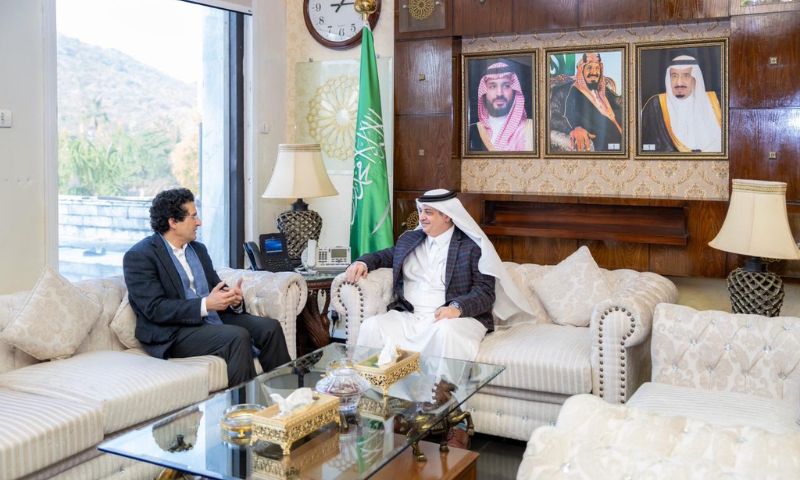
Pakistan is preparing to make a strong impression at the Future Minerals Forum (FMF) 2026 in Riyadh, Saudi Arabia, marking a focused step toward boosting investment and cooperation in the minerals and energy sectors. Federal Minister for Petroleum Ali Pervaiz Malik recently met with H.E. Nawaf bin Saeed Ahmad Al-Malkiy, Ambassador of Saudi Arabia to Pakistan, to discuss areas of mutual interest and stronger bilateral ties. During the meeting, Malik expressed deep respect for Crown Prince Mohammed bin Salman and highlighted the long-standing shared cultural and religious ties that bind the two nations. At the invitation of the Saudi government, Pakistan confirmed its full participation in the FMF, which will run from January 13–15, 2026 in Riyadh. The forum has grown into one of the world’s premier platforms for mineral industry dialogue, bringing together ministers, investors, and innovators to shape the future of mineral supply chains and sustainable development. Pakistan will unveil a dedicated pavilion titled “Pakistan – The Mineral Marvel” to showcase the nation’s rich geological endowment. The pavilion aims to draw global investors and industry professionals to explore opportunities in Pakistan’s untapped mineral sector. Leading the Pakistani delegation, Minister Malik will join executives from 13 state-owned and private mineral companies. A key highlight at the FMF will be a 90-minute Country Showcase Session under the theme “Unleashing Potential: Accelerating Pakistan’s Mineral Revolution.” This session will include CEOs, foreign investors, and international experts who will discuss strategies for accelerating development in Pakistan’s mineral industry. Officials say the pavilion’s role goes beyond Riyadh. It will serve as a prelude to the Pakistan Mineral Investment Forum (PMIF) 2026, planned for April in Islamabad, where the focus will be on attracting even broader international engagement. Saudi Ambassador Al-Malkiy warmly welcomed Pakistan’s participation and reiterated the potential for cooperation in minerals and energy sectors. He emphasized FMF’s role as a key platform to expand strategic ties between Pakistan and the Kingdom. As global demand for critical minerals grows especially for technology, energy transition, and infrastructure. Pakistan’s entry onto this stage signals a renewed drive to convert natural wealth into economic growth.

Pakistan Air Force Successfully Tests Indigenous Taimoor Air-Launched Cruise Missile
The Pakistan Air Force has successfully conducted the flight test of the indigenously developed Taimoor Weapon System, marking a significant advancement in Pakistan’s aerospace and defence capabilities. According to a statement issued by the Inter-Services Public Relations (ISPR), the Taimoor Air-Launched Cruise Missile (ALCM) demonstrated high accuracy during the test and is capable of engaging both land and sea-based targets at a range of up to 600 kilometres. The missile is designed to carry a conventional warhead. The ISPR said the weapon system is equipped with a state-of-the-art navigation and guidance suite and is capable of flying at very low altitudes, allowing it to evade enemy radar, air defence, and missile interception systems. The missile’s precision-strike capability significantly enhances the Pakistan Air Force’s conventional deterrence and operational flexibility, the statement added. The successful test underscores the growing technical maturity, innovation, and self-reliance of Pakistan’s defence industry. Senior officers of the Pakistan Armed Forces, along with scientists and engineers associated with the programme, witnessed the launch. PAKISTAN AIR FORCE CONDUCTS SUCCESSFUL FLIGHT TEST OF TAIMOOR WEAPON SYSTEM 03 January, 2026: Pakistan Air Force has successfully conducted the flight test of the indigenously developed Taimoor Weapon System, marking another significant milestone in the advancement of national… pic.twitter.com/pRSQkXgOXb — DGPR (AIR FORCE) (@DGPR_PAF) January 3, 2026 Zaheer Ahmed Baber Sidhu, Chief of Air Staff, congratulated the scientists, engineers, and the Pakistan Air Force team on what he described as a major national achievement. He praised their professionalism, dedication, and unwavering commitment to strengthening Pakistan’s defence capabilities. The air chief stated that such milestones reflect Pakistan’s determination to achieve technological self-sufficiency while maintaining a credible conventional deterrent amid an evolving regional security landscape. He added that the successful test reaffirmed the PAF’s focus on operational readiness, technological superiority, and the protection of national security interests. Shehbaz Sharif also extended his congratulations to the nation and the Pakistan Air Force on the successful flight test. He lauded the leadership of the armed forces, including Field Marshal Syed Asim Munir, Chief of Army Staff and Chief of Defence Staff, and Air Chief Marshal Zaheer Ahmed Baber Sidhu, as well as the scientists and engineers involved in the missile’s development. “The successful test of the Taimoor Weapon System reflects the innovation, technical expertise, and self-reliance of Pakistan’s defence industry,” the prime minister said. He added that the system would further strengthen Pakistan’s defensive posture and demonstrated the armed forces’ continuous efforts to maintain a technological edge and ensure national security.

Pakistan–Bangladesh Relations Warm as Dhaka–Karachi Flights Get Green Light
Pakistan has approved flight operations for Biman Bangladesh Airlines, allowing the Bangladeshi national carrier to operate between Dhaka and Karachi, the Pakistan Civil Aviation Authority confirmed on Friday. The move signals a further thaw in relations between Pakistan and Bangladesh after decades of limited engagement. According to a PCAA spokesperson, Biman has been granted initial approval to operate flights on the Dhaka–Karachi route for a three-month period, valid until March 26. The official said the permission could be extended subject to operational performance and regulatory compliance. The decision marks an important step toward restoring direct air connectivity between the two countries, which were once part of a single state before separating in 1971 following a violent civil war that led to the creation of Bangladesh. Bilateral relations have shown signs of improvement since the removal of former Bangladeshi prime minister Sheikh Hasina in August 2024, following a student-led uprising. Hasina was widely seen as politically aligned with India and openly critical of Pakistan, and her exit reshaped Dhaka’s foreign policy posture. In recent months, Islamabad has actively sought to rebuild ties with Dhaka. The two countries launched direct sea trade in late 2024 and have since explored broader government-to-government cooperation, particularly in trade, logistics, and transport. Last November, Pakistan International Airlines, which has since been privatized, announced a cargo partnership with Biman aimed at improving air freight connectivity and supporting bilateral trade. PIA officials said the agreement was part of a wider strategy to grow its cargo operations and enhance service competitiveness. Trade relations have also gained momentum at sea. In February 2025, a cargo vessel sailed directly from Pakistan to Bangladesh for the first time in decades, unloading containers successfully, according to port authorities. Diplomatic engagement has expanded alongside trade. In August last year, the two sides signed six agreements covering visa exemptions for diplomatic and official passport holders, trade cooperation, media collaboration, and cultural exchanges. Separately, Pakistan has approved flight operations for Britain’s Norse Atlantic Airways, enabling the airline to operate direct services from London, Manchester, and Birmingham to Islamabad. Commenting on the development, Defense Minister Khawaja Asif said increased access for international airlines would help foster competition in Pakistan’s aviation sector, leading to improved service standards and more balanced airfares.
Wrong Lab Report Costs Patient Peace of Mind, Court Fines Aga Khan Hospital
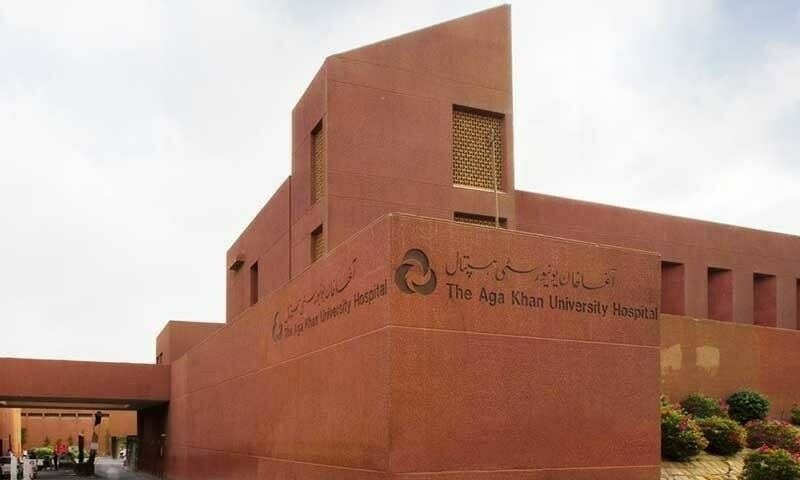
A consumer court in Karachi has directed Aga Khan University Hospital to pay Rs1.68 million in compensation to a patient after ruling that the hospital issued an incorrect laboratory test report, causing severe mental distress and reputational harm. The verdict was delivered by the Consumer Protection Court Karachi South, which held the hospital responsible for medical negligence and deficient service. The court observed that the erroneous report had serious consequences for the complainant’s personal and social life. According to the judgment, the patient was incorrectly declared hepatitis C reactive in a laboratory test conducted at the hospital. The diagnosis triggered intense psychological stress, fear, and social stigma, prompting the patient to seek further medical verification. Subsequently, the complainant had the same test conducted at Dow Lab, where the hepatitis C result was confirmed as non-reactive, directly contradicting the earlier report. During court proceedings, the hospital admitted that a mix-up had occurred in handling laboratory samples and acknowledged that the complainant was mistakenly issued another patient’s test report. The court noted that such an error reflected serious lapses in laboratory protocols. Barrister Arsalan Raja, counsel for the complainant, argued that the incorrect and alarming diagnosis had deeply affected his client’s mental well-being and disrupted his daily life, adding that such negligence was unacceptable from a reputed medical institution. The court also relied on findings from the Sindh Healthcare Commission, which confirmed violations of standard laboratory procedures by the hospital. It further noted that the hospital failed to present any qualified laboratory staff as witnesses to defend its position. In its ruling, the court declared that issuing a false and frightening medical report constituted gross negligence. It emphasized that the decision would serve as a precedent to reinforce consumer rights and compel healthcare institutions to strictly adhere to professional standards and due care.
Pakistan Welcomes 2026: Festivities, Fireworks and Tight Security Across Cities
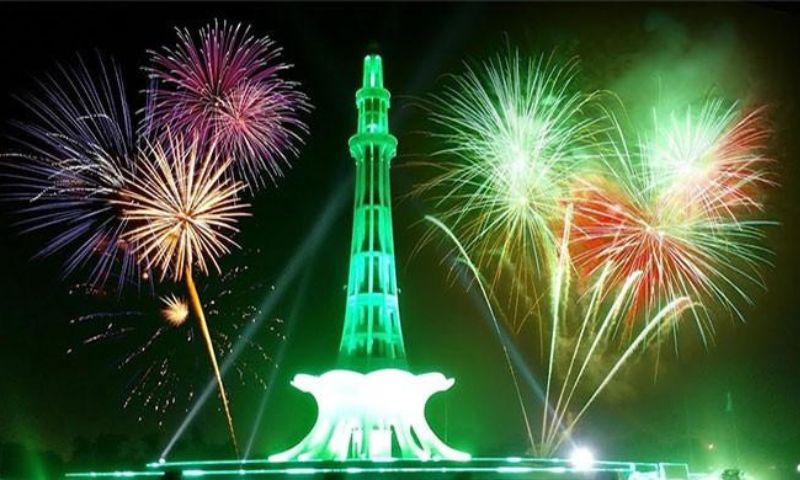
Pakistan welcomed 2026 with colourful celebrations, fireworks and renewed optimism as midnight brought cheers to cities and towns across the country. Residents marked the transition from 2025 with lively gatherings, city displays and a festive atmosphere that blended tradition with modern revelry. Across major urban centres, families and friends gathered to celebrate the start of the year with excitement and hope. In Karachi, the festive spirit was visible well into the night as crowds gathered at popular spots and open areas to watch fireworks brighten the skies. Authorities deployed thousands of police personnel ahead of the celebrations to ensure safety and prevent dangerous practices like aerial firing — a move aimed at keeping revelry joyful but secure. The capital Islamabad hosted vibrant New Year events at Park View City and lakeside venues, where families enjoyed musical performances and colourful light displays before the midnight countdown. Fireworks added to the festive mood, and celebrants exchanged warm wishes as the clock struck twelve. اسلام آباد میں نئے سال کے آغاز پر آتشبازی pic.twitter.com/HdjlvTJyqS — Tayyab Khan (@TayyabKhanARY) December 31, 2025 In other parts of the country, traditions of celebration varied but shared the same enthusiasm. In Quetta, private events featured music, fireworks and cake-cutting ceremonies, bringing together community members in a joyful setting. Multan saw crowds of youth fill streets with energy and optimism for the year ahead, while police checkpoints helped manage the flow of traffic and maintain order. Cities that traditionally organise fireworks were especially lively, with many residents heading to well-known viewing spots. In Karachi, rooftop cafés and seaside restaurants became favourite pick-ups for spectators keen to enjoy the night sky’s spectacle. The celebrations took place amid a backdrop of public excitement about the official New Year’s Day public holiday — announced by the government to give people time with family and friends. The nationwide holiday also allows citizens to reflect on personal goals and hopes for 2026, including development, peace and prosperity. Pakistan’s festivities mirrored global celebrations, as cities around the world from Auckland to Sydney welcomed the year with fireworks and gatherings. While international celebrations included symbolic moments and concerts, Pakistan’s own events emphasised community joy and shared optimism for the future. As dawn broke on January 1, 2026, Pakistan emerged into the new year with vibrant energy and collective readiness to face the opportunities and challenges ahead, blending local traditions with the universal excitement that comes with new beginnings.

Double-Decker Buses Back in Karachi After Decades
Karachi’s battered public transport system is about to get a major makeover as double-decker buses return to the city’s streets for the first time in decades, offering commuters a mix of nostalgia, comfort, and capacity just as the city steps into 2026. After nearly half a century, the Sindh government has launched a trial double-decker bus service running between Malir and Shahrah-e-Faisal, with plans to expand throughout Karachi in the new year. The service was inaugurated on December 31 by Sindh Senior Minister Sharjeel Inam Memon alongside other officials, who said the revival fulfills a long-held promise to improve urban mobility. The move comes amid broader efforts by provincial authorities to modernize public transport, including adding electric buses and integrating different transit systems like the Orange and Green Line Bus Rapid Transit (BRT) networks into a seamless network for commuters. Karachi once had a thriving double-decker bus network in the 1960s and 1970s, when these iconic vehicles dominated routes through Saddar and MA Jinnah Road. They eventually disappeared due to rising traffic, maintenance challenges, and the growth of minibuses and coaches. Each bus can hold around 115–120 passengers and is fully air-conditioned, making long, crowded rides more comfortable. Officials also emphasized that the fare for the new double-deckers will match the existing People’s Bus Service cost, keeping the upgrade affordable for daily riders. Beyond comfort, the buses are expected to reduce congestion by moving more people per trip, which could help ease pressure on busy corridors like Shahrah-e-Faisal. Alongside the double-deckers, the Sindh government has also imported 34 electric buses as part of the same initiative, bringing Karachi closer to a greener transit future. These electric vehicles, also dispatched from China, are slated to roll out across key routes once customs clearance is completed. This bold move comes as Karachi’s population tops 20 million and the city grapples with congestion and pollution. While infrastructure challenges remain — including road quality and traffic flow — transport officials hope the expanded fleet will offer real relief for commuters and make daily travel more pleasant. If the trial proves successful, plans call for more double-deckers on major routes in 2026. For many Karachiites, the sight of these buses is not just a return of a classic mode of transport but a sign of renewed investment in the city’s future.
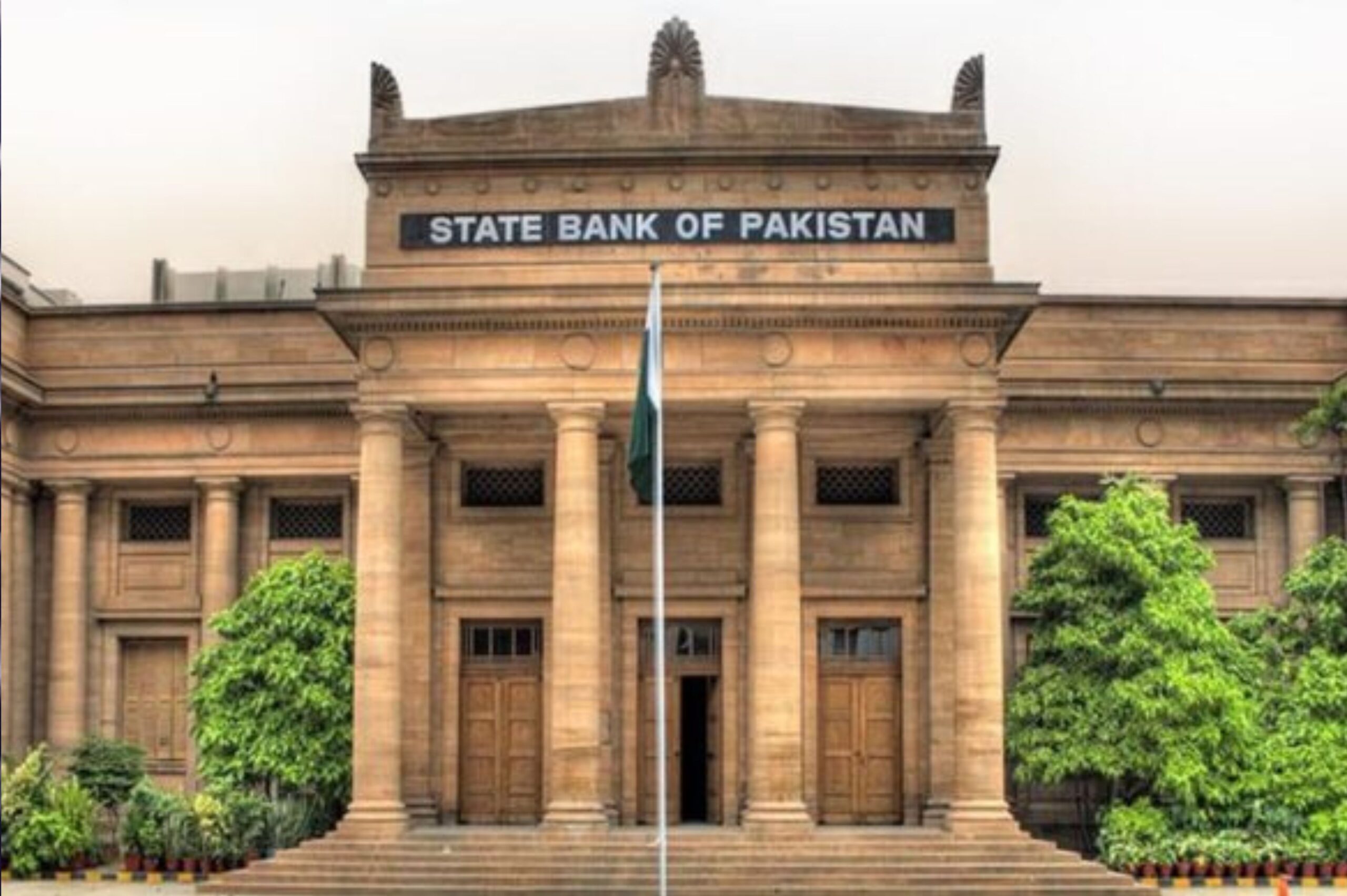
Banks in Pakistan to Remain Closed on New Year’s Day, SBP Announces
On December 30, 2025, the State Bank of Pakistan (SBP) issued Circular Letter No. 26 of 2025, announcing a bank holiday on January 1, 2026. This notice requires all commercial banks, microfinance banks, and development finance institutions to remain closed for public dealing on that day. The decision affects normal banking operations and means customers will not be able to conduct in-person transactions at SBP or its regulated banks on New Year’s Day. SBP’s official announcement, shared through its Banking Policy & Regulations Department, confirmed that the institution will observe January 1, 2026 as a bank holiday. This closure aligns with the national calendar and gives bank staff and customers a public holiday to mark the start of the new year. The circular directs bank presidents and chief executives to adjust schedules and inform branches ahead of time so that no confusion arises about services on that date. This move is consistent with previous SBP notices that declared public holidays for banks, especially at year-end or around major national events. In 2025 alone, multiple circular letters from SBP outlined other official bank holidays, including earlier in the year. These notices help banks manage operations, staffing, and customer expectations. In addition to holiday announcements, the SBP regularly updates policies that shape Pakistan’s financial landscape. Throughout 2025, its circulars covered a wide range of regulatory and operational matters, from corporate governance changes to upgraded auditing panels and public holiday schedules. These notices strengthen the framework within which banks and financial institutions operate, ensuring compliance with SBP’s standards. For everyday customers, the January 1 bank holiday means planning ahead for routine transactions such as cash withdrawals, deposits, account openings, or loan inquiries. However, digital and mobile banking services are expected to remain functional, so customers can still manage accounts online even when physical branches are closed. This reflects a broader trend where SBP and banks encourage electronic banking use and financial inclusion across Pakistan.
