

Pakistan’s race toward next-generation connectivity has gained momentum as Zong announced successful 5G trials in Islamabad, achieving peak download speeds of over 1,400 Mbps. The tests, conducted across multiple urban environments in the capital, highlight the operator’s technical readiness for a future nationwide rollout. High-Speed Trials Show Network Capability According to Zong, the pre-launch testing phase demonstrated consistent performance and strong signal stability across different locations. The company emphasized that these speeds were achieved through efficient spectrum utilization and optimized infrastructure. Zong noted that its “output-to-spectrum” efficiency played a critical role in reaching these benchmarks, reflecting years of investment in network upgrades and advanced technologies. These results place Zong among the leading telecom operators in Pakistan’s evolving 5G landscape, especially as competition intensifies. Building on a History of 5G Milestones Zong has been at the forefront of 5G development in Pakistan for several years. In 2019, it conducted the country’s first successful 5G trial and established the first functional 5G node. In 2020, the company completed South Asia’s first 5G international video call, showcasing low latency and real-time communication capabilities. Since then, Zong has continued investing in infrastructure upgrades, artificial intelligence-based traffic management, and network expansion. These milestones have helped position Pakistan among countries preparing for full-scale 5G deployment. Three-Pillar Strategy for 5G Launch Zong has outlined a clear roadmap for its commercial 5G rollout, built on three core pillars. The first is improving customer experience by ensuring a smooth transition for existing 4G users. The second focuses on diversified services, enabling new applications powered by high-speed connectivity. The third pillar centers on AI-driven optimization, where intelligent systems manage network performance during peak usage. This approach indicates that Zong is not only focusing on speed but also on long-term reliability and scalability. Competition Heats Up in Pakistan’s Telecom Sector Zong’s announcement comes shortly after another major telecom operator, Jazz, revealed similar early 5G testing results in Islamabad with speeds also reaching around 1,400 Mbps. This growing competition suggests that Pakistan’s telecom industry is entering a critical phase, with operators racing to establish dominance ahead of a commercial launch. What 5G Means for Pakistan The introduction of 5G is expected to transform Pakistan’s digital landscape. Faster speeds and lower latency could enable smart cities, advanced healthcare, cloud gaming, and industrial automation. Zong’s latest trials represent more than just a speed milestone. They signal a shift toward a more connected and digitally driven economy, where high-speed internet becomes a backbone for innovation. Final Analysis While the results are promising, the real challenge lies in translating test speeds into consistent real-world performance. Infrastructure costs, spectrum allocation, and affordability will play key roles in determining how quickly 5G becomes accessible to the public. For now, Zong’s 1.4 Gbps achievement is a strong indicator that Pakistan is moving closer to the 5G era.

Apple Launches AirPods Max 2 After 5 Years at $549
Apple has officially launched the second-generation AirPods Max, marking its first major update to the premium over-ear headphones in more than five years. The new model is priced at $549, the same as the original version introduced in 2020, and comes with a range of improvements aimed at competing in the high-end audio market. The updated headphones are powered by Apple’s latest H2 chip, which enables improved performance, better sound quality and a host of new smart features. Improved noise cancellation and audio quality One of the biggest upgrades in the new AirPods Max is enhanced active noise cancellation, which Apple says is significantly more effective than the previous generation. Apple stated: “AirPods Max are upgraded with up to 1.5x more effective ANC”, highlighting a major improvement in blocking external noise. The headphones also feature a new microphone system and improved computational audio, delivering clearer calls and richer sound quality. In addition, the device supports high-resolution lossless audio via USB-C connection, targeting professional users and music creators who require higher fidelity sound. Read More: MacBook Neo: Apple Unveils Its Cheapest Laptop Ever New AI-powered features introduced Apple has introduced several new intelligent features in the latest version of AirPods Max. These include Adaptive Audio, which automatically adjusts sound levels based on surroundings, and Conversation Awareness, which lowers volume when users start speaking to someone nearby. Another key addition is Live Translation, a feature powered by Apple’s artificial intelligence platform that allows users to translate in-person conversations in real time. Voice isolation has also been improved, making calls clearer even in noisy environments. Availability and market competition Apple said the new AirPods Max will be available for pre-order starting March 25 in more than 30 countries, with retail availability expected in early April. The launch comes as Apple looks to strengthen its position in the premium headphone market, which is currently dominated by brands such as Sony, Bose and Sennheiser. Despite the improvements, the overall design of the headphones remains largely unchanged from the original version, focusing instead on internal upgrades and smarter features. Read More: Apple’s Big 2026: Over 20 New Devices Including Foldable iPhone and AR Glasses Apple doubles down on premium audio segment The launch of the second-generation AirPods Max signals Apple’s continued focus on expanding its ecosystem of premium audio products. With increasing competition and growing demand for high-quality wireless headphones, Apple is betting on AI-driven features and improved performance to attract both everyday users and professionals. Industry analysts say the addition of advanced features such as live translation and enhanced noise cancellation could help Apple strengthen its position in the global audio market.

Pakistan’s IT Exports Near $3 Billion in 8 Months of FY26
Pakistan’s information technology sector continues its strong upward trajectory, with exports reaching nearly $3 billion during the first eight months of fiscal year 2025-26, reflecting steady growth in one of the country’s most promising industries. The increase highlights the growing global demand for Pakistani IT services, including software development, freelancing, and IT-enabled solutions. The sector has become a key source of foreign exchange for the country, helping ease pressure on Pakistan’s external accounts. Consistent growth driven by freelancers and IT firms According to industry data, Pakistan’s IT exports have maintained a consistent upward trend throughout the fiscal year. Earlier figures showed exports reaching $2.61 billion in the first seven months of FY26, marking a significant year-on-year increase. The growth is being driven by a combination of freelancers, software houses, and outsourcing firms, all of which are serving international clients across North America, Europe, and the Middle East. Experts say Pakistan’s competitive pricing, skilled workforce, and increasing digital adoption have positioned the country as an emerging hub for global IT services. Read More: Pakistani Freelancers Earn Over $2.22 Billion in Just Six Months Monthly fluctuations but overall upward momentum Despite the strong overall performance, monthly export figures have shown some fluctuations. For example, IT export receipts stood at around $374 million in January 2026, slightly lower than December’s peak levels but still significantly higher compared to the same period last year. Analysts attribute these fluctuations to seasonal trends, payment cycles, and global economic conditions, but emphasize that the broader growth trend remains intact. IT sector becomes key pillar of Pakistan’s economy Pakistan’s IT and IT-enabled services sector is now among the fastest-growing segments of the economy. It has become a major contributor to services exports, which themselves have shown strong growth during FY26. According to official data, Pakistan’s overall services exports reached $5.66 billion in the first seven months of FY26, with IT services leading the increase. The sector’s ability to generate foreign exchange without heavy reliance on imports makes it especially valuable for Pakistan’s economic stability. Industry experts also note that the country has a large pool of freelancers and young professionals, which continues to support expansion in digital exports. Read More: Pakistan’s 5G Journey Begins: When Will Ultra-Fast Internet Reach Everyone? Future outlook remains positive The outlook for Pakistan’s IT exports remains strong, with expectations that the sector could cross new milestones by the end of the fiscal year. Government initiatives aimed at improving digital infrastructure, easing payment systems, and supporting startups are expected to further boost growth. However, experts also highlight challenges such as payment barriers, talent migration, and infrastructure limitations that need to be addressed to sustain long-term growth. Overall, the steady rise in IT exports reflects Pakistan’s increasing integration into the global digital economy and its potential to become a major player in the international tech market.

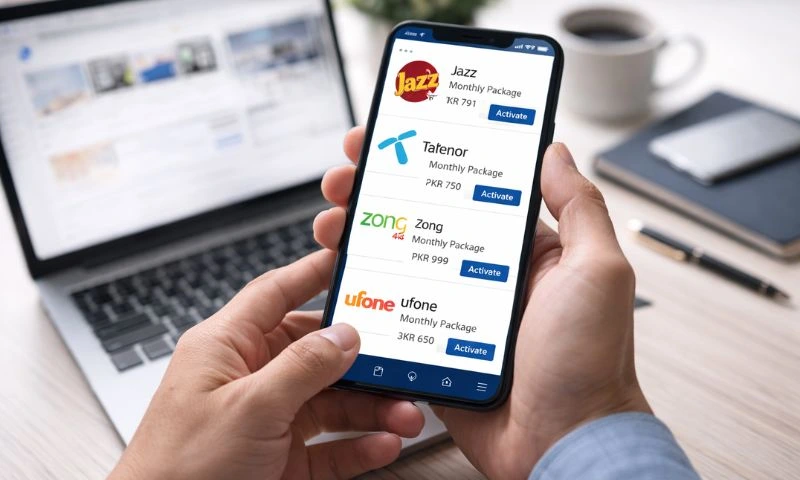
PTA Stops Mobile Operators From Increasing Monthly Package Prices
Pakistan Telecommunication Authority has stopped mobile operators from increasing the prices of their monthly mobile packages, a move aimed at protecting consumers from sudden telecom tariff hikes. The directive comes amid rising inflation and growing complaints from mobile users about frequent changes in package rates by telecom companies. According to reports, the regulator has informed telecom operators that monthly packages cannot be increased without regulatory approval, and companies must maintain the existing prices for such bundles unless PTA reviews and approves the changes. Telecom Operators Directed to Maintain Existing Prices The Pakistan Telecommunication Authority issued the instructions to major telecom companies operating in the country including Jazz, Zong, Ufone and Telenor. The regulator clarified that telecom operators cannot change the prices of monthly bundles at their own discretion. PTA stated that the decision was taken to ensure fairness and transparency for consumers who rely heavily on monthly packages for voice calls, SMS and mobile data usage. Officials said the directive is meant to stabilize telecom costs for millions of users who subscribe to monthly packages as their primary mobile plan. A PTA spokesperson said the authority had received complaints about operators increasing the prices of packages without sufficient notice. The official statement said that the regulator had “directed telecom operators not to increase prices of monthly bundles without prior approval from PTA.” Growing Concerns Over Telecom Costs Pakistan has more than 190 million cellular subscribers and a large percentage of them use bundled packages that include data, calls and text messages. Monthly packages are particularly popular among students, freelancers and working professionals who rely on consistent connectivity for work and communication. Over the past few years, telecom companies have periodically revised package prices due to rising operational costs, currency depreciation and higher energy prices. Mobile operators argue that network expansion, spectrum licensing and infrastructure costs have increased significantly. However, consumer groups say sudden price increases place additional financial pressure on users already dealing with high inflation and rising utility costs. The PTA’s intervention is therefore being viewed as a consumer protection measure designed to keep telecom services affordable. Telecom Sector Under Regulatory Watch The Pakistan Telecommunication Authority regulates the telecom sector under the Pakistan Telecommunication Act and oversees pricing structures, licensing and service quality. The regulator also monitors tariff adjustments to ensure that operators do not impose unfair pricing practices. Telecom companies still have the option to request price adjustments, but any such changes must be formally submitted to PTA for approval. Industry experts say that while the move may limit immediate price hikes, telecom operators will likely continue discussions with regulators regarding pricing flexibility as operational costs continue to rise. Pakistan’s telecom industry plays a critical role in the country’s digital economy, supporting mobile banking, e commerce, freelancing and digital services used by millions of citizens. Impact on Consumers For mobile users, the PTA directive provides short term relief by ensuring that existing monthly packages remain stable. Consumers can continue using their current bundles without worrying about sudden price increases. Analysts believe regulatory oversight will also encourage telecom companies to focus on improving service quality and network coverage rather than relying on frequent price adjustments. With mobile connectivity now a necessity rather than a luxury, decisions affecting telecom pricing have a direct impact on Pakistan’s digital landscape and everyday life.

Elevate Pay and NayaPay Launch Zero Fee Dollar Transfers for Pakistan
Pakistani freelancers and remote workers have gained a new option for receiving international payments after a partnership between Elevate Pay and NayaPay introduced a system that allows dollar payments to be transferred directly into NayaPay wallets without transfer fees. The new integration aims to simplify how Pakistanis receive payments from overseas clients and digital platforms. The development is particularly significant for Pakistan’s growing freelance economy, where thousands of professionals rely on cross border payments from clients in the United States, Europe, and other global markets. Partnership Between Elevate Pay and NayaPay Under the new arrangement, users can receive USD payments through Elevate Pay and then move the funds into their NayaPay wallets with zero transfer fees. The dollars are converted into Pakistani rupees and deposited into the digital wallet quickly. According to Elevate Pay, users can move funds seamlessly between the two platforms. The company said: “Pay $0 in transfer fees when you send USD to NayaPay.” The service also promises fast processing times. Elevate Pay states that payments can arrive within minutes after the transfer is initiated. “PKR arrives in your NayaPay wallet within minutes.” Users need an approved Elevate Pay USD account to start receiving international payments before transferring them into their NayaPay wallet. Designed for Freelancers and Remote Workers The service is targeted mainly at freelancers, digital professionals, and remote workers who regularly receive payments from abroad. Pakistan is one of the world’s fastest growing freelance markets, with many professionals working on platforms such as Upwork, Fiverr, and Toptal. Elevate Pay provides users with virtual USD accounts that allow them to receive payments from international clients without needing a US bank account. The platform supports global payment infrastructure and converts earnings into local currency at competitive exchange rates. For many Pakistani freelancers, cross border payments have traditionally been complicated because services like PayPal are not fully available in Pakistan. As a result, professionals often rely on platforms like Payoneer or bank wire transfers, which may include higher fees and slower processing times. The new Elevate Pay and NayaPay integration aims to address these challenges by offering faster and more transparent payment processing. Instant Transfers and Official Remittance Documentation Another key feature of the system is that each transaction generates a Proceeds Realization Certificate. This document is important for tax reporting and financial documentation in Pakistan. Elevate Pay explained that each transfer produces a PRC with a specific remittance purpose code, allowing users to maintain official records of their foreign income. The system also operates around the clock, meaning freelancers can receive funds at any time of the day without waiting for traditional banking hours. Growing Fintech Ecosystem in Pakistan Pakistan’s digital payments ecosystem has expanded rapidly in recent years with the rise of mobile wallets and fintech companies. Services such as NayaPay, Easypaisa, and JazzCash have significantly improved financial access and digital transactions across the country. Experts say solutions that simplify international payments could further boost Pakistan’s freelance industry. Overseas remittances and freelance income together contribute billions of dollars annually to Pakistan’s economy, making efficient digital payment infrastructure increasingly important. With the new partnership, freelancers now have another tool to receive global payments more easily and with fewer costs.

New Pink Button Alert System Introduced to Boost School Safety in Punjab
The government of Punjab has launched a new safety initiative aimed at strengthening security in educational institutions. Authorities have introduced a Pink Button emergency alert system in schools to allow staff to immediately notify law enforcement in case of emergencies. Officials say the system is designed to improve response time during critical situations and ensure better protection for students and teachers across the province. What the Pink Button System Does The newly introduced Pink Button system functions as an emergency alert mechanism installed inside schools. When activated, the button sends an immediate distress signal to nearby police stations and emergency response centers. This allows authorities to quickly identify the location of the emergency and dispatch assistance without delay. The initiative is part of broader efforts by the Punjab government to improve school security and modernize emergency response mechanisms. Officials believe the technology will play a key role in addressing safety concerns and ensuring that schools remain secure environments for learning. How the System Will Work in Schools Under the program, selected staff members within schools will be authorized to activate the emergency alert when they detect any security threat or emergency situation. Once the Pink Button is pressed, the alert is transmitted directly to the police control system, allowing authorities to respond rapidly. The system is expected to be integrated with the province’s emergency response infrastructure so that multiple agencies can coordinate effectively if required. Security experts say such systems can significantly reduce response time during incidents by providing precise location data to emergency teams. Part of Wider School Safety Reforms The Pink Button initiative is part of a broader strategy by the Punjab government to strengthen security in educational institutions. In recent years, authorities have implemented several measures to improve safety in schools across the province. These include surveillance cameras, security drills, improved boundary walls, and coordination with local police. Education officials say modern technology can help prevent incidents and ensure faster response if emergencies occur. The introduction of the new alert system also reflects growing global attention toward school safety. Technology and Safety in Educational Institutions Many countries have begun adopting digital alert systems in schools to improve emergency preparedness. These systems allow school authorities to notify police, fire services, or medical teams instantly. Experts say that early warning and quick response are critical in managing emergencies effectively. In Pakistan, improving school security has remained a priority for governments following past security incidents that highlighted vulnerabilities in educational institutions. Officials hope that new technological tools such as the Pink Button system will provide additional protection and reassurance to parents and students. Ensuring a Safe Learning Environment Education authorities in Punjab say the main goal of the initiative is to create a safer environment for students and teachers. By enabling quick communication with law enforcement, the Pink Button system is expected to strengthen coordination between schools and emergency services. Officials also plan to monitor the system’s effectiveness and expand it to more institutions if the initial rollout proves successful. The initiative reflects the province’s increasing focus on using technology to enhance public safety and improve the education sector.

Pakistan’s 5G Journey Begins: When Will Ultra-Fast Internet Reach Everyone?
Pakistan has taken a major step toward next-generation connectivity after successfully raising $507 million in a nationwide 5G spectrum auction, paving the way for ultra-fast internet services across the country. The auction was conducted by the Pakistan Telecommunication Authority (PTA), where telecom operators Jazz, Ufone and Zong secured the spectrum needed to deploy 5G networks. A total of 480 MHz spectrum was sold out of 597 MHz offered, marking one of the largest telecom spectrum auctions in Pakistan’s history. While this is a major milestone, experts say Pakistan still needs to complete several technical and infrastructure stages before 5G becomes widely available to consumers. Where 5G Is Already Transforming the World 5G services are already operational in many countries including the United States, China, South Korea, Japan, the United Kingdom, Germany, the UAE and Saudi Arabia. According to global telecom industry data, 5G networks are expected to cover nearly one-third of the world’s population by the mid-2020s, highlighting the rapid pace of adoption worldwide. Countries that adopted 5G early are already seeing major benefits. In Europe, nations like Denmark have achieved very high connectivity and digital business adoption due to strong network infrastructure, enabling companies to integrate technologies like artificial intelligence, cloud computing and big data. Research by global telecom organizations also shows that 5G will play a critical role in the Fourth Industrial Revolution, enabling smart cities, autonomous vehicles, remote healthcare and advanced manufacturing. When Will 5G Be Available Across Pakistan? According to government officials, the newly acquired spectrum will first be used to improve 4G network quality and capacity before the full rollout of 5G services. Initial 5G launches are expected to begin in Islamabad and provincial capitals, with telecom operators gradually expanding coverage to other cities. However, industry experts say full nationwide availability could take two to three years, depending on infrastructure upgrades, fiber deployment and consumer adoption of 5G-compatible smartphones. Telecom analysts also note that Pakistan currently relies heavily on 4G infrastructure, and the transition to 5G requires new base stations, fiber networks and upgraded spectrum utilization. Economic Impact: What 5G Could Bring to Pakistan Experts believe 5G could significantly boost Pakistan’s digital economy. Faster connectivity can increase productivity in sectors such as e-commerce, banking, healthcare, education and manufacturing. Studies indicate that high-speed digital infrastructure improves productivity and competitiveness while creating jobs and boosting economic growth. For businesses, 5G can enable real-time data processing, automation and smarter logistics systems. Technology companies also expect faster internet to attract more global investment into Pakistan’s technology sector. Freelancers and Digital Workers Could Benefit the Most Pakistan is already among the world’s leading freelance markets. Faster internet speeds could significantly improve productivity for freelancers working in fields like software development, graphic design, video editing and digital marketing. Experts say 5G will allow freelancers to upload large files faster, participate in high-quality video meetings and use cloud-based tools more efficiently. For example, activities such as 4K video streaming, cloud computing, gaming, artificial intelligence tools and remote collaboration require high-speed, low-latency connections that 5G can provide. What Still Needs to Happen Before Full 5G Rollout Although the spectrum auction is complete, several steps remain before widespread adoption: Expansion of fiber-optic infrastructure Installation of new telecom towers and base stations Upgrading existing networks to support 5G technology Availability of affordable 5G-enabled smartphones Experts also stress the importance of policy support, investment and digital literacy to ensure the technology benefits the entire population. Pakistan’s Digital Future With the successful spectrum auction, Pakistan has officially entered the global 5G race. If implemented effectively, the technology could transform how businesses operate, how freelancers work and how people access digital services. Industry analysts believe that the coming years will determine how quickly Pakistan can convert this technological milestone into real economic growth and digital transformation.

Jazz Secures 190 MHz Spectrum to Boost Pakistan’s 5G Future
Pakistan’s largest telecom operator has taken a significant step toward next generation connectivity as Jazz secured additional spectrum aimed at accelerating the country’s transition toward 5G services. The development highlights the telecom industry’s preparations for the future of high speed mobile internet in Pakistan as demand for faster connectivity and digital services continues to grow. Jazz Secures 190 MHz Spectrum According to reports, Jazz has successfully acquired 190 MHz of spectrum, a move that strengthens the company’s network capacity and positions it for upcoming 5G deployment in Pakistan. Spectrum is the radio frequency used by telecom operators to transmit mobile signals. The more spectrum a company holds, the better it can deliver faster speeds, improved coverage, and reliable connectivity. The acquisition allows Jazz to expand its network capabilities and handle increasing data traffic from millions of users across Pakistan. The telecom operator said the new spectrum will help support future technologies and improve customer experience as Pakistan prepares for the rollout of next generation mobile networks. Read More: 5G Rollout in Pakistan Gains Momentum After 600 MHz Spectrum Auction Preparing Pakistan for 5G Pakistan has been gradually moving toward introducing 5G services. Telecom companies have conducted several test trials in recent years to evaluate the technology’s capabilities. The addition of spectrum plays a crucial role in enabling the transition from current 4G networks to faster 5G connectivity. Industry experts say 5G technology can deliver extremely high data speeds, ultra low latency, and improved support for emerging technologies such as artificial intelligence applications, smart cities, and the Internet of Things. With smartphone usage and mobile data consumption increasing rapidly, telecom operators are investing in infrastructure to meet future demand. Rising Demand for Data in Pakistan Pakistan has witnessed significant growth in mobile internet usage over the past decade. According to the Pakistan Telecommunication Authority, the country now has more than 130 million broadband users and over 190 million cellular subscribers. Mobile data consumption continues to rise as people rely on digital services such as video streaming, online education, remote work, and e commerce. Telecom operators like Jazz, Zong, Telenor and Ufone have been upgrading their networks to ensure faster speeds and wider coverage. Experts say that securing additional spectrum is essential for telecom companies to manage growing traffic and deliver improved network performance. Read More: Pakistan Raises $507 Million as Jazz, Zong and Ufone Win Key 5G Spectrum Investment in Digital Transformation Jazz has been positioning itself not only as a telecom operator but also as a digital services provider through its broader ecosystem that includes fintech, cloud services and digital platforms. Industry analysts say investments in spectrum and infrastructure will support Pakistan’s digital transformation and help create new opportunities for innovation and economic growth. The expansion of high speed connectivity could also benefit sectors such as healthcare, education, agriculture and financial technology. However, experts note that large scale 5G deployment will require continued investment in infrastructure, regulatory support and spectrum allocation by the government. As Pakistan moves closer to launching next generation mobile networks, telecom companies are increasingly preparing their systems to handle the demands of a digitally connected future.

MacBook Neo: Apple Unveils Its Cheapest Laptop Ever
Apple has introduced a new entry level laptop called the MacBook Neo, a device designed to make the Mac ecosystem more accessible to students and everyday users. The new laptop combines Apple’s signature design with a lower price point, marking a significant shift in the company’s strategy to compete in the budget laptop market. Apple Introduces MacBook Neo The MacBook Neo was unveiled during Apple’s March 2026 product announcements as the most affordable Mac laptop ever produced by the company. The device starts at $599, making it considerably cheaper than other MacBook models such as the MacBook Air and MacBook Pro. Apple says the new laptop aims to attract students, first time Mac users, and budget conscious consumers who want access to macOS and Apple’s ecosystem without paying premium prices. The laptop will be available globally starting March 11, 2026, with pre orders opening shortly after the announcement. Read More: Apple’s First Touchscreen MacBook Pro Set for 2026 Release Design and Display MacBook Neo features a sleek aluminum body similar to other MacBook devices, but it introduces a more colorful approach to design. The laptop comes in four colors including silver, blush, citrus, and indigo. Apple designed the laptop to be lightweight and portable, weighing around 2.7 pounds, making it easy to carry for students and travelers. The device includes a 13 inch Liquid Retina display with a resolution of 2408 by 1506 pixels. Apple says the display supports one billion colors and offers high brightness levels for clearer visuals while watching videos, editing photos, or browsing the web. The display also includes an anti reflective coating that improves visibility in bright environments. Performance Powered by A18 Pro Chip One of the most notable changes in MacBook Neo is the processor. Instead of Apple’s M series chips used in other Macs, the Neo is powered by the A18 Pro chip, the same processor used in iPhone devices. This makes MacBook Neo the first Mac laptop built around an A series mobile processor rather than Apple’s M series silicon. Apple claims the chip delivers strong performance for everyday tasks such as web browsing, streaming, video calls, and office work. The laptop includes 8 GB of unified memory and storage options of 256 GB or 512 GB. It also features a 16 core Neural Engine designed to accelerate artificial intelligence tasks and machine learning features. Read More: Apple Unveils New MacBook Air and Pro Starting at $1,099 Battery Life and Features MacBook Neo offers up to 16 hours of battery life on a single charge, allowing users to work or study throughout the day without needing frequent charging. The laptop includes a Magic Keyboard, a large multi touch trackpad, and a 1080p FaceTime HD camera for video calls. Other features include dual microphones with noise reduction and side firing speakers that support Spatial Audio and Dolby Atmos for immersive sound. Connectivity options include two USB C ports, a headphone jack, Wi Fi 6E support, and Bluetooth connectivity. Budget Focus Comes With Trade Offs To reach the lower price point, Apple made several compromises. The base model does not include Touch ID, and the laptop lacks premium features such as Thunderbolt ports and MagSafe charging. Despite these limitations, analysts say the MacBook Neo represents Apple’s strongest push yet into the affordable laptop market, where it will compete with Chromebooks and entry level Windows laptops. Experts believe the device could significantly expand Apple’s presence among students and younger users worldwide.
