
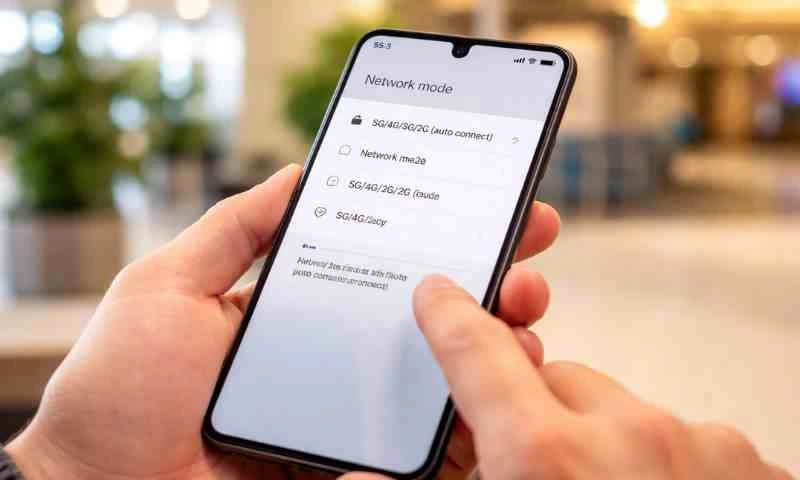
As Pakistan prepares for the rollout of 5G services, many users are asking a simple but important question: does my phone actually support 5G? With telecom operators gearing up for next-generation connectivity, knowing your device’s compatibility has become essential. Check Your Phone Settings First The easiest way to confirm 5G support is through your phone’s settings. On Android devices, users can go to Settings, then open “Network & Internet” or “Connections,” and select “Mobile Network.” If options such as “5G/4G/3G” or “5G Auto” appear under network mode, your device supports 5G. If only LTE or 4G is listed, the phone is not 5G-enabled. This method is considered the quickest way to confirm compatibility without needing external tools. Search Your Phone Model Online Another reliable method is to check your phone’s specifications online. Users can find their model name under “About Phone” and search it on Google or visit official brand websites. If 5G is listed under network support, the device is compatible. This approach helps confirm hardware capability, even if 5G is not yet active on the phone. Most flagship smartphones released in recent years support 5G, while many mid-range devices have also started offering compatibility. Use IMEI to Confirm Compatibility Each smartphone has a unique IMEI number that can be used to check network compatibility. Users can dial *#06# or find the IMEI in settings, then enter it on verification platforms. This method is particularly useful because it can confirm whether the phone supports the specific 5G bands used by local networks. Experts note that having a 5G phone is not enough if it does not support the right frequency bands. Look for the 5G Icon If you are in a 5G coverage area, your phone may display a “5G” symbol in the status bar. This indicates that the device is connected to a 5G network. However, not seeing the icon does not necessarily mean your phone is incompatible. It could simply be due to limited coverage, disabled settings, or network restrictions. Check Supported Bands and Software Updates Compatibility also depends on whether your phone supports the correct 5G bands used in Pakistan. Imported devices may not always work on local networks due to band differences. Additionally, users should ensure their phones are updated to the latest software version, as some manufacturers enable 5G through updates. Pakistan’s 5G Future Pakistan is moving toward a phased 5G rollout, with major cities expected to get early access. The Pakistan Telecommunication Authority has already taken steps toward spectrum allocation and infrastructure development to support next-generation networks. Experts believe 5G will significantly improve internet speeds, reduce latency, and enable new technologies such as smart cities, cloud services, and advanced mobile applications.

Big Shift: Google Using AI to Rewrite Search Result Titles
Google is reportedly testing a new artificial intelligence feature that can rewrite website titles directly in search results. The move is part of the company’s broader push to improve user experience and match content more closely with search intent. According to reports, Google’s AI may replace original headlines with newly generated ones that better align with what users are searching for. This means the title shown on Google Search may differ from the one written by the publisher. Experts say this experiment could significantly change how users interact with search results and how websites attract clicks. How the Feature Works The feature uses AI to analyze a webpage’s content and generate a title that it believes is more relevant to a user’s query. In some cases, these rewritten titles are shorter or simplified. Google has described the test as a “small” and “narrow” experiment, indicating that it is not yet widely rolled out. However, early examples show that AI-generated titles can sometimes alter the tone or meaning of the original headline. This has raised concerns among publishers and content creators. Concerns from Publishers and Experts Many publishers fear that AI rewriting titles could reduce their control over how their content is presented online. There are also concerns that changes in wording could affect click-through rates and even misrepresent the original intent of an article. In some reported cases, headlines were shortened or rephrased in ways that changed their meaning, leading to confusion among readers. Industry experts warn that this could impact branding, trust, and overall website traffic. Part of a Bigger AI Shift in Search This development is part of Google’s larger transition toward AI-powered search. Features like AI-generated summaries, also known as AI Overviews, are already changing how users consume information. These tools provide direct answers on the search page, reducing the need to click on websites. As a result, publishers are already facing challenges related to declining traffic and visibility. What It Means for SEO and Content Creators The introduction of AI-generated titles could reshape search engine optimization strategies. Websites may need to focus more on content clarity, structure, and relevance rather than relying solely on catchy headlines. Experts suggest that businesses should adapt by creating content that is easy for AI systems to understand and present accurately. This shift may also increase competition, as visibility in search results becomes more dependent on AI interpretation rather than original headlines. What Happens Next Google has not confirmed when or if this feature will be rolled out globally. For now, it remains in the testing phase. However, the experiment signals a major change in how search engines may present information in the future. If implemented widely, AI-generated titles could redefine the relationship between search platforms and content creators.
Pakistan’s 5G Not Working on iPhones and Pixel Devices
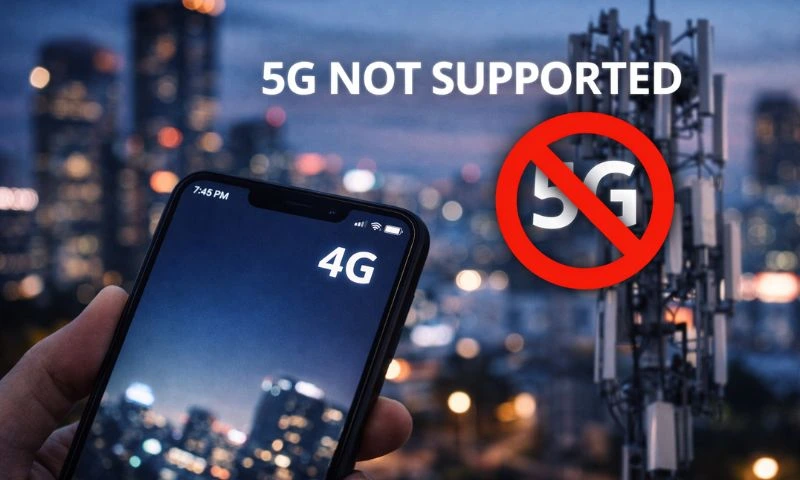
Pakistan’s long-awaited 5G rollout has begun, but many users are facing an unexpected limitation. Despite having 5G-capable smartphones, a large number of users with iPhones, Google Pixel devices, and some Samsung models are currently unable to access the new network. According to reports, the issue is not related to hardware limitations but rather software restrictions and lack of official carrier approvals. Why 5G Is Not Working on Premium Phones The primary reason behind this limitation lies in how global smartphone manufacturers control 5G access. Apple, Google, and Samsung require telecom operators to receive official certification before enabling 5G on their devices. In the case of Apple, 5G is activated through carrier bundles. Without approval, the option remains disabled on iPhones. As explained, “5G will not work on an iPhone until the carrier pushes the required carrier bundle.” Similarly, Google restricts 5G access on Pixel devices through firmware-level controls. If a telecom operator is not officially supported in a region, the device will remain locked to 4G networks. Samsung follows a different approach using a Country Specific Code system. Devices connected to uncertified networks, especially imported models, may not enable 5G functionality. Certification Delays Behind the Issue The root of the problem appears to be timing. Pakistan’s 5G rollout has moved quickly, but telecom operators such as Jazz, Zong, and Ufone have not yet completed certification processes with global manufacturers. Industry sources indicate that these approvals are essential for enabling 5G compatibility on premium devices. Without them, even the most advanced smartphones cannot access local 5G networks. One telecom operator has already acknowledged the limitation, confirming that 5G is currently not supported on iPhones and that efforts are underway to expand compatibility. Some Brands Already Working Interestingly, not all smartphones are affected. Brands like Xiaomi, Oppo, and Vivo are reportedly less restrictive and allow easier access to 5G networks without extensive certification requirements. This has created a situation where mid-range devices from certain manufacturers may support 5G, while premium flagship phones remain limited to 4G for now. User Frustration Grows The issue has sparked frustration among users, especially those who invested in expensive flagship devices expecting full 5G functionality. Many users are questioning why commercial 5G services were launched before ensuring compatibility with major global brands. For now, most affected users will continue relying on 4G despite the availability of 5G infrastructure. What Happens Next Telecom operators are actively working with manufacturers to resolve the issue. Once approvals are granted and updates are rolled out, affected devices are expected to gain access to 5G networks. However, no official timeline has been provided, leaving uncertainty around when full compatibility will be achieved. Pakistan’s 5G journey has officially begun, but this early limitation highlights a key reality. Next-generation connectivity depends not only on network infrastructure but also on global ecosystem alignment between telecom operators and device manufacturers.

Musk’s Tweets Land Him in Legal Trouble Over Twitter Deal
A US jury has found tech billionaire Elon Musk liable for misleading Twitter shareholders during his controversial $44 billion acquisition of the social media platform in 2022, marking a significant legal setback in one of the most closely watched corporate deals in recent history. The verdict, delivered by a federal jury in San Francisco, concluded that Musk’s public statements about the deal misled investors and contributed to fluctuations in Twitter’s share price, causing financial losses to shareholders. Key Statements Under Scrutiny The case centered on Musk’s tweets and public remarks during the acquisition process, particularly a May 2022 post in which he claimed the deal was “temporarily on hold.” Jurors determined that such statements were misleading and had a direct impact on investor decisions, leading some shareholders to sell their holdings at lower prices. However, the jury stopped short of concluding that Musk had orchestrated a broader scheme to defraud investors, clearing him of some fraud-related claims. Read More: Musk Becomes Richest Person Ever With $839 Billion Fortune Billions at Stake The lawsuit was filed as a class action by Twitter shareholders who argued that Musk’s actions were aimed at driving down the company’s stock price to renegotiate or exit the deal. Legal experts estimate that damages in the case could reach billions of dollars, with some reports suggesting potential liability of around $2.5 billion or more. The exact compensation amount will be determined in subsequent proceedings. Background of the Twitter Takeover Musk agreed to buy Twitter for $44 billion in April 2022, offering $54.20 per share. However, the deal soon became turbulent as he raised concerns about the number of fake or spam accounts on the platform. These concerns were repeatedly expressed on social media, which investors claim created uncertainty and volatility in the stock price. Despite attempts to withdraw or renegotiate, Musk ultimately completed the acquisition in October 2022 and later rebranded the platform as X. Read More: Explained: Elon Musk, Reid Hoffman and the Viral Trump Assassination Debate Legal Troubles Continue This case adds to a series of legal challenges Musk has faced related to his public statements and market influence. In a separate matter, the US Securities and Exchange Commission has also investigated Musk over delayed disclosure of his Twitter share purchases, alleging that it allowed him to acquire stock at lower prices. Musk has denied wrongdoing in both cases and is expected to appeal the latest verdict. Implications for Markets and Tech Industry The ruling is being closely watched by regulators and investors worldwide, as it sets an important precedent regarding the influence of high-profile executives on financial markets through social media. Analysts say the case underscores the risks associated with market-moving statements by influential figures, particularly during major corporate transactions. For investors, the verdict reinforces the need for transparency and accountability in high-stakes deals, especially in an era where social media plays a central role in shaping market sentiment.


Jazz, Ufone and Zong Cleared to Roll Out 5G Services in Pakistan
Pakistan has taken a major step toward next-generation connectivity as the Pakistan Telecommunication Authority has formally authorized leading Cellular Mobile Operators including Jazz, Ufone and Zong to begin 5G services across the country. In an official announcement shared on X, PTA stated, “The Pakistan Telecommunication Authority (PTA) is pleased to announce that Cellular Mobile Operators (CMOs), namely Jazz, Ufone and Zong have formally been authorized to start the 5G services across Pakistan.” The development marks the beginning of Pakistan’s transition into a high-speed digital ecosystem, with telecom operators now preparing to roll out commercial 5G networks in phases. <blockquote class=”twitter-tweet”><p lang=”en” dir=”ltr”>The Pakistan Telecommunication Authority (PTA) is pleased to announce that Cellular Mobile Operators (CMOs), namely Jazz, Ufone and Zong have formally been authorized to start the 5G services across Pakistan. In order to ensure a high-quality user experience during this initial… <a href=”https://t.co/YJ43ke19X8″>pic.twitter.com/YJ43ke19X8</a></p>— PTA (@PTAofficialpk) <a href=”https://twitter.com/PTAofficialpk/status/2034903390690713846?ref_src=twsrc%5Etfw”>March 20, 2026</a></blockquote> <script async src=”https://platform.twitter.com/widgets.js” charset=”utf-8″></script> Phased Rollout to Ensure Quality According to PTA, operators will not launch nationwide services immediately. Instead, 5G will be introduced gradually to ensure service stability and quality. The authority explained, “In order to ensure a high-quality user experience during this initial transition, all CMOs will introduce 5G services in a phased manner.” This approach aligns with global telecom practices, where operators prioritize network optimization and performance before expanding coverage. Industry experts believe that a phased rollout will help address challenges such as infrastructure readiness, spectrum management, and device compatibility, which are critical for successful 5G deployment. Consumer Awareness and Device Compatibility To support users during the transition, PTA has placed a strong emphasis on transparency and awareness. The statement added, “To facilitate consumer awareness and ensure a seamless user experience, all CMOs will publish updated lists on their official websites, identifying specific areas where 5G services are available, as well as details of 5G-enabled mobile handset models compatible in Pakistan.” This move is expected to help consumers understand whether their devices support 5G and where they can access the new service. Currently, many smartphones sold in Pakistan are technically 5G-capable, but compatibility with local frequency bands remains a key factor for optimal performance. Pakistan’s Journey Toward 5G Pakistan has been working toward 5G adoption for several years. Early trials were conducted by telecom operators, with Zong becoming the first to test 5G in the country in 2019. More recently, operators have reported speeds exceeding 1 Gbps in controlled environments, demonstrating the potential of the technology. However, commercial rollout has faced delays due to spectrum allocation issues, regulatory planning, and economic constraints. What 5G Means for Pakistan The introduction of 5G is expected to transform multiple sectors, including healthcare, education, manufacturing, and entertainment. Faster speeds and lower latency can enable applications such as remote surgeries, smart cities, industrial automation, and immersive digital experiences. For consumers, 5G promises significantly improved internet speeds, smoother streaming, and enhanced mobile connectivity. At the same time, experts caution that widespread adoption will depend on affordability, device penetration, and infrastructure expansion. A Turning Point for Digital Pakistan The PTA’s authorization signals a new phase in Pakistan’s telecom evolution. With operators now cleared to launch services, the focus will shift toward execution, coverage expansion, and user adoption. As 5G begins to roll out across major cities, Pakistan moves closer to realizing its vision of a fully connected digital economy.

Zong 5G is Live; Leading Pakistan’s Digital Journey into a New Era with Commercial 5G Launch
At a defining moment in Pakistan’s digital evolution, Zong, Pakistan’s leading technology service enterprise, has officially attained its 5G license and commercially launched its 5G services in more than 16 cities including Islamabad, Rawalpindi, Karachi, Lahore, Peshawar, and Quetta. Ushering in a new era of digital connectivity, innovation, and economic acceleration, Zong has a strategic commitment to deploy and upgrade 1,000+ 5G sites nationwide in 2026, driving scale, speed, and impact across Pakistan’s digital ecosystem. This launch reflects a clear strategic commitment: to lead Pakistan’s transition into a fully digital, intelligent, and connected future. It marks the culmination of Zong’s journey from pioneering Pakistan’s first 5G trial in 2019 to deploying a robust, multi-city 5G infrastructure today. Backed by globally benchmarked infrastructure, Zong has already demonstrated speeds exceeding 1.4Gbps in trials, reinforcing its position at the forefront of technological excellence and network innovation. At the core of Zong’s 5G strategy are three transformative pillars. Ultimate Customer Experience remains the top priority delivering low latency, high reliability, consistency and seamless performance to power next-generation use cases such as immersive gaming with customized bundles, ultra-HD video streaming, and advanced digital lifestyles. Moreover, Zong ensure to deliver faster issue resolution and a smooth, consistent experience across app, touchpoints, and social channels. Diversified Products & Services Portfolio will extend 5G beyond connectivity, enabling integrated solutions including cloud platforms, enterprise digitization tools, smart homes & IoT ecosystems, CCTV solutions and tailored offerings for startups, SMEs and large industries. Complementing this, is a strong focus on AI Enablement, personalized products and bundles recommendations, embedding intelligent automation across the network to enable predictive network optimization and proactive problem detection. As a subsidiary of China Mobile Limited, the world’s largest telecommunications enterprise, Zong brings global expertise and innovation leadership to build a world-class digital ecosystem in Pakistan, aligned with national growth priorities. In line with the Government’s Digital Pakistan vision and Pakistan Vision 2030, its 5G rollout positions the country as a rising global technology hub while strengthening the CPEC agenda, enabling high-speed, low-latency connectivity to power smart industries, transform healthcare, and drive precision agriculture, accelerating sustainable growth and nationwide digital innovation. Zong is not just launching a network; it is enabling a future where every individual, business, and industry can thrive in a truly Digital Pakistan. The era of 5G is live with Zong 5G – Aisa hai future!

Faster Than Ever: Zong’s 5G Test Impresses Industry
Pakistan’s race toward next-generation connectivity has gained momentum as Zong announced successful 5G trials in Islamabad, achieving peak download speeds of over 1,400 Mbps. The tests, conducted across multiple urban environments in the capital, highlight the operator’s technical readiness for a future nationwide rollout. High-Speed Trials Show Network Capability According to Zong, the pre-launch testing phase demonstrated consistent performance and strong signal stability across different locations. The company emphasized that these speeds were achieved through efficient spectrum utilization and optimized infrastructure. Zong noted that its “output-to-spectrum” efficiency played a critical role in reaching these benchmarks, reflecting years of investment in network upgrades and advanced technologies. These results place Zong among the leading telecom operators in Pakistan’s evolving 5G landscape, especially as competition intensifies. Building on a History of 5G Milestones Zong has been at the forefront of 5G development in Pakistan for several years. In 2019, it conducted the country’s first successful 5G trial and established the first functional 5G node. In 2020, the company completed South Asia’s first 5G international video call, showcasing low latency and real-time communication capabilities. Since then, Zong has continued investing in infrastructure upgrades, artificial intelligence-based traffic management, and network expansion. These milestones have helped position Pakistan among countries preparing for full-scale 5G deployment. Three-Pillar Strategy for 5G Launch Zong has outlined a clear roadmap for its commercial 5G rollout, built on three core pillars. The first is improving customer experience by ensuring a smooth transition for existing 4G users. The second focuses on diversified services, enabling new applications powered by high-speed connectivity. The third pillar centers on AI-driven optimization, where intelligent systems manage network performance during peak usage. This approach indicates that Zong is not only focusing on speed but also on long-term reliability and scalability. Competition Heats Up in Pakistan’s Telecom Sector Zong’s announcement comes shortly after another major telecom operator, Jazz, revealed similar early 5G testing results in Islamabad with speeds also reaching around 1,400 Mbps. This growing competition suggests that Pakistan’s telecom industry is entering a critical phase, with operators racing to establish dominance ahead of a commercial launch. What 5G Means for Pakistan The introduction of 5G is expected to transform Pakistan’s digital landscape. Faster speeds and lower latency could enable smart cities, advanced healthcare, cloud gaming, and industrial automation. Zong’s latest trials represent more than just a speed milestone. They signal a shift toward a more connected and digitally driven economy, where high-speed internet becomes a backbone for innovation. Final Analysis While the results are promising, the real challenge lies in translating test speeds into consistent real-world performance. Infrastructure costs, spectrum allocation, and affordability will play key roles in determining how quickly 5G becomes accessible to the public. For now, Zong’s 1.4 Gbps achievement is a strong indicator that Pakistan is moving closer to the 5G era.

Apple Launches AirPods Max 2 After 5 Years at $549
Apple has officially launched the second-generation AirPods Max, marking its first major update to the premium over-ear headphones in more than five years. The new model is priced at $549, the same as the original version introduced in 2020, and comes with a range of improvements aimed at competing in the high-end audio market. The updated headphones are powered by Apple’s latest H2 chip, which enables improved performance, better sound quality and a host of new smart features. Improved noise cancellation and audio quality One of the biggest upgrades in the new AirPods Max is enhanced active noise cancellation, which Apple says is significantly more effective than the previous generation. Apple stated: “AirPods Max are upgraded with up to 1.5x more effective ANC”, highlighting a major improvement in blocking external noise. The headphones also feature a new microphone system and improved computational audio, delivering clearer calls and richer sound quality. In addition, the device supports high-resolution lossless audio via USB-C connection, targeting professional users and music creators who require higher fidelity sound. Read More: MacBook Neo: Apple Unveils Its Cheapest Laptop Ever New AI-powered features introduced Apple has introduced several new intelligent features in the latest version of AirPods Max. These include Adaptive Audio, which automatically adjusts sound levels based on surroundings, and Conversation Awareness, which lowers volume when users start speaking to someone nearby. Another key addition is Live Translation, a feature powered by Apple’s artificial intelligence platform that allows users to translate in-person conversations in real time. Voice isolation has also been improved, making calls clearer even in noisy environments. Availability and market competition Apple said the new AirPods Max will be available for pre-order starting March 25 in more than 30 countries, with retail availability expected in early April. The launch comes as Apple looks to strengthen its position in the premium headphone market, which is currently dominated by brands such as Sony, Bose and Sennheiser. Despite the improvements, the overall design of the headphones remains largely unchanged from the original version, focusing instead on internal upgrades and smarter features. Read More: Apple’s Big 2026: Over 20 New Devices Including Foldable iPhone and AR Glasses Apple doubles down on premium audio segment The launch of the second-generation AirPods Max signals Apple’s continued focus on expanding its ecosystem of premium audio products. With increasing competition and growing demand for high-quality wireless headphones, Apple is betting on AI-driven features and improved performance to attract both everyday users and professionals. Industry analysts say the addition of advanced features such as live translation and enhanced noise cancellation could help Apple strengthen its position in the global audio market.

Pakistan’s IT Exports Near $3 Billion in 8 Months of FY26
Pakistan’s information technology sector continues its strong upward trajectory, with exports reaching nearly $3 billion during the first eight months of fiscal year 2025-26, reflecting steady growth in one of the country’s most promising industries. The increase highlights the growing global demand for Pakistani IT services, including software development, freelancing, and IT-enabled solutions. The sector has become a key source of foreign exchange for the country, helping ease pressure on Pakistan’s external accounts. Consistent growth driven by freelancers and IT firms According to industry data, Pakistan’s IT exports have maintained a consistent upward trend throughout the fiscal year. Earlier figures showed exports reaching $2.61 billion in the first seven months of FY26, marking a significant year-on-year increase. The growth is being driven by a combination of freelancers, software houses, and outsourcing firms, all of which are serving international clients across North America, Europe, and the Middle East. Experts say Pakistan’s competitive pricing, skilled workforce, and increasing digital adoption have positioned the country as an emerging hub for global IT services. Read More: Pakistani Freelancers Earn Over $2.22 Billion in Just Six Months Monthly fluctuations but overall upward momentum Despite the strong overall performance, monthly export figures have shown some fluctuations. For example, IT export receipts stood at around $374 million in January 2026, slightly lower than December’s peak levels but still significantly higher compared to the same period last year. Analysts attribute these fluctuations to seasonal trends, payment cycles, and global economic conditions, but emphasize that the broader growth trend remains intact. IT sector becomes key pillar of Pakistan’s economy Pakistan’s IT and IT-enabled services sector is now among the fastest-growing segments of the economy. It has become a major contributor to services exports, which themselves have shown strong growth during FY26. According to official data, Pakistan’s overall services exports reached $5.66 billion in the first seven months of FY26, with IT services leading the increase. The sector’s ability to generate foreign exchange without heavy reliance on imports makes it especially valuable for Pakistan’s economic stability. Industry experts also note that the country has a large pool of freelancers and young professionals, which continues to support expansion in digital exports. Read More: Pakistan’s 5G Journey Begins: When Will Ultra-Fast Internet Reach Everyone? Future outlook remains positive The outlook for Pakistan’s IT exports remains strong, with expectations that the sector could cross new milestones by the end of the fiscal year. Government initiatives aimed at improving digital infrastructure, easing payment systems, and supporting startups are expected to further boost growth. However, experts also highlight challenges such as payment barriers, talent migration, and infrastructure limitations that need to be addressed to sustain long-term growth. Overall, the steady rise in IT exports reflects Pakistan’s increasing integration into the global digital economy and its potential to become a major player in the international tech market.
