

Chinese scientists have developed the world’s first dedicated software system for tracking time on the Moon, a breakthrough that could play a critical role in the next phase of lunar exploration as multiple missions prepare to operate simultaneously on the lunar surface. Researchers from Purple Mountain Observatory have created a high-precision model that accounts for the Moon’s unique gravitational environment and orbital motion. Unlike Earth, time on the Moon runs slightly faster — by around 56 microseconds per day — a difference explained by Einstein’s theory of general relativity. While imperceptible in everyday life, such discrepancies can cause serious errors in spacecraft navigation and landing systems. The newly released software, known as LTE440 (Lunar Time Ephemeris), converts these complex relativistic effects into a practical, automated tool. Instead of relying on manual corrections based on Earth time, mission planners can now directly compare lunar time with terrestrial clocks in a single step. According to the research team, the system can maintain accuracy within tens of nanoseconds over a period of 1,000 years, making it suitable for long-term lunar operations. The findings were published in the peer-reviewed journal Astronomy and Astrophysics in December. Why lunar time now matters For decades, space missions simply followed Earth-based time standards, applying occasional adjustments when necessary. However, experts say that approach is no longer sufficient. With several spacecraft — and eventually humans — expected to operate on the Moon at the same time, a unified and reliable lunar time reference has become an engineering necessity. Harvard-based astronomer and space historian Jonathan McDowell noted that even a one-microsecond timing error could translate into meaningful navigation mistakes. He said that any future lunar positioning system — effectively a “GPS for the Moon” — would depend on extremely precise and shared timekeeping. McDowell added that while similar research is being conducted in the United States, no other publicly accessible lunar timekeeping software currently exists. He described the Chinese release as timely, given the increasing complexity of planned Moon missions. Part of a broader global effort The development comes amid a renewed global push toward long-term lunar presence. The US-led Artemis programme, China’s Chang’e missions, and private companies such as SpaceX are all planning sustained activity around and on the Moon. Acknowledging this momentum, the International Astronomical Union introduced a formal framework in 2024 for a dedicated lunar time reference — often described as a future “Moon Standard Time.” The LTE440 software builds on that framework, translating theoretical models into a usable engineering tool. The Nanjing-based team used highly accurate orbital data to model how time gradually diverges between Earth and the Moon, packaging those calculations into a lightweight program. While LTE440 currently serves as a proof of concept, researchers aim to expand it to support real-time navigation and synchronised lunar clock networks. If further developed, the system could become a cornerstone of future lunar infrastructure, enabling safer landings, reliable communications, and coordinated operations — and perhaps one day allowing astronauts to set their clocks not to Earth time, but to Moon time.
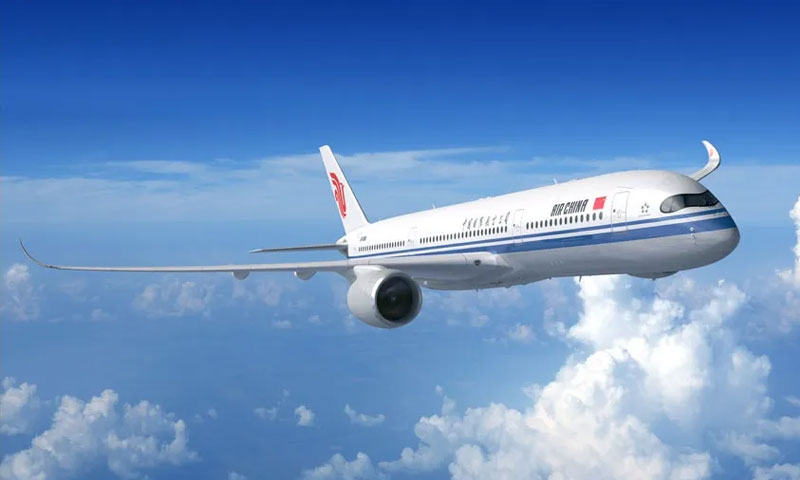
Air China Orders 60 Airbus A320neo Jets in $9.5 Billion Deal
China’s national carrier Air China has finalized an agreement with European aircraft manufacturer Airbus to purchase 60 A320neo aircraft, in a deal valued at around $9.5 billion based on list prices. The agreement, signed by Air China and one of its subsidiaries, adds momentum to a wave of aircraft orders announced this week by Chinese airlines, including low-cost carrier Spring Airlines and full-service operator Juneyao Airlines, highlighting renewed expansion in the world’s second-largest aviation market. According to a filing submitted to the Shanghai Stock Exchange, the aircraft will be delivered in phases between 2028 and 2032, allowing the airline to gradually expand and modernize its narrow-body fleet. Airbus welcomed the decision, saying it was “very pleased” that Air China had chosen to add more aircraft from the A320 family, one of the manufacturer’s most popular and fuel-efficient models. Aviation analyst Li Hanming said the order falls under a broader 2022 framework agreement between Airbus and China Aviation Supplies Holding Company (CASC). That deal covered 132 A320-family jets and eight A350 widebody aircraft, with a combined value of approximately $17 billion. “Large framework agreements are typically followed by individual contracts over time,” Li noted, explaining the delay between the initial deal and the latest purchase. The latest order further strengthens Airbus’s position in China at a time when prolonged political tensions between Beijing and Washington have limited opportunities for its U.S. rival Boeing to secure new aircraft orders in the Chinese market.
Thousands of Flights Cancelled as Powerful Winter Storm Hits America
A powerful post-Christmas winter storm system has disrupted travel across large parts of the United States, grounding flights, snarling highways, and prompting weather warnings as millions of Americans attempted to return home after the holidays. The storm, fueled by a rapidly intensifying weather pattern often described as a “bomb cyclone,” brought a dangerous mix of heavy snow, ice, strong winds, and plunging temperatures, particularly across the Midwest, Great Lakes, Northeast, and parts of the East Coast. Air travel has been among the hardest hit. More than 1,500 flights were cancelled in a single day, with thousands more delayed as major airports struggled with snow-covered runways, poor visibility, and staffing disruptions. Airlines warned passengers to expect ongoing delays as crews worked to reposition aircraft and manage the ripple effects of earlier cancellations. Social media was flooded with frustrated travelers sharing images of packed terminals, long security lines, and overnight airport stays, while others posted videos of snow-lashed planes and whiteout conditions. On the ground, travel conditions were equally treacherous. Several states issued advisories urging drivers to stay off roads unless absolutely necessary. Parts of the Great Lakes region and Northeast experienced heavy snowfall totals, while areas farther south faced freezing rain and ice accumulation that made roads slick and power outages more likely. Emergency responders reported an uptick in weather-related accidents, and officials warned that icy bridges and sudden drops in visibility posed serious risks. Meteorologists explained that the storm’s intensity was driven by a sharp clash between Arctic air and warmer Atlantic moisture, causing the system to strengthen rapidly. Forecasters cautioned that even as the main storm moves eastward, lingering lake-effect snow and strong winds could continue to affect travel into the coming days. Some coastal areas also faced flooding concerns as storm surge and heavy rain combined with high tides. The timing of the storm amplified its impact. Post-holiday travel typically sees one of the busiest periods of the year, and many families found themselves forced to delay returns to work or school. Airlines encouraged passengers to rebook early, while authorities urged people to monitor forecasts closely and prepare for rapidly changing conditions. Despite the disruptions, weather agencies stressed that preparation remains key. Keeping emergency kits in vehicles, allowing extra travel time, and heeding local advisories can significantly reduce risk. As winter settles in, officials warned that this storm may be a sign of a volatile season ahead, with more extreme weather events likely in the weeks to come.
