

Australia has announced sweeping new restrictions on gambling advertisements, targeting what officials describe as the growing normalisation of betting, especially among young people and sports audiences. The reforms, unveiled by Anthony Albanese, are being described as the most significant overhaul of gambling advertising rules in the country, though critics argue they do not go far enough. New Rules to Limit Gambling Ads Across TV, Online and Sports Under the new measures, gambling advertisements will face strict limits across multiple platforms. Television ads will be capped at three per hour between 6am and 8:30pm, with a complete ban during live sports broadcasts in that timeframe. Radio ads will also be prohibited during school drop-off and pick-up hours, while online gambling ads will only be allowed for users over 18 who are logged into accounts. The reforms also ban celebrities and sports personalities from appearing in gambling advertisements and remove betting promotions from sports uniforms and venues. Officials say these steps aim to reduce exposure to gambling content, particularly for children and vulnerable groups. Read More: Are Productivity Apps Helping or Just Creating More Work? Government Calls It “Most Significant Reform” Prime Minister Albanese defended the move, calling it a major step toward protecting public health. He said the government is “taking decisive action” to ensure that children are not constantly exposed to betting promotions and that gambling is not seen as a normal part of sport. He added that the goal is to strike a balance between allowing adults to gamble and limiting harm caused by excessive advertising. Critics Say Measures Fall Short of Full Ban Despite the sweeping changes, the reforms have faced criticism from public health advocates and lawmakers. Experts point out that a government inquiry had previously recommended a complete ban on online gambling advertising, which has not been implemented. Critics argue that limiting ads rather than banning them entirely may not be enough to address the scale of gambling-related harm in Australia. Some also raised concerns that the opt-out system for online ads places responsibility on users rather than companies. Gambling Ads Linked to Harmful Behaviour Research has shown a strong link between gambling advertising and risky betting behaviour. A study by the Australian Institute of Family Studies found that frequent exposure to betting ads increases the likelihood of impulsive gambling and financial harm, particularly among young people. The report highlighted that many Australians believe gambling advertising is excessive and contributes to addiction, with growing public support for stricter regulation. Impact on Sports, Media and Industry The crackdown is expected to have significant financial implications for broadcasters and sports organisations. Gambling companies are major advertisers and sponsors in Australia, particularly in sports leagues. Restrictions on ads and branding could reduce revenue for: Television networks Sports teams and leagues Advertising agencies Industry groups have warned that the reforms could disrupt funding models for sports and media, though the government insists public health concerns must take priority. Read More: FBR Targets Social Media Income as New Tax Rules Emerge in Pakistan A Shift in Policy as Concerns Grow The move reflects a broader shift in Australia’s approach to gambling regulation, as authorities respond to rising concerns about addiction and social harm. Officials have also indicated plans to block illegal offshore gambling platforms and introduce further consumer protection measures in the future. A Balancing Act Between Freedom and Protection While the reforms mark a significant step toward regulating gambling advertising, the debate over how far the government should go is likely to continue. With strong public concern about gambling harm and increasing pressure for stricter controls, Australia’s latest measures may be just the beginning of broader reforms in the sector.
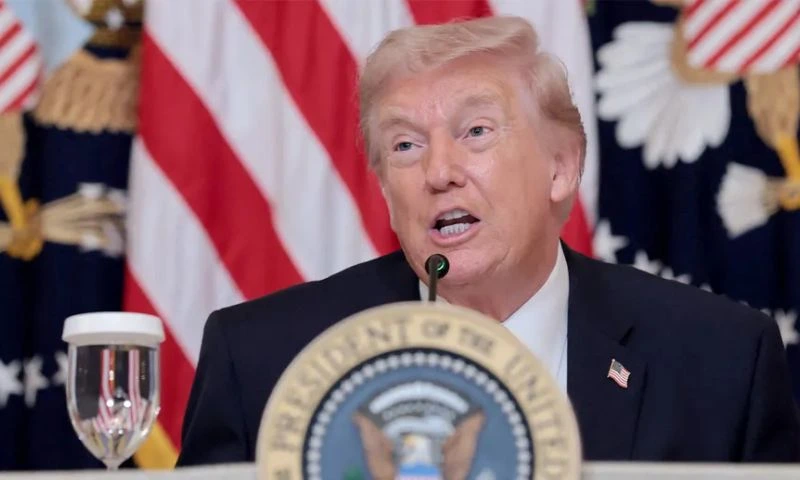
Oil Price Hits $107 as Trump Signals More Strikes on Iran
Global oil markets surged sharply after US President Donald Trump warned of intensified military action against Iran, raising fears of prolonged conflict and further disruption to global energy supplies. Brent crude jumped to $107.60 per barrel, while West Texas Intermediate rose about 6.4% to around $106.50, as traders reacted immediately to the remarks. The spike reversed earlier optimism that prices might stabilise. Trump’s Threat Triggers Market Shock In a televised address from the White House, Trump signalled that the United States would escalate its offensive in Iran over the coming weeks. He said the US would complete its strategic objectives “very shortly” and warned that American forces could spend the next “two to three weeks bombing Iran back to the Stone Ages.” The remarks rattled markets that had been hoping for clarity on a possible exit strategy. Instead, the speech reinforced expectations of a prolonged conflict. Oil prices, which had briefly dipped below $100 earlier in the day on hopes of de-escalation, surged within minutes of the address. Strait of Hormuz Disruption Fuels Crisis The ongoing Iran conflict has severely disrupted global oil and gas flows, particularly through the Strait of Hormuz, one of the world’s most critical energy chokepoints. Shipments through the strait have largely stalled after Iran threatened to target tankers attempting to pass, in response to US and Israeli strikes that began on 28 February. Analysts note that nearly one fifth of the world’s oil supply typically passes through this narrow waterway, making any disruption highly sensitive for global markets. In his speech, Trump said the US no longer depends on Middle Eastern energy and called on other nations to intervene and restore shipping routes. “To those countries that can’t get fuel, many of which refuse to get involved in the decapitation of Iran… build up some delayed courage, go to the Strait and just take it,” he said. Markets React as War Outlook Darkens Energy analysts said the price surge reflects a shift in market expectations. Alberto Bellorin of InterCapital Energy described the rise as a “clear market reality check following the earlier optimism for an imminent ceasefire.” He added that Trump’s speech lacked a “concrete timeline” for reopening the Strait of Hormuz and warned that normal supply conditions could take months rather than weeks to return. Experts say the absence of a clear de-escalation plan has removed hopes of a quick resolution, prompting investors to price in prolonged supply shortages. Tina Soliman-Hunter from Macquarie University said Trump’s comments signal that the war is likely to continue, reinforcing expectations that oil markets will remain tight. Asian Markets Slide Amid Energy Fears The impact was not limited to oil. Stock markets across Asia fell sharply following the speech, reflecting concerns over rising energy costs and economic instability. Japan’s Nikkei 225 dropped 2.4%, South Korea’s KOSPI fell 4.5%, and Hong Kong’s Hang Seng Index declined 1.3%. The region remains particularly vulnerable because many Asian economies rely heavily on Middle Eastern oil imports. Global Energy Risks Intensify The Iran war has already strained global supply chains, with energy markets experiencing sustained volatility since late February. Industry observers warn that continued disruption in the Gulf could push oil prices even higher, increasing inflationary pressures worldwide and affecting fuel costs, transportation, and manufacturing. With no clear timeline for resolution and escalating rhetoric from Washington, markets are bracing for further instability in the weeks ahead.
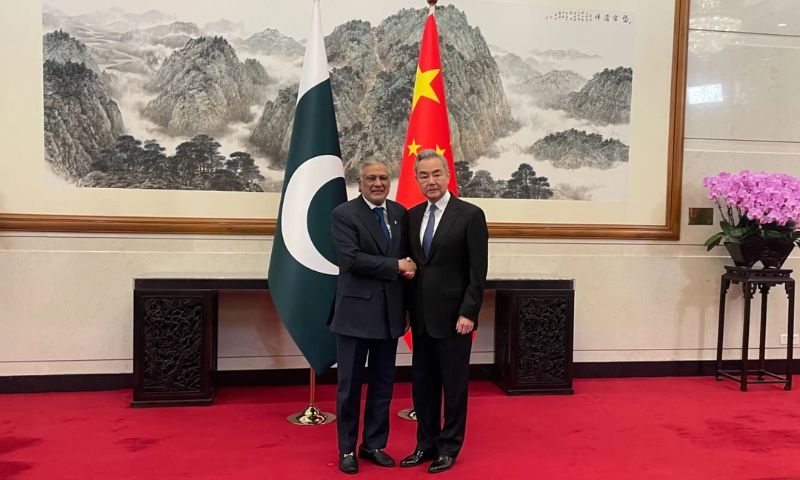
Diplomatic Push Intensifies for Iran Ceasefire: China, Pakistan Demand End to Hostilities
Pakistan and China have jointly called for an immediate ceasefire in the ongoing Iran war and urged all parties to begin peace talks “as soon as possible,” as global concern grows over escalating violence in the Middle East. The appeal was made during diplomatic engagement between Pakistan’s Deputy Prime Minister and Foreign Minister Ishaq Dar and his Chinese counterpart Wang Yi, with both sides emphasizing the urgent need to de-escalate tensions and restore stability in the region. According to official statements, the two countries agreed to “jointly promote a ceasefire and cessation of hostilities and the resumption of peace talks,” stressing that dialogue remains the only viable path to resolving the conflict. 🔊PR No.85/2026 Five-Point Initiative of China and Pakistan for Restoring Peace and Stability in the Gulf and Middle East Region (Beijing, March 31,2026)@MFA_China@PakinChina_https://t.co/8zjtGWe8VC 🔗⬇️ pic.twitter.com/fgWroQIX40 — Ministry of Foreign Affairs – Pakistan (@ForeignOfficePk) March 31, 2026 Urgent Call for Peace Talks The joint stance comes amid intensifying fighting involving Iran, the United States, and Israel, which has triggered a wider regional crisis. Both countries highlighted that initiating peace negotiations quickly is essential to prevent further escalation. A joint initiative also stressed that talks should begin “as soon as possible” to bring all sides to the negotiating table. China reiterated that “the pressing priority is to actively promote peace talks,” underlining the importance of seizing any opportunity for dialogue to end hostilities. Pakistan has also positioned itself as a key diplomatic bridge, maintaining communication with multiple stakeholders and offering to facilitate negotiations. Focus on Safety of Civilians and Waterways A major concern raised by both countries is the safety of civilians and critical infrastructure, particularly in conflict zones. The two sides emphasized the need to ensure the protection of non-military targets and maintain the safety of key maritime routes, especially the Strait of Hormuz, through which a significant portion of global oil supplies passes. They warned that disruption in these waterways could have severe global economic consequences, including rising fuel prices and supply chain instability. Pakistan’s Diplomatic Role Expands Pakistan has emerged as an important mediator in the crisis, with Islamabad offering to host peace talks between the United States and Iran. Officials say Pakistan’s balanced relations with both sides place it in a unique position to facilitate dialogue and reduce tensions. Foreign Minister Ishaq Dar has been actively engaging regional and global leaders, reaffirming Pakistan’s commitment to diplomacy and peaceful resolution of conflicts. Background of the Conflict The Iran war, which began in late February 2026 following US and Israeli strikes on Iranian targets, has rapidly escalated into a broader regional confrontation. Iran has responded with retaliatory attacks, including strikes on Gulf states and disruption of shipping routes. The conflict has drawn international attention due to its impact on global energy markets and geopolitical stability. Despite rising tensions, diplomatic efforts are gaining momentum, with multiple countries pushing for negotiations to prevent further escalation. A Critical Moment for Diplomacy The joint call by Pakistan and China reflects growing international pressure to end the conflict through dialogue rather than military means. Analysts say that the coming days will be crucial in determining whether peace talks can be initiated or if the situation will deteriorate further. As the crisis unfolds, both countries have reiterated that sustained diplomacy, mutual respect, and dialogue remain the only viable solutions to achieving long-term peace in the region.
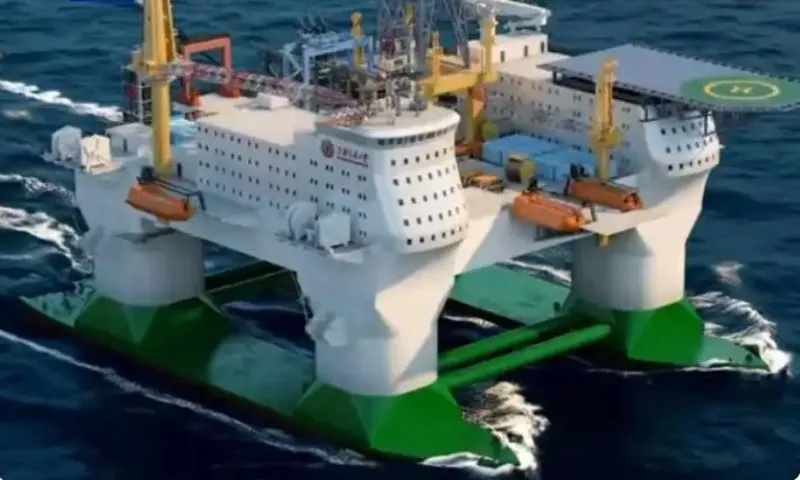
China Launches World’s First Floating Artificial Island for Deep-Sea Research
China has officially launched the world’s first ultra-large floating artificial island designed for deep-sea scientific research, marking a major step forward in marine technology and ocean exploration. The project, unveiled in Shanghai, is a national-level science and technology infrastructure initiative aimed at advancing research in marine science, resources, and engineering. The facility is described as an “open-sea floating island” capable of operating in all weather conditions. A Unique Research Platform The floating platform is designed to function as a comprehensive research hub, combining multiple systems to support deep-sea exploration. It consists of three key components: a main offshore platform, ship-based laboratories, and land-based support facilities. At the core of the project is an innovative semi-submersible twin-hull structure. This design allows the platform to remain stable in rough ocean conditions while supporting large-scale testing of marine equipment weighing hundreds of tons. According to reports, the facility will enable scientists to conduct experiments at ocean depths of up to 10,000 meters, opening new possibilities for studying extreme underwater environments. Advancing Marine Science and Industry The floating island is expected to play a crucial role in accelerating research across several fields, including marine ecosystems, deep-sea mining, and offshore oil and gas exploration. Experts say the platform will help scientists better understand the seasonal evolution of marine ecosystems and explore the origins and development of life in deep-sea environments. It will also serve as a testing ground for advanced marine equipment and technologies, supporting the commercial development of ocean resources. In addition, the facility is expected to improve forecasting of extreme weather events such as typhoons, contributing to better disaster prevention and mitigation efforts. Timeline and Institutional Support The project is being led by Shanghai Jiao Tong University, which has also established a dedicated institute for deep-sea science and engineering to oversee research activities. Construction of the floating research facility is expected to be completed by 2030, with phased development allowing for gradual expansion of capabilities. Officials have described the initiative as a major milestone in China’s efforts to strengthen its position in global marine research and technology. Global Significance The launch of the floating artificial island comes at a time when countries are increasingly investing in ocean exploration and marine resources. Oceans cover more than 70 percent of the Earth’s surface, yet a large portion remains unexplored. Advances in deep-sea technology are seen as critical for unlocking new resources and addressing global challenges such as climate change and biodiversity loss. China’s new platform is expected to contribute significantly to international scientific knowledge while also enhancing the country’s capabilities in marine innovation. Looking Ahead As the project progresses, the floating island is set to become a key hub for cutting-edge research and collaboration in ocean science. Its ability to operate continuously in open-sea conditions positions it as a groundbreaking development in the field of marine research infrastructure. With completion targeted for 2030, the facility is expected to redefine how scientists explore and utilize the deep ocean.
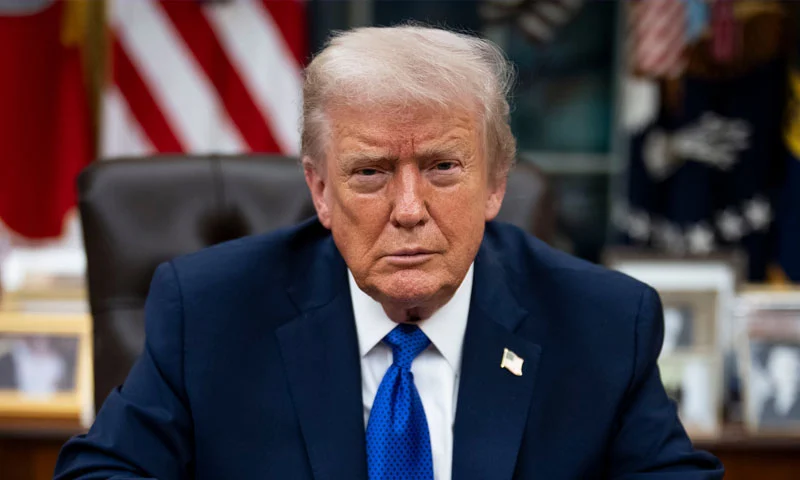
US President Donald Trump Threatens Iran’s Oil and Power Infrastructure if Talks Fail
US President Donald Trump has issued a stark warning to Iran, threatening to destroy key energy infrastructure and desalination plants if ongoing negotiations collapse, escalating tensions in an already volatile Middle East conflict. In a post on Truth Social, Trump signaled both urgency and aggression, making it clear that failure to reach a deal could trigger devastating military action. He wrote that if an agreement is not reached soon, the United States would move to strike Iran’s critical infrastructure, including power plants, oil wells, and potentially water desalination facilities. “We have, really, regime change,” Trump said, adding that leadership in Iran has already shifted significantly. He also emphasized that the US is now dealing with “different people than anybody’s dealt with before.” Direct Threat to Energy and Water Infrastructure Trump’s warning specifically highlighted energy sites as primary targets, including oil facilities and power generation plants, which are central to Iran’s economy and daily life. Reports also indicate that desalination plants, which provide critical drinking water in parts of Iran, could be targeted if talks fail. The president has repeatedly stressed that reopening the Strait of Hormuz, a key global oil shipping route, remains a top priority. He warned that failure to do so could result in the United States taking decisive action to “destroy” infrastructure tied to Iran’s energy sector. Talks Continue Amid Rising Pressure Despite the strong rhetoric, Trump suggested that negotiations are ongoing with what he described as a “new, and more reasonable” Iranian leadership. He expressed cautious optimism, stating that progress has been made, but warned that talks could be abandoned if Iran does not comply with US demands. “We’re dealing with different people now,” Trump said, indicating a shift in diplomatic engagement, while also suggesting that Iran is under pressure to reach an agreement. However, Iranian officials have denied the existence of direct talks, calling US claims misleading and accusing Washington of using diplomacy as a cover for military escalation. Escalating Conflict and Global Impact The threats come amid an ongoing war that began in February 2026, with US and Israeli strikes targeting Iranian military and nuclear sites. In response, Iran has carried out retaliatory attacks across the region, including strikes on energy infrastructure in Gulf countries. The conflict has disrupted global oil supply chains, particularly through the Strait of Hormuz, through which nearly 20 percent of the world’s oil passes. As a result, oil prices have surged, intensifying a global energy crisis. Experts warn that targeting energy and water infrastructure could have severe humanitarian consequences, as such facilities are essential for civilian life. As the situation unfolds, the world is closely watching whether diplomacy can prevail or if the conflict will escalate further. Trump’s warning has significantly raised the stakes, placing energy infrastructure at the center of the crisis and signaling that military options remain firmly on the table. Whether talks succeed or fail may determine not only the future of US-Iran relations but also the stability of global energy markets.
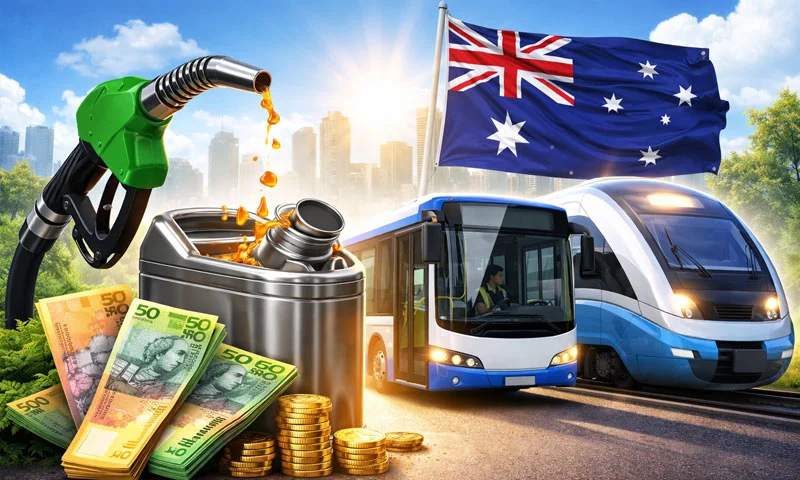
Australia Announces 50% Fuel Relief and Free Transport Amid Energy Crisis
Australia has announced a major relief measure for consumers by halving its fuel tax, as the global energy crisis intensifies due to ongoing geopolitical tensions and disruptions in oil supply chains. Prime Minister Anthony Albanese confirmed that the government will cut fuel excise by 50 percent for a temporary period, aiming to ease the burden of rising fuel prices on households and businesses. The move comes as global crude oil prices surge beyond $116 per barrel, driven largely by instability in the Middle East and disruptions to key shipping routes such as the Strait of Hormuz. Relief for Households and Businesses The tax cut is expected to reduce petrol and diesel prices by around 26 cents per litre, offering immediate financial relief to motorists across the country. Officials said the measure will remain in place for three months, during which the government will monitor global energy developments and domestic supply conditions. The policy is part of a broader effort to address the rising cost of living, which has been exacerbated by inflation and energy price shocks. Energy Crisis Driven by Global Conflict The current crisis has been triggered by escalating tensions in the Middle East, particularly the ongoing conflict involving Iran, which has disrupted oil flows and heightened fears of supply shortages. The Strait of Hormuz, a critical global oil chokepoint, has seen reduced shipping activity, leading to sharp increases in oil prices and uncertainty in international markets. Experts warn that the situation mirrors aspects of past oil crises, with global supply chains under pressure and countries scrambling to secure energy resources. National Fuel Security Measures In addition to cutting fuel taxes, Australia has rolled out a national fuel security plan to ensure stable supply and prevent shortages. The plan includes prioritising fuel distribution, supporting supply chains, and preparing for potential escalation if disruptions worsen. Authorities have also considered underwriting fuel imports and tapping into reserves to stabilise the market. Officials said the country currently has fuel reserves at a relatively stable level, but acknowledged that stocks still fall short of international benchmarks. Economic and Political Debate While the tax cut has been welcomed by many as a necessary relief measure, it has also sparked debate among economists and policymakers. Some experts warn that such broad subsidies could increase fuel demand and add pressure on inflation, potentially complicating monetary policy decisions in the coming months. Critics have also questioned the long-term sustainability of the move, arguing that it may delay the transition toward renewable energy and electric vehicles. A Short-Term Solution to a Long-Term Problem The Australian government has stressed that the tax cut is a temporary response to an extraordinary global situation. As the energy crisis unfolds, analysts say countries like Australia will need to balance short-term relief measures with long-term strategies aimed at reducing dependence on fossil fuels. The current developments highlight the fragility of global energy systems and the far-reaching impact of geopolitical conflicts on everyday life.
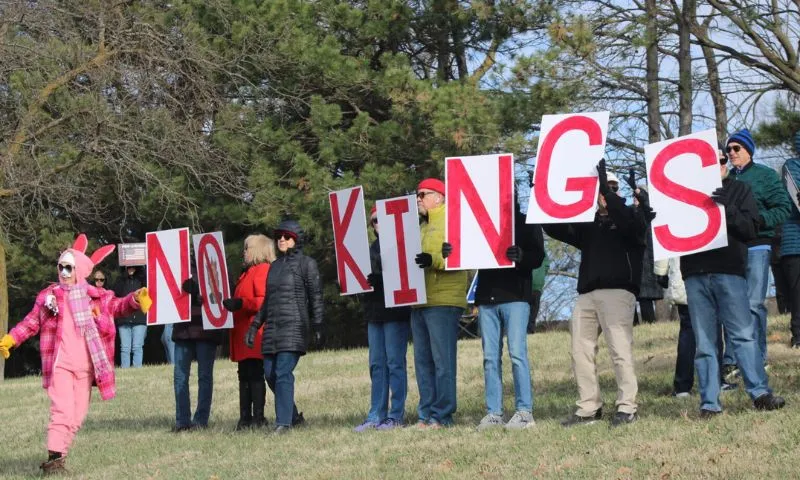
‘No Kings’ Protests Sweep US as Thousands Rally Against Trump Policies
Massive anti-government demonstrations erupted across the United States as the “No Kings” movement returned to the streets, drawing thousands of protesters opposing President Donald Trump’s policies and leadership style. The protests, held across major cities and smaller towns, marked one of the largest coordinated waves of demonstrations in recent months, with rallies taking place in all 50 states. Nationwide Protests Gain Momentum Crowds gathered in cities including New York, Washington, Dallas, and Philadelphia, with organisers reporting more than 3,000 protest events nationwide. Demonstrators carried signs and chanted slogans criticising what they described as authoritarian tendencies in the Trump administration. The movement’s central message, “No Kings,” reflects opposition to what protesters see as an erosion of democratic norms. Participants voiced concerns over several issues, including immigration crackdowns, economic challenges, and the ongoing war in Iran, which has further intensified public debate. Key Issues Driving the Movement The protests were fueled by widespread dissatisfaction with government policies, particularly strict immigration enforcement measures and military decisions abroad. Many protesters also highlighted concerns about voting rights and economic pressures, arguing that current policies disproportionately affect vulnerable communities. According to organisers, the movement has expanded significantly since its launch in 2025, now reaching communities that traditionally saw limited political mobilisation. “This is a democracy,” one protester said, echoing a common theme seen across rallies. High-Profile Support and Public Response The demonstrations attracted support from prominent public figures, including politicians and celebrities who joined rallies or addressed crowds. Actor Robert De Niro was among those who spoke out strongly, saying Trump “must be stopped” while urging Americans to defend democratic values. Other well-known personalities, including activists and artists, also participated, amplifying the movement’s message on social media and in public gatherings. Despite the scale of the protests, reactions have been mixed. The White House dismissed the demonstrations, while supporters of the administration held counter-protests in some locations. Clashes and Security Concerns While most protests remained peaceful, some cities reported clashes between demonstrators and counter-protesters, leading to arrests and injuries in isolated incidents. Law enforcement agencies maintained a strong presence in several locations to manage crowds and prevent escalation. A Growing Political Movement Analysts say the “No Kings” protests reflect a broader wave of civic activism ahead of upcoming elections, with increasing public engagement across the political spectrum. The movement has also gained international attention, with solidarity protests reported in several countries, highlighting global interest in US political developments. Experts believe the demonstrations signal rising political polarisation in the United States, as citizens take to the streets to voice their concerns. What Lies Ahead Organisers have indicated that the protests are part of a longer-term campaign rather than a one-time event. They plan to continue mobilising communities and encouraging voter participation in the months ahead. As the political climate intensifies, the “No Kings” movement is expected to remain a key force shaping public discourse in the United States.
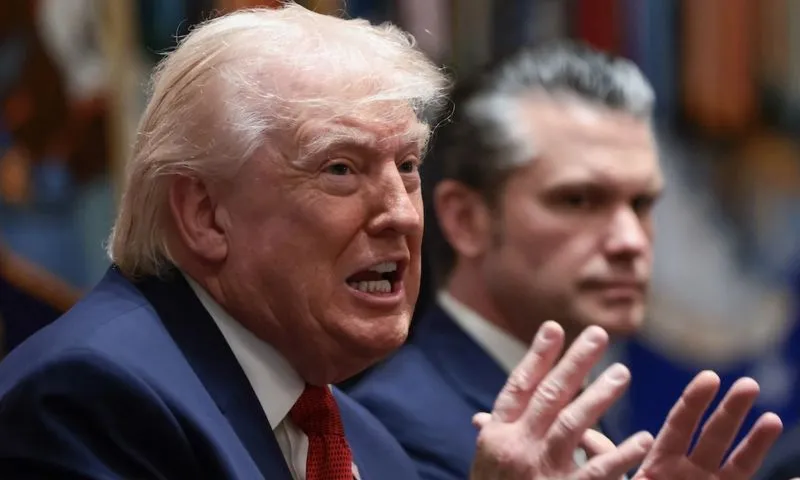
Trump Claims Progress in Iran Talks via Pakistan, Floats Kharg Island Seizure
US President Donald Trump has claimed there is progress in indirect talks with Iran, reportedly being facilitated through Pakistan, even as he floated a controversial plan to seize Iran’s most critical oil export hub, Kharg Island. Pakistan emerges as key mediator According to multiple international reports, Pakistan has stepped forward as a potential venue for dialogue between Washington and Tehran. Officials in Islamabad have expressed readiness to host talks aimed at de-escalating the ongoing conflict. Trump confirmed that both direct and indirect contacts are underway, describing Iran’s current leadership as “very reasonable” and suggesting there is room for a negotiated outcome despite ongoing hostilities. However, Iran has publicly downplayed or denied meaningful progress, even as backchannel diplomacy continues. Contradictions between diplomacy and military buildup While diplomatic efforts are being explored, the situation on the ground remains tense. The United States has deployed additional troops to the Middle East, and the Pentagon is reportedly preparing for possible limited ground operations. Iran, on the other hand, has warned that any US ground incursion would trigger a strong military response, accusing Washington of pursuing war while simultaneously calling for talks. The conflict, now stretching into weeks, has already disrupted global oil markets and intensified instability across key shipping routes like the Strait of Hormuz. Trump raises possibility of seizing Kharg Island In a dramatic escalation, Trump suggested that US forces could take control of Kharg Island, Iran’s primary oil export terminal in the Persian Gulf. He reportedly said his “preference would be to take the oil,” adding that seizing the island could be done “easily,” although he stopped short of confirming any final decision. Kharg Island is a critical economic lifeline for Iran, handling around 90 percent of the country’s crude exports, making it a strategic target in any effort to pressure Tehran. Analysts warn that any attempt to seize or attack the island would mark a major escalation and could send global oil prices soaring, potentially destabilizing already fragile markets. A high-risk path ahead Trump’s dual approach, pursuing negotiations while openly discussing aggressive military options, has created uncertainty about US strategy. On one hand, Pakistan-backed talks offer a possible diplomatic exit. On the other, threats to capture Iran’s oil infrastructure signal that Washington is prepared to escalate if talks fail. With regional tensions widening and global economic risks mounting, the coming days could prove critical in determining whether diplomacy prevails or the conflict deepens further.
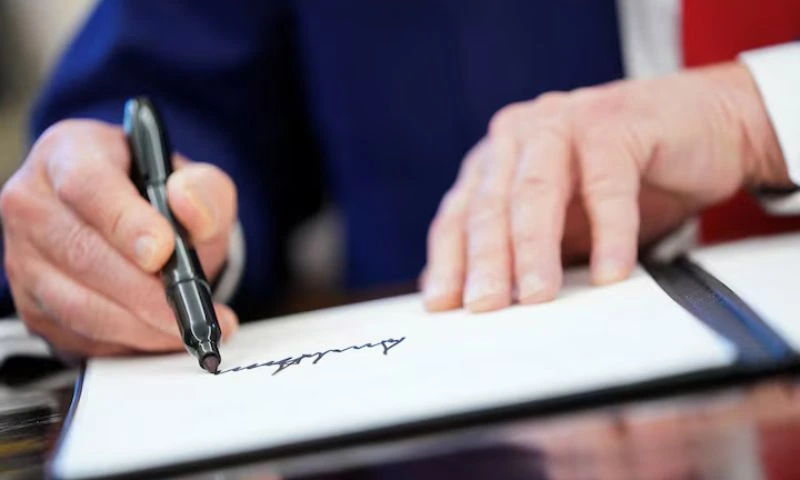
Trump’s Signature Set to Appear on US Dollar Bills in Historic First
The United States is set to make a historic shift in its currency design, as President Donald Trump’s signature will appear on newly printed dollar bills, marking the first time a sitting president’s name will feature on American paper money. The announcement by the US Treasury Department signals the end of a 165-year tradition in which US currency has carried the signatures of the Treasury Secretary and the US Treasurer. Historic Change to US Currency Under the new plan, the first redesigned $100 bills bearing Trump’s signature and that of Treasury Secretary Scott Bessent will be printed in June 2026. Other denominations will follow in the months ahead, with the updated notes expected to enter circulation gradually through banks. The move will remove the signature of the US Treasurer from currency for the first time since 1861, when the US government first issued paper money. Lynn Malerba, the most recent treasurer, will be the last in a long line of officials whose signatures have appeared on American bills. Officials confirmed that while the signature will change, the overall design of the currency will remain largely the same. Linked to America’s 250th Anniversary The redesign is part of broader efforts to mark the 250th anniversary of US independence in 2026. Treasury officials say the inclusion of the president’s signature reflects what they describe as a period of strong economic growth and financial stability during Trump’s second term. In a statement, Bessent said, “There is no more powerful way to recognize the historic achievements of our great country and President Donald J. Trump than US dollar bills bearing his name.” The initiative is also aligned with other commemorative projects, including plans for a gold coin featuring Trump’s image, although proposals for a circulating $1 coin have faced legal hurdles due to restrictions on depicting living individuals. Continuity and Legal Framework Despite the change, existing currency bearing the signatures of previous officials, including former Treasury Secretary Janet Yellen, will continue to be produced and circulated alongside the new notes. US law gives the Treasury Department broad authority to modify currency designs to improve security and prevent counterfeiting. However, certain elements must remain unchanged, including national mottos and the use of historical figures on banknotes. Experts note that while the change does not alter the physical design of US currency significantly, it represents a symbolic shift in how national identity and leadership are reflected on money. A Broader Push to Shape Legacy The move is seen as part of a wider effort by the Trump administration to leave a lasting imprint on national symbols, institutions, and commemorative items. From proposed coins to branding initiatives, the decision to place the president’s signature on currency underscores a focus on legacy-building ahead of a major milestone in US history. As the new bills begin circulating later this year, the change is expected to spark both public interest and debate over tradition, symbolism, and the evolving identity of US currency.
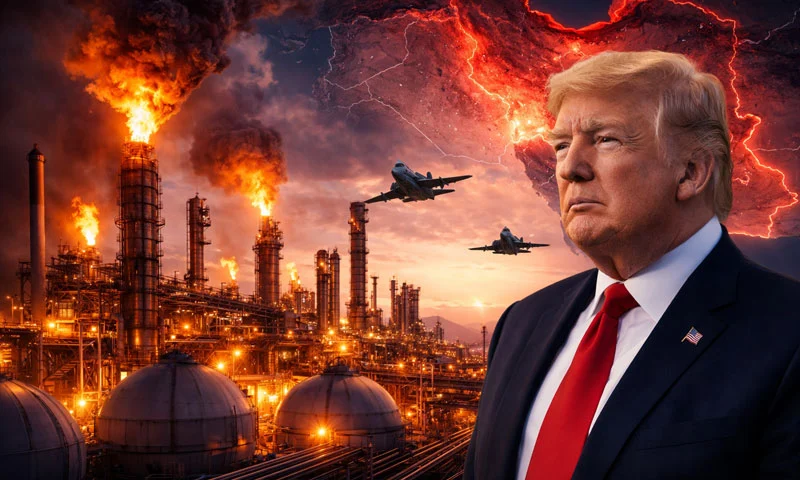
After 5-Day Pause, US President Donald Trump Extends Iran Attack Halt by 10 More Days
US President Donald Trump has announced a fresh 10-day pause on attacks targeting Iran’s energy infrastructure, just three days after initially ordering a 5-day halt. The move signals a cautious shift toward diplomacy, even as tensions between the two sides remain high. Trump said negotiations are “going very well,” but added that he is not certain whether the United States will ultimately reach a deal with Iran. From 5 Days to 10 Days, A Window for Diplomacy The United States had first paused strikes for five days to allow space for talks. Now, that pause has been extended by another 10 days, giving both sides more time to negotiate and avoid further escalation. Reports indicate that the new deadline will run until April 6, during which diplomatic engagement is expected to intensify. The extension suggests that discussions have shown some progress, or at least that Washington is willing to give diplomacy a longer chance. Mixed Signals on a Possible Deal Despite the extension, Trump’s remarks reflect uncertainty. While he praised ongoing talks, he clearly stated that he does not know if the US is willing to make a deal with Iran. This dual messaging highlights a strategy where military pressure and diplomacy are being used at the same time. Iran, meanwhile, has reportedly raised concerns over certain US conditions, making negotiations more complex. Why Energy Targets Matter Iran’s energy infrastructure has been a central focus of US strategy in the conflict. Strikes on these facilities can disrupt global oil supply, making them a powerful tool in both economic and military terms. The pause in attacks has provided temporary relief to global markets, though uncertainty continues to drive volatility. Oil prices have remained elevated due to fears of supply disruption, especially around the Strait of Hormuz, a key global shipping route. Global Mediation Efforts Underway Several countries are actively working to mediate between Washington and Tehran. These diplomatic efforts aim to reduce tensions and prevent a wider regional conflict. However, major differences remain, particularly over Iran’s nuclear program and its regional influence. A Critical Moment for the Conflict The additional 10-day pause creates a narrow but important window for diplomacy. Trump has warned that if talks fail, attacks on Iran’s energy facilities could resume. For now, the situation remains fragile, with both sides balancing negotiation and confrontation. The coming days are likely to determine whether this pause leads to a breakthrough or a renewed escalation.
