
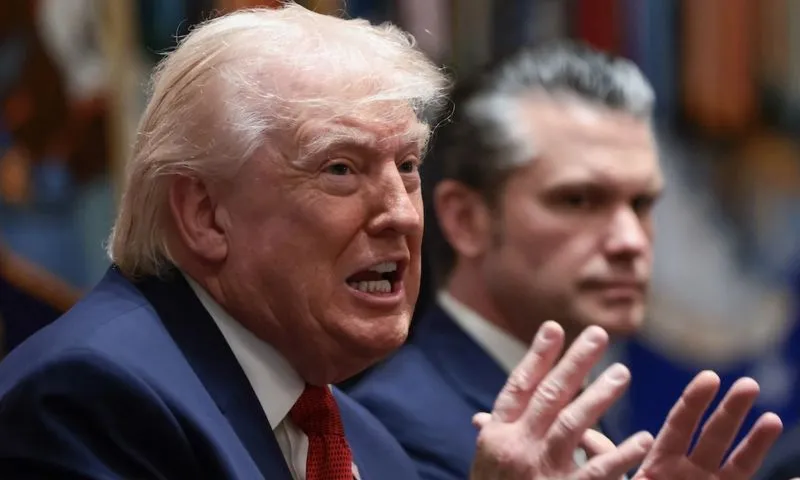
US President Donald Trump has claimed there is progress in indirect talks with Iran, reportedly being facilitated through Pakistan, even as he floated a controversial plan to seize Iran’s most critical oil export hub, Kharg Island. Pakistan emerges as key mediator According to multiple international reports, Pakistan has stepped forward as a potential venue for dialogue between Washington and Tehran. Officials in Islamabad have expressed readiness to host talks aimed at de-escalating the ongoing conflict. Trump confirmed that both direct and indirect contacts are underway, describing Iran’s current leadership as “very reasonable” and suggesting there is room for a negotiated outcome despite ongoing hostilities. However, Iran has publicly downplayed or denied meaningful progress, even as backchannel diplomacy continues. Contradictions between diplomacy and military buildup While diplomatic efforts are being explored, the situation on the ground remains tense. The United States has deployed additional troops to the Middle East, and the Pentagon is reportedly preparing for possible limited ground operations. Iran, on the other hand, has warned that any US ground incursion would trigger a strong military response, accusing Washington of pursuing war while simultaneously calling for talks. The conflict, now stretching into weeks, has already disrupted global oil markets and intensified instability across key shipping routes like the Strait of Hormuz. Trump raises possibility of seizing Kharg Island In a dramatic escalation, Trump suggested that US forces could take control of Kharg Island, Iran’s primary oil export terminal in the Persian Gulf. He reportedly said his “preference would be to take the oil,” adding that seizing the island could be done “easily,” although he stopped short of confirming any final decision. Kharg Island is a critical economic lifeline for Iran, handling around 90 percent of the country’s crude exports, making it a strategic target in any effort to pressure Tehran. Analysts warn that any attempt to seize or attack the island would mark a major escalation and could send global oil prices soaring, potentially destabilizing already fragile markets. A high-risk path ahead Trump’s dual approach, pursuing negotiations while openly discussing aggressive military options, has created uncertainty about US strategy. On one hand, Pakistan-backed talks offer a possible diplomatic exit. On the other, threats to capture Iran’s oil infrastructure signal that Washington is prepared to escalate if talks fail. With regional tensions widening and global economic risks mounting, the coming days could prove critical in determining whether diplomacy prevails or the conflict deepens further.
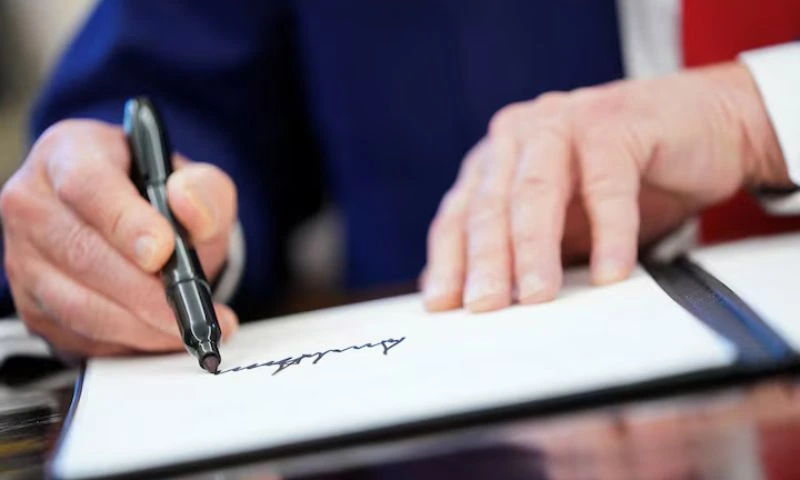
Trump’s Signature Set to Appear on US Dollar Bills in Historic First
The United States is set to make a historic shift in its currency design, as President Donald Trump’s signature will appear on newly printed dollar bills, marking the first time a sitting president’s name will feature on American paper money. The announcement by the US Treasury Department signals the end of a 165-year tradition in which US currency has carried the signatures of the Treasury Secretary and the US Treasurer. Historic Change to US Currency Under the new plan, the first redesigned $100 bills bearing Trump’s signature and that of Treasury Secretary Scott Bessent will be printed in June 2026. Other denominations will follow in the months ahead, with the updated notes expected to enter circulation gradually through banks. The move will remove the signature of the US Treasurer from currency for the first time since 1861, when the US government first issued paper money. Lynn Malerba, the most recent treasurer, will be the last in a long line of officials whose signatures have appeared on American bills. Officials confirmed that while the signature will change, the overall design of the currency will remain largely the same. Linked to America’s 250th Anniversary The redesign is part of broader efforts to mark the 250th anniversary of US independence in 2026. Treasury officials say the inclusion of the president’s signature reflects what they describe as a period of strong economic growth and financial stability during Trump’s second term. In a statement, Bessent said, “There is no more powerful way to recognize the historic achievements of our great country and President Donald J. Trump than US dollar bills bearing his name.” The initiative is also aligned with other commemorative projects, including plans for a gold coin featuring Trump’s image, although proposals for a circulating $1 coin have faced legal hurdles due to restrictions on depicting living individuals. Continuity and Legal Framework Despite the change, existing currency bearing the signatures of previous officials, including former Treasury Secretary Janet Yellen, will continue to be produced and circulated alongside the new notes. US law gives the Treasury Department broad authority to modify currency designs to improve security and prevent counterfeiting. However, certain elements must remain unchanged, including national mottos and the use of historical figures on banknotes. Experts note that while the change does not alter the physical design of US currency significantly, it represents a symbolic shift in how national identity and leadership are reflected on money. A Broader Push to Shape Legacy The move is seen as part of a wider effort by the Trump administration to leave a lasting imprint on national symbols, institutions, and commemorative items. From proposed coins to branding initiatives, the decision to place the president’s signature on currency underscores a focus on legacy-building ahead of a major milestone in US history. As the new bills begin circulating later this year, the change is expected to spark both public interest and debate over tradition, symbolism, and the evolving identity of US currency.
After 5-Day Pause, US President Donald Trump Extends Iran Attack Halt by 10 More Days
US President Donald Trump has announced a fresh 10-day pause on attacks targeting Iran’s energy infrastructure, just three days after initially ordering a 5-day halt. The move signals a cautious shift toward diplomacy, even as tensions between the two sides remain high. Trump said negotiations are “going very well,” but added that he is not certain whether the United States will ultimately reach a deal with Iran. From 5 Days to 10 Days, A Window for Diplomacy The United States had first paused strikes for five days to allow space for talks. Now, that pause has been extended by another 10 days, giving both sides more time to negotiate and avoid further escalation. Reports indicate that the new deadline will run until April 6, during which diplomatic engagement is expected to intensify. The extension suggests that discussions have shown some progress, or at least that Washington is willing to give diplomacy a longer chance. Mixed Signals on a Possible Deal Despite the extension, Trump’s remarks reflect uncertainty. While he praised ongoing talks, he clearly stated that he does not know if the US is willing to make a deal with Iran. This dual messaging highlights a strategy where military pressure and diplomacy are being used at the same time. Iran, meanwhile, has reportedly raised concerns over certain US conditions, making negotiations more complex. Why Energy Targets Matter Iran’s energy infrastructure has been a central focus of US strategy in the conflict. Strikes on these facilities can disrupt global oil supply, making them a powerful tool in both economic and military terms. The pause in attacks has provided temporary relief to global markets, though uncertainty continues to drive volatility. Oil prices have remained elevated due to fears of supply disruption, especially around the Strait of Hormuz, a key global shipping route. Global Mediation Efforts Underway Several countries are actively working to mediate between Washington and Tehran. These diplomatic efforts aim to reduce tensions and prevent a wider regional conflict. However, major differences remain, particularly over Iran’s nuclear program and its regional influence. A Critical Moment for the Conflict The additional 10-day pause creates a narrow but important window for diplomacy. Trump has warned that if talks fail, attacks on Iran’s energy facilities could resume. For now, the situation remains fragile, with both sides balancing negotiation and confrontation. The coming days are likely to determine whether this pause leads to a breakthrough or a renewed escalation.
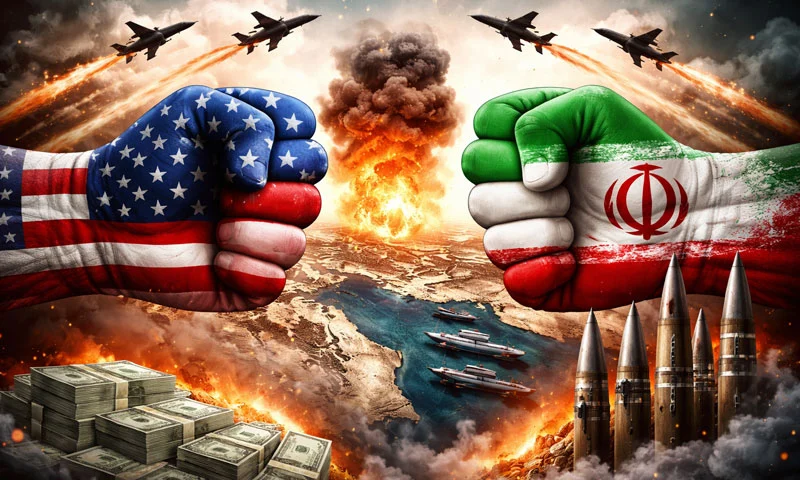
Trump’s 15-Point Plan vs Iran’s Demands: Key Differences Explained
The United States has presented a comprehensive 15-point ceasefire plan to Iran as part of efforts to end the ongoing conflict that has raised tensions across the Middle East. The proposal, reportedly conveyed through diplomatic channels including Pakistan, outlines a structured framework focused on nuclear restrictions, regional security, and stability in global energy markets. Officials say the plan is designed to halt hostilities while creating a pathway for long-term peace negotiations. Trump’s Key Demands from Iran Under President Donald Trump’s proposal, Washington has outlined the following key conditions: Immediate halt to uranium enrichment Dismantling of key nuclear facilities Strict international monitoring of Iran’s nuclear program End to development of ballistic missiles Restrictions on long-range missile capabilities Full reopening of the Strait of Hormuz Guaranteed safe passage for global oil shipments End to support for regional proxy groups Reduction of military activities across the Middle East Commitment to regional de-escalation Cooperation with international inspectors Agreement to long-term nuclear compliance Full transparency in nuclear and military programs Avoidance of further escalation in the Gulf Participation in formal peace negotiations These demands reflect US concerns over Iran’s nuclear ambitions, missile program, and regional influence. Incentives Offered by the United States In exchange, the US has offered several incentives to encourage Iran to accept the proposal: Complete lifting of economic and financial sanctions Restoration of access to global financial systems Removal of snapback sanctions Support for Iran’s civilian nuclear program Opportunities for economic cooperation and trade Gradual reintegration into global markets Officials believe these incentives could ease economic pressure on Tehran and support diplomatic progress. Iran’s Counter Demands and Conditions Iran has responded with its own conditions, outlining key demands before agreeing to any ceasefire: Immediate and unconditional end to military operations Binding guarantees against future US or allied attacks Financial compensation for war-related damages Recognition of Iran’s right to maintain its nuclear program Rejection of dismantling nuclear infrastructure No restrictions on its ballistic missile program Continued control over the Strait of Hormuz Respect for Iran’s sovereignty and territorial integrity Complete removal of sanctions before compliance No external interference in its domestic or regional policies Iran has made it clear that its missile program and strategic autonomy are non-negotiable. Strait of Hormuz Remains Central to Crisis The Strait of Hormuz has emerged as a critical point in the standoff. The waterway carries nearly 20 percent of global oil shipments, making it one of the most important energy routes in the world. The US has pushed for its reopening, while Iran has used it as leverage in negotiations. Pakistan’s Role in Mediation Pakistan has emerged as a key diplomatic intermediary during the crisis. Reports indicate that Islamabad has facilitated communication between the US and Iran and has offered to host talks between the two sides. This has placed Pakistan at the center of international efforts to de-escalate tensions. A Fragile Path Toward Peace Despite the detailed proposals, major differences remain between Washington and Tehran. Iran has denied formal negotiations, while the United States continues to keep military options open. Experts say the coming days will be critical in determining whether diplomacy succeeds or tensions escalate further.

Oil Prices Fall on Ceasefire Hopes in Middle East, Offering Relief to Global Markets
Global oil prices dropped sharply after growing optimism over a possible ceasefire in the Middle East eased fears of supply disruptions, offering potential relief to economies and consumers worldwide. Oil Prices Drop on Peace Signals Oil markets reacted strongly after reports suggested that the United States had proposed a ceasefire plan to Iran, raising hopes of de-escalation in the region. Brent crude fell below the $100 mark, while US West Texas Intermediate also saw a significant decline. The drop followed weeks of volatility triggered by the conflict, which had disrupted supply routes, particularly through the Strait of Hormuz, a key passage for about 20 percent of global oil trade. Earlier, oil prices had surged above $120 per barrel amid fears of prolonged supply shortages and attacks on energy infrastructure. Why Markets Reacted So Quickly Analysts say oil prices are highly sensitive to geopolitical developments, especially in the Middle East, which plays a central role in global energy supply. The possibility of a ceasefire suggests that shipping lanes could reopen and production disruptions may ease. This prompted traders to sell positions, leading to a sharp fall in prices. However, experts caution that the situation remains fragile. Any escalation or renewed attacks could quickly reverse the trend and push prices higher again. Impact on Global Economy The recent conflict had already caused a severe energy shock, removing millions of barrels of oil from global markets and driving up costs for fuel, transport, and manufacturing. Countries heavily dependent on imported oil, particularly in Asia, have been among the hardest hit, facing rising inflation and economic pressure. The latest price drop could help stabilise markets and ease inflation concerns, especially if ceasefire talks lead to a lasting resolution. What It Means for the Average Person For everyday consumers, falling oil prices can translate into lower petrol and diesel prices, although the impact is often delayed depending on government policies and taxes. In Pakistan and similar economies, even a $5 to $10 drop in global oil prices can reduce fuel costs by several rupees per litre, easing pressure on household budgets. Lower fuel prices also reduce transportation costs, which can bring down the prices of essential goods such as food and services. Delivery charges, public transport fares, and electricity costs may also stabilise over time. However, economists warn that if the geopolitical situation remains unstable, any relief could be temporary. Continued Uncertainty in Energy Markets Despite the current dip, the global oil market remains highly volatile. The Middle East conflict has already damaged key energy infrastructure and disrupted supply chains, with long-term impacts still unfolding. Analysts say sustained peace is necessary to ensure stable prices. Without it, oil markets could continue to fluctuate sharply, affecting both economies and consumers worldwide.
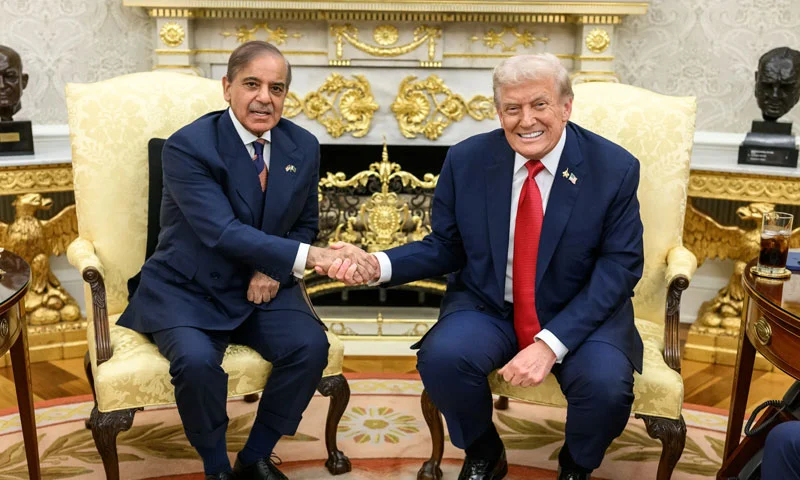
PM Shehbaz Sharif offers to host US-Iran talks, Donald Trump re-shares proposal
Prime Minister Shehbaz Sharif has said Pakistan is ready and honoured to host talks between the United States and Iran, as global efforts intensify to reduce tensions in the Middle East. In his statement, the prime minister said, “Pakistan stands ready and honoured to host talks between the United States and Iran in Islamabad.” He added that Pakistan is willing to play a constructive role in facilitating meaningful dialogue, subject to agreement by both sides. Pakistan welcomes and fully supports ongoing efforts to pursue dialogue to end the WAR in Middle East, in the interest of peace and stability in region and beyond. Subject to concurrence by the US and Iran, Pakistan stands ready and honoured to be the host to facilitate…— Shehbaz Sharif (@CMShehbaz) March 24, 2026 Trump Shares Pakistan’s Offer The proposal gained international attention after US President Donald Trump shared Prime Minister Shehbaz Sharif’s message on social media. Trump’s move is being seen as a signal of openness toward diplomatic engagement, as tensions between Washington and Tehran remain high. The development has placed Pakistan at the center of global diplomatic efforts aimed at de-escalation. Pakistan Acknowledges Role in De-escalation Officials in Islamabad have also acknowledged that Pakistan has already been playing a role in efforts to ease tensions between the US and Iran. According to reports, Pakistan has engaged in diplomatic outreach and maintained communication with key stakeholders to prevent further escalation. Authorities emphasized that Pakistan’s approach is based on dialogue, restraint, and peaceful resolution of conflicts. Diplomatic Outreach and Global Engagement Prime Minister Shehbaz Sharif has held discussions with regional and global leaders, including Iran’s leadership, urging de-escalation and a return to diplomacy. He stressed the importance of avoiding further conflict and resolving disputes through negotiations. Pakistan’s balanced relations with both the United States and Iran have positioned it as a potential mediator in the crisis. Growing Importance of Pakistan’s Role Analysts say Pakistan’s offer reflects its increasing diplomatic relevance in global affairs. By offering Islamabad as a venue for talks, the country is signaling its willingness to contribute to regional stability and peace. The move has also drawn attention from international observers, who see Pakistan as a bridge between competing powers. A Critical Moment for Diplomacy The US-Iran standoff has raised concerns about a wider regional conflict, particularly with the Strait of Hormuz remaining a key flashpoint. Global markets have already felt the impact of rising tensions, with oil prices and economic uncertainty increasing. In this context, Pakistan’s role is being viewed as part of broader international efforts to prevent escalation and promote dialogue. While no formal talks have been confirmed yet, Pakistan’s offer has opened a potential pathway for negotiations. Officials say the country will continue to support diplomatic solutions and work with international partners to reduce tensions. As the situation evolves, attention remains focused on whether dialogue can succeed in easing one of the most critical geopolitical crises of the year.
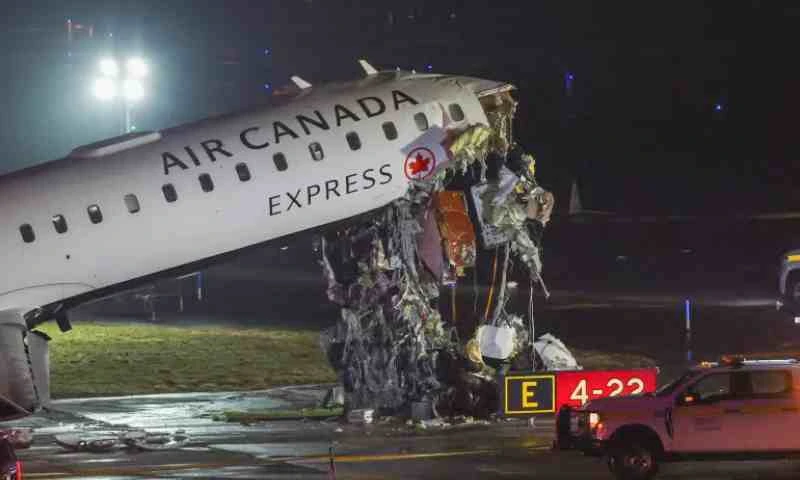
Air Canada Crash at New York’s LaGuardia Airport Leaves Two Dead, Dozens Injured
A tragic aviation accident at New York’s LaGuardia Airport has left two pilots dead and dozens injured after an Air Canada Express jet collided with a fire truck during landing, raising serious concerns about air traffic coordination and airport safety. What Happened at LaGuardia The incident occurred late Sunday night when Air Canada Express Flight AC8646, operated by Jazz Aviation, was landing at LaGuardia after departing from Montreal. The aircraft was carrying 72 passengers and four crew members. At around 11:40pm, the Bombardier CRJ-900 jet struck a Port Authority fire truck that had entered the runway while responding to a separate emergency involving a United Airlines flight that reported an unusual odour onboard. Audio recordings captured the tense final moments, with controllers shouting, “Stop, stop, stop,” as they attempted to prevent the collision. Despite the warning, the aircraft collided with the vehicle on the runway, causing severe damage to the cockpit area. Victims and Injuries The crash claimed the lives of the pilot and co-pilot, both seated in the cockpit, which was largely destroyed on impact. A total of 41 people were taken to hospitals, including 39 passengers and two firefighters who were inside the emergency vehicle at the time of the crash. Most injuries were not life-threatening, though several passengers required further medical care. Authorities confirmed that all passengers survived, highlighting what many described as a narrow escape from a far more devastating disaster. Investigation and Possible Causes Preliminary findings suggest a breakdown in communication between air traffic control and ground operations. The fire truck had been cleared to cross the runway moments before the landing aircraft approached, pointing to a possible coordination failure. Investigators from the US National Transportation Safety Board have recovered the flight data and cockpit voice recorders and are working alongside Canadian authorities to determine the exact sequence of events. Aviation experts have raised concerns about staffing shortages and the handling of simultaneous emergencies, noting that such incidents highlight vulnerabilities in airport safety systems. Wider Impact and Response The crash forced the temporary closure of LaGuardia Airport, disrupting hundreds of flights and affecting thousands of passengers. Flights were diverted to nearby airports including JFK and Newark, adding pressure to an already strained US aviation system. US President Donald Trump described the crash as “terrible” and added that “they made a terrible mistake,” reflecting growing scrutiny over aviation safety standards. Air Canada expressed deep sorrow over the tragedy, calling it a “sombre day” for the airline and pledging support for victims and their families. Growing Safety Concerns The LaGuardia crash is among the most serious runway incidents in recent years and has reignited debate over air traffic control protocols, staffing shortages, and emergency coordination at busy airports. Experts warn that as air travel demand rises, ensuring seamless communication between pilots, controllers, and ground vehicles will be critical to preventing similar accidents in the future.
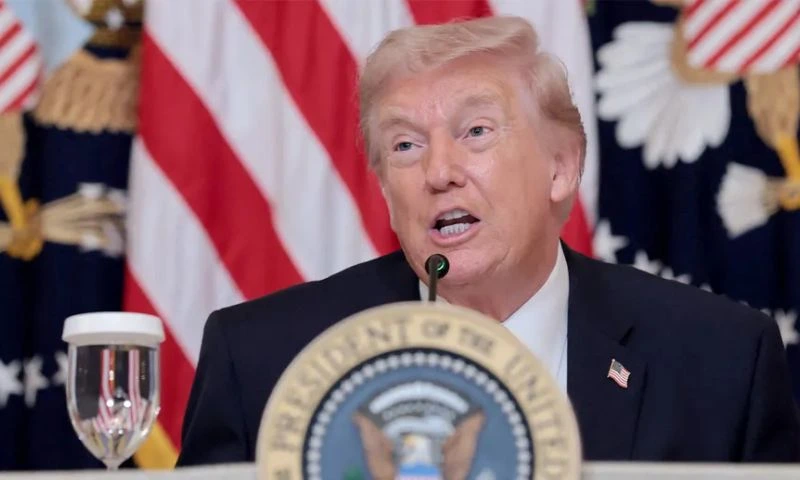
US President Donald Trump Pauses Attack on Iranian Power Plants After ‘Productive Talks’
US President Donald Trump has postponed planned military strikes on Iranian power plants and energy infrastructure, signaling a possible shift toward diplomacy amid rising tensions in the Middle East. The decision comes after what Trump described as “very good and productive conversations” between the United States and Iran regarding a potential resolution to ongoing hostilities. He announced that the strikes would be delayed for five days to allow time for further discussions, adding that the move depends on the success of ongoing negotiations. Ultimatum Linked to Strait of Hormuz The postponement follows a sharp escalation in tensions after Trump had earlier warned Iran to reopen the Strait of Hormuz. The strategic waterway is one of the world’s most important oil routes, carrying a significant portion of global energy supplies. Any disruption in this passage has immediate global economic consequences. Trump had threatened to target Iranian power plants if the Strait was not reopened within a set deadline, raising fears of a broader conflict. BREAKING PRESIDENT TRUMP: 🇺🇸🇮🇷 We had very good and productive conversations regarding a complete and total resolution of hostilities in the Middle East.Military strikes postponed for 5 days. pic.twitter.com/wiZh9F1H5p— Donald J Trump Posts TruthSocial (@TruthTrumpPost) March 23, 2026 Iran’s Position and Denial of Talks Despite Trump’s claims, Iranian officials have denied that any direct or indirect negotiations are taking place with the United States. Tehran has maintained a firm stance, warning that any attack on its energy infrastructure would trigger strong retaliation across the region. Iran has previously indicated that it could target energy facilities and strategic assets if its own infrastructure is hit, increasing the risk of escalation. War Background and Regional Impact The current crisis is part of a wider conflict that began in late February after US and Israeli strikes on Iranian targets. The confrontation has already resulted in thousands of casualties and has significantly disrupted global markets. The Strait of Hormuz has been at the center of the standoff, with Iran restricting shipping routes and causing instability in global oil supplies. Markets React to De-Escalation The announcement of a delay in strikes had an immediate impact on global markets. Oil prices dropped sharply, while stock markets showed gains as fears of an immediate military escalation eased. However, analysts warn that the situation remains fragile, as conflicting statements from both sides create uncertainty about the future. What Comes Next The five-day window is now being seen as a critical period for diplomacy. Trump has expressed optimism about reaching a deal, stating that both sides want to resolve the conflict. At the same time, Iran’s denial of talks and continued warnings suggest that tensions remain high. A Region Still on Edge While the postponement has reduced immediate fears of conflict, the Middle East remains on edge. Experts say that any failure in negotiations could quickly lead to renewed military action, with serious consequences for global energy markets and regional stability.
Mixed Signals: Trump Talks Peace as War Escalates
US President Donald Trump has indicated that Washington is considering scaling back its military campaign against Iran, even as tensions continue to escalate following reported strikes on key nuclear infrastructure. Speaking amid ongoing conflict in the region, Trump said the United States is “considering winding down” the war, suggesting a potential shift in strategy after weeks of intense military operations. Natanz Nuclear Facility Targeted The development comes as Iranian media reported that US and Israeli forces had attacked the Shahid Ahmadi-Roshan enrichment complex in Natanz, one of Iran’s most critical nuclear facilities. According to reports, “technical experts found that no radioactive leaks had occurred and nearby residents were not at risk.” The International Atomic Energy Agency confirmed it is investigating the incident, while Russia condemned the attack, calling it “a blatant violation of international law.” Israel, however, said it was unaware of any such strike, adding further uncertainty around the incident. War Continues Despite De-Escalation Signals Despite Trump’s remarks about potentially winding down the conflict, military activity in the region has not slowed. The United States has continued deploying additional troops and naval assets to the Middle East, highlighting the contradiction between diplomatic messaging and operational reality. The ongoing conflict, which began with coordinated US-Israeli strikes on Iranian targets earlier this year, has expanded into a broader regional confrontation involving multiple actors. Iran has responded with missile and drone attacks targeting US and allied positions, as well as energy infrastructure across the Gulf, intensifying fears of a wider regional war. Strategic Importance of Natanz The Natanz facility holds significant importance in Iran’s nuclear program, serving as a major uranium enrichment site. It has been targeted multiple times in past conflicts due to its role in advancing Iran’s nuclear capabilities. Experts warn that any attack on such facilities carries serious risks, including potential environmental hazards and escalation of geopolitical tensions. Global Reactions and Concerns The reported strike has drawn strong international reactions. Russia has criticized the move, while global powers have called for restraint and de-escalation. The International Atomic Energy Agency’s involvement underscores the seriousness of the situation, particularly given concerns about nuclear safety and regional stability. Uncertain Path Ahead Trump’s suggestion of winding down the war introduces uncertainty into an already volatile situation. Analysts believe that while the statement may signal an attempt to reduce tensions, the continued military buildup suggests that the conflict remains far from resolved. For global markets, especially energy and shipping, the situation remains critical. Any disruption in the region, particularly near key oil routes, could have widespread economic consequences. The coming days are expected to be crucial in determining whether diplomatic efforts can reduce tensions or if the conflict will continue to escalate further.
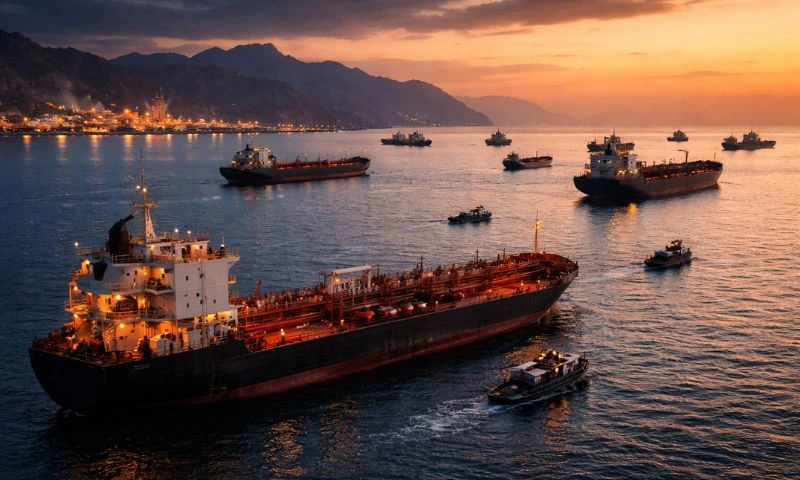
20,000 Seafarers Trapped as Nations Propose Safe Corridor
A growing humanitarian crisis is unfolding in the Gulf as around 20,000 seafarers remain stranded amid escalating regional tensions. In response, several countries have proposed the creation of a safe maritime corridor to enable the evacuation of ships and protect crew members trapped in high-risk waters. Safe Corridor Proposal Gains Momentum The proposal was presented at a meeting of the United Nations’ International Maritime Organization in London. Countries including Bahrain, Japan, Panama, Singapore, and the United Arab Emirates have backed the initiative, with support from the United States. The plan calls for “a framework such as a safe maritime corridor” to allow vessels to exit the Gulf safely. Officials stressed that the main objective is to “facilitate the safe evacuation of merchant ships” and protect the lives of thousands of seafarers caught in the conflict zone. Conflict Disrupts Global Shipping Routes The crisis stems from escalating tensions involving Iran, which has led to serious threats against ships attempting to pass through the Strait of Hormuz. Hundreds of vessels have halted operations or dropped anchor, leaving crews stranded at sea. The Strait of Hormuz is one of the world’s most critical energy corridors, handling nearly one-fifth of global oil and gas supplies. Any disruption in this route has immediate implications for global energy markets and maritime trade. Shipping activity has already declined sharply, with tanker movements dropping significantly as companies suspend operations due to safety risks and rising insurance costs. Rising Humanitarian Concerns Beyond economic disruption, the situation has raised serious humanitarian concerns. According to the International Maritime Organization, multiple incidents have occurred since the conflict escalated, resulting in fatalities and injuries among crew members. IMO Secretary-General Arsenio Dominguez warned that seafarers “must not become victims of broader geopolitical tensions,” emphasizing the urgent need for de-escalation and protective measures. Reports also indicate that thousands of additional passengers and crew members are stranded across hundreds of vessels, facing uncertainty, limited mobility, and mounting psychological stress. Global Powers Weigh Security Measures The crisis has prompted discussions among global powers about securing maritime routes. NATO officials have indicated that member states are exploring options to ensure safe passage, while the United States has urged nations to help maintain security in the Strait of Hormuz. At the same time, Iran has stated that it continues to provide humanitarian assistance to vessels and crews in the region, even as tensions remain high. Broader Implications for Trade and Energy The ongoing disruption highlights the vulnerability of global supply chains to geopolitical shocks. A prolonged crisis could lead to sustained increases in shipping costs, energy prices, and delivery delays across international markets. For countries dependent on imported energy, including Pakistan, any instability in the Gulf directly impacts fuel prices, inflation, and economic stability. A Crisis Demanding Urgent Action The proposal for a safe corridor reflects a growing consensus that immediate action is needed to prevent further loss of life and restore confidence in global shipping routes. As diplomatic efforts continue, the fate of thousands of seafarers remains uncertain, underscoring the human cost of geopolitical conflict in one of the world’s most strategic regions.
