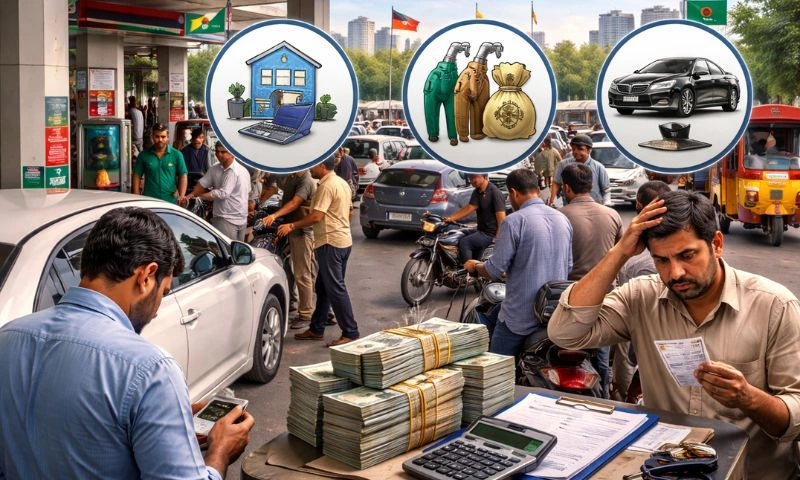
Pakistan’s decision to raise petrol and high speed diesel prices by Rs55 per litre has triggered a wider policy debate over whether the government had alternatives before passing the full burden to consumers. The latest increase took petrol to Rs321.17 per litre and diesel to Rs335.86, with officials linking the move to war related disruption in regional supply chains and higher global oil prices. The government also raised the petroleum levy on petrol to Rs105.4 per litre.
One option already discussed inside government circles was fuel conservation instead of an immediate price pass through. A cabinet committee decided in principle to consider measures such as work from home, distance learning, car pooling and even a shift toward weekly price revisions as part of a broader response to supply uncertainty. The committee’s official March 5 handout also said it reviewed a “phased menu” of fuel conservation steps and examined measures to manage demand if needed.
A second option was to cut taxes and levies on fuel, at least temporarily. Profit reported that oil industry stakeholders urged the federal government to reduce the petroleum levy rather than pass the full impact of global oil volatility to consumers. Before the latest price revision, the government was charging a petroleum levy of Rs84.4 per litre on petrol and Rs76.21 on diesel, along with a climate support levy of Rs2.5 per litre and import related charges brought the total tax burden on petroleum products to roughly Rs120 to Rs125 per litre.
A third option raised in public criticism was to reduce official fuel perks and non essential state consumption. There is widespread anger after the fuel hike over government fuel allowances. Jamaat e Islami Central Ameer Hafiz Naeem ur Rehman demands the withdrawal of free petrol for ministers and government officials. Under a revised Punjab motor transport policy, some official and personal use vehicles are entitled to 500 litres and 300 litres of petrol per month respectively, with touring vehicles based on actual consumption.
Neighbouring Countries Took a Mixed Approach
Pakistan’s neighbours did not respond in the same way over the past week. In India, the government said petrol and diesel prices would not rise despite the regional energy shock, although Reuters reported that cooking gas prices were increased by 7 percent. Indian media outlets also reported petrol and diesel rates remained unchanged in major cities such as Delhi and Mumbai.
Bangladesh also avoided a petrol increase for March. Reports citing a government notification said petrol stayed at Tk116 per litre, diesel at Tk100, octane at Tk120 and kerosene at Tk112 throughout the month.
Nepal kept retail petrol prices unchanged as well. Nepal Oil Corporation’s published price table showed petrol at NPR154.5 per litre on March 1, the same as February 16. Radio Nepal reported that this decision was maintained even though the corporation said international costs had risen.
Sri Lanka moved in the opposite direction, but only slightly. Reports on the Ceylon Petroleum Corporation revision effective March 1 said Petrol 92 Octane was increased by LKR1 per litre to LKR293, while Petrol 95 remained unchanged at LKR340.
A Global Oil Shock, But Different Policy Choices
Globally, the pressure is real. Reuters reported that oil and gas prices have surged as the Iran crisis disrupted Middle East exports and shipping, and U.S. pump prices also rose sharply over the past week. But the comparison with neighbouring countries shows that governments still had different tools available, including holding retail petrol prices steady, cutting levies, or relying more heavily on conservation measures. In Pakistan’s case, several of those options were discussed or demanded, but the state chose a sharp price increase first.