Pakistan’s national identity authority has clarified that the digital version of the Computerised National Identity Card (CNIC) carries the same legal status as the traditional physical card and must be accepted as valid proof of identity across the country.
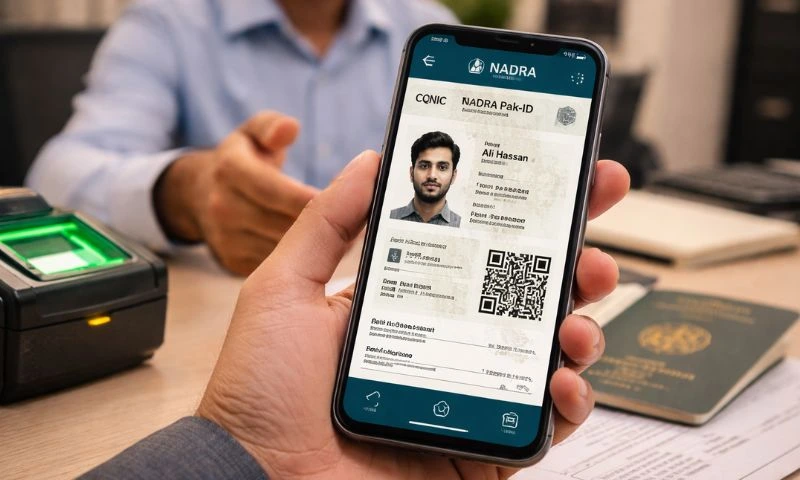
In a statement issued on Friday, the National Database and Registration Authority (NADRA) said the digital CNIC available through its PakID mobile application is legally equivalent to the physical identity card.
The authority expressed concern that many government offices and service providers still insist on physical cards or photocopies even when citizens present the digital version. NADRA stressed that this practice violates the current legal framework. According to the authority, “Digital identity cards hold the same legal status as physical CNICs.”
NADRA warned institutions that refusing to accept the digital CNIC is inconsistent with the law and urged organizations to recognize digital identity credentials presented by citizens.
Digital CNIC available through PakID app
The digital CNIC is accessible through NADRA’s official PakID mobile application, which allows citizens to securely store and display their identity credentials on their smartphones.
Through the app, users can apply for identity documents, renew CNICs, update personal details and track applications online. The system is designed to provide a complete digital identity management experience for Pakistani citizens.
Officials say the digital CNIC reduces the need to carry physical cards and helps eliminate unnecessary photocopies during identity verification.
Part of Pakistan’s digital transformation
The digital CNIC initiative is part of Pakistan’s broader push toward digital governance and modern public services.
Pakistan introduced the dematerialised digital identity card as part of efforts to modernize the country’s identity management system and improve access to government services through digital platforms.
The system allows citizens to store identity documents on their smartphones and securely verify their credentials when required.
NADRA officials believe the digital ID framework will improve service delivery in sectors such as banking, telecommunications, travel verification and government services.
Role of CNIC in Pakistan’s identity system
The Computerised National Identity Card remains the primary identity document for Pakistani citizens and is issued by NADRA. It carries a unique 13-digit identification number and includes biometric information such as fingerprints and facial data.
The CNIC is required for many essential services including opening bank accounts, obtaining passports, accessing government benefits and registering property.
By introducing the digital version of the CNIC, authorities aim to simplify identification procedures while improving security and accessibility.
NADRA urges compliance
NADRA has called on all institutions, organizations and service providers to fully comply with the law and accept digital identity credentials presented through the PakID platform.
The authority emphasized that the digital CNIC is not merely a convenience feature but a legally recognized identity document.
As Pakistan continues to expand digital public infrastructure, officials say wider acceptance of digital IDs will help create a faster and more efficient system for verifying citizen identity across the country.