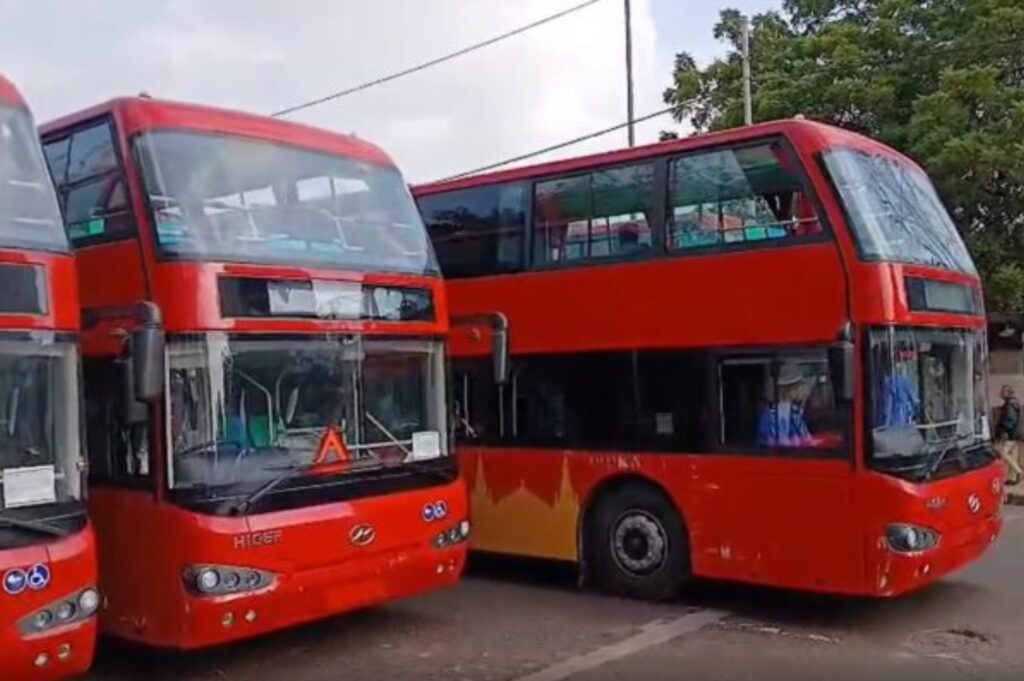
Karachi’s battered public transport system is about to get a major makeover as double-decker buses return to the city’s streets for the first time in decades, offering commuters a mix of nostalgia, comfort, and capacity just as the city steps into 2026. After nearly half a century, the Sindh government has launched a trial double-decker bus service running between Malir and Shahrah-e-Faisal, with plans to expand throughout Karachi in the new year.
The service was inaugurated on December 31 by Sindh Senior Minister Sharjeel Inam Memon alongside other officials, who said the revival fulfills a long-held promise to improve urban mobility. The move comes amid broader efforts by provincial authorities to modernize public transport, including adding electric buses and integrating different transit systems like the Orange and Green Line Bus Rapid Transit (BRT) networks into a seamless network for commuters.
Karachi once had a thriving double-decker bus network in the 1960s and 1970s, when these iconic vehicles dominated routes through Saddar and MA Jinnah Road. They eventually disappeared due to rising traffic, maintenance challenges, and the growth of minibuses and coaches. Each bus can hold around 115–120 passengers and is fully air-conditioned, making long, crowded rides more comfortable.
Officials also emphasized that the fare for the new double-deckers will match the existing People’s Bus Service cost, keeping the upgrade affordable for daily riders. Beyond comfort, the buses are expected to reduce congestion by moving more people per trip, which could help ease pressure on busy corridors like Shahrah-e-Faisal.
Alongside the double-deckers, the Sindh government has also imported 34 electric buses as part of the same initiative, bringing Karachi closer to a greener transit future. These electric vehicles, also dispatched from China, are slated to roll out across key routes once customs clearance is completed.
This bold move comes as Karachi’s population tops 20 million and the city grapples with congestion and pollution. While infrastructure challenges remain — including road quality and traffic flow — transport officials hope the expanded fleet will offer real relief for commuters and make daily travel more pleasant.
If the trial proves successful, plans call for more double-deckers on major routes in 2026. For many Karachiites, the sight of these buses is not just a return of a classic mode of transport but a sign of renewed investment in the city’s future.