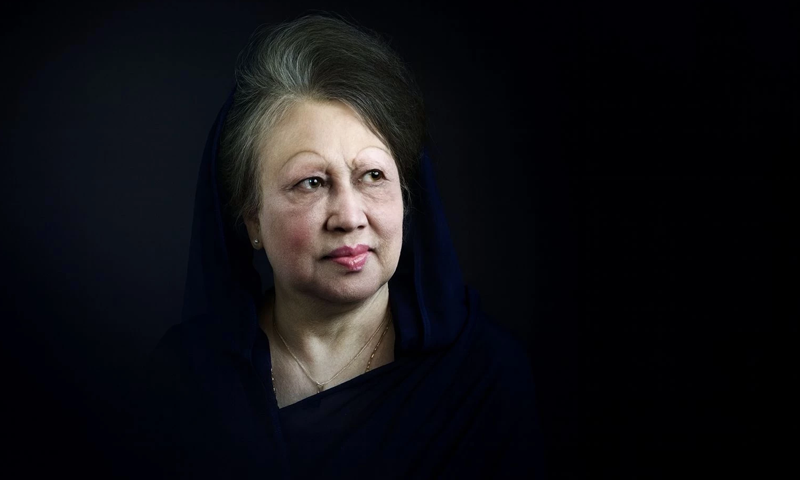
Khaleda Zia, Bangladesh’s first woman prime minister and one of the most influential — and divisive — figures in the country’s modern political history, has died at the age of 80 after a long illness, her party confirmed on Tuesday.
In a statement, the Bangladesh Nationalist Party (BNP) said Khaleda passed away at 6:00am local time at Evercare Hospital in Dhaka, where she had been receiving treatment since late November. The party described her as a “national leader” and called on supporters to pray for her soul.
Medical officials said Khaleda had been suffering from multiple serious health conditions, including advanced liver cirrhosis, diabetes, arthritis, and chronic heart and chest complications.
Her death marks the end of a political era defined by her intense rivalry with longtime opponent Sheikh Hasina. For more than three decades, the two leaders — famously dubbed the “battling begums” — dominated Bangladeshi politics, shaping its democratic struggles, street movements, and repeated cycles of confrontation.
Bangladesh’s interim leader Muhammad Yunus expressed deep sorrow, calling Khaleda “a symbol of the democratic movement” and saying the nation had lost a guardian figure at a critical moment in its history.
Condolences also poured in from abroad. Indian Prime Minister Narendra Modi said Khaleda’s contributions to Bangladesh’s development and regional relations would be remembered, while Pakistan’s Prime Minister Shehbaz Sharif described her as a friend of Pakistan and extended sympathy to the Bangladeshi people.
Born in 1946 in Dinajpur, then part of East Bengal, Khaleda entered politics after tragedy reshaped her life. She was married at a young age to army officer Ziaur Rahman, who later became president and founded the BNP. His assassination during a failed coup in 1981 thrust Khaleda into national leadership.
Initially underestimated, she emerged as a powerful political force, helping lead the movement that toppled military ruler Hussain Muhammad Ershad in 1990. The following year, she won Bangladesh’s first widely recognised free election, becoming prime minister with the backing of the Islamist party Jamaat-e-Islami.
During her terms in office, Khaleda oversaw the restoration of parliamentary democracy, promoted foreign investment, and expanded access to primary education. She returned to power again in 2001 but remained a polarising figure, admired by loyalists and criticised for confrontational politics and corruption allegations.
In later years, Khaleda faced imprisonment and house arrest following convictions she said were politically motivated. She was released after Hasina’s removal from power in 2024 and was later acquitted by the Supreme Court.
Her son, Tarique Rahman, is now set to lead the BNP into the February 12 general election, potentially extending the Zia family’s political legacy.
The BNP announced seven days of national mourning, with funeral arrangements to be shared later.