Chinese electric vehicle giant BYD has unveiled a new generation of ultra-fast charging technology capable of adding hundreds of kilometers of range in minutes, pushing electric vehicles closer to matching the convenience of petrol refuelling. Yet experts say the breakthrough may not transform everyday driving as much as headlines suggest.
The company’s latest “flash charging” system represents one of the most ambitious attempts to address range anxiety, a key barrier to EV adoption globally.
Charging speeds approach petrol refuelling
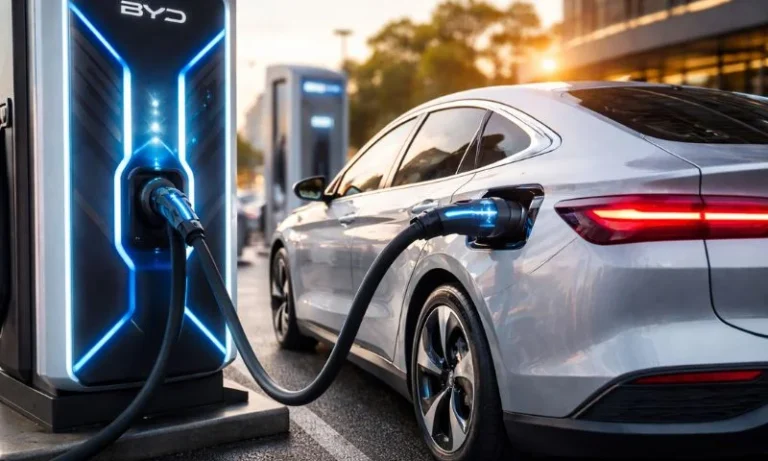
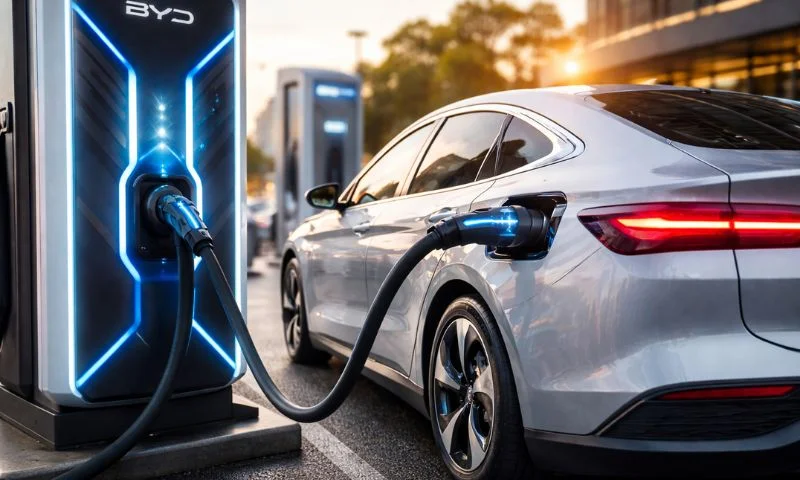
BYD’s new chargers can deliver up to 1,500 kilowatts of power, significantly higher than the 350 kW fast chargers commonly used in Western markets.
Under optimal conditions, the system can charge a compatible vehicle from around 10 percent to 70 percent in roughly five minutes, with near-full charging possible in under ten minutes.
The technology relies on a combination of high-voltage architecture, advanced battery chemistry and integrated design, with BYD manufacturing its own batteries, vehicles and charging infrastructure. This vertical integration allows the system to handle extremely high electrical loads more efficiently than most competitors.
The company has already installed thousands of these chargers in China and plans to expand rapidly, targeting tens of thousands of stations across domestic and international markets.
Analysts say such speeds bring EV charging closer to the “gas station experience,” potentially easing concerns among drivers hesitant to switch from traditional vehicles.
Why faster may not mean better for everyone
Despite the technological leap, experts caution that ultra-fast charging may have limited impact on daily EV use.
“It’s a good, marginal improvement in technology,” said one researcher, noting that it is “not something that changes most people’s daily life.”
The primary reason is practical. Most EV owners charge their vehicles at home or at work, where speed is less critical. Public fast chargers are typically used only during long-distance travel, making the difference between five minutes and 20 minutes less significant for routine driving.
Infrastructure challenges also remain a major hurdle. Delivering megawatt-level power requires substantial upgrades to electricity grids, including new transmission capacity and energy storage systems to prevent overload.
Even in markets where the technology is available, only a limited number of vehicles can currently support such high charging speeds, meaning widespread adoption will take time.
Race to dominate EV infrastructure
The development highlights an intensifying global race among automakers to improve charging speeds as part of broader competition in the EV market.
BYD’s approach contrasts with rivals such as Tesla, which has focused on expanding charging networks rather than pushing extreme power levels for passenger vehicles.
At the same time, the breakthrough comes amid mixed signals in the EV industry, where demand growth has slowed in some regions due to policy changes and rising costs.
Experts say faster charging could still play a key role in attracting new buyers, particularly those comparing EVs with conventional cars.
However, the broader transition will depend on factors beyond speed, including affordability, infrastructure availability and government support.
As the technology evolves, BYD’s latest innovation signals how quickly the EV landscape is changing. But for now, the promise of five-minute charging may remain more relevant for future markets than for everyday drivers today.