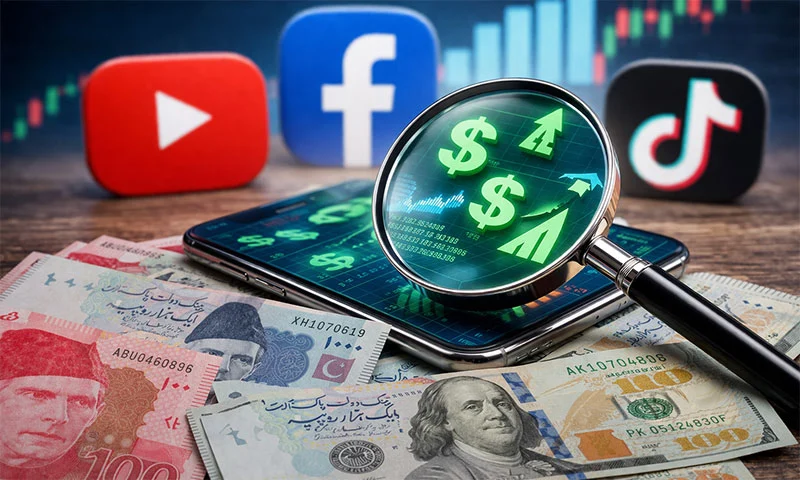
Pakistan’s Federal Board of Revenue has moved to bring social media earnings under the formal tax system, introducing a new framework aimed at regulating income generated through digital platforms such as YouTube, TikTok and other online channels. The move signals a major shift in how digital earnings are treated, as authorities step up efforts to expand the tax base and document previously untaxed income streams.
The new regime has been introduced through official notifications, outlining a special procedure for taxing individuals earning income from remunerative social media content.
FBR Seeks Public Feedback on New Rules
As part of the process, the tax authority has also invited public input on the proposed mechanism, indicating that the framework is still evolving and may be refined based on stakeholder feedback. The initiative reflects an effort to balance enforcement with consultation as Pakistan adapts its tax system to the growing digital economy.
Officials say the goal is to create clarity for content creators, freelancers and influencers while ensuring that income generated through online platforms is properly declared and taxed.
Social Media Income Now Under Strict Monitoring
Authorities have begun closely tracking earnings from social media platforms, signaling that digital income will no longer remain outside the tax net. The development comes amid growing concern within the government about revenue leakages from the rapidly expanding freelance and creator economy.
Industry estimates suggest that Pakistan’s digital content and freelance sector has grown significantly in recent years, with thousands of individuals earning through monetized content, brand deals and online services. The new policy aims to bring these earnings into the documented economy.
Potential Tax Structure and Revenue Goals
Experts indicate that the government is considering applying a tax rate on social media income, with earlier proposals suggesting a rate of around 3.5 percent on earnings from platforms such as YouTube and TikTok.
The move is part of broader efforts to increase tax collection and meet ambitious revenue targets. Pakistan’s tax authority has been under pressure to widen the tax base and reduce reliance on traditional sectors by tapping into emerging income streams.
Impact on Content Creators and Freelancers
The introduction of this regime is expected to directly impact influencers, vloggers, freelancers and digital entrepreneurs across Pakistan. While some view the move as necessary for economic documentation, others have raised concerns about compliance challenges and the need for clear guidelines.
Tax experts stress that transparency and ease of filing will be critical in ensuring compliance, particularly for small scale creators who may not be familiar with tax procedures.
Part of Broader Economic Reforms
The decision to tax social media income aligns with Pakistan’s ongoing economic reforms aimed at increasing revenue collection and improving financial transparency. Authorities are increasingly focusing on previously untaxed sectors, including the digital economy, retail and informal markets.
With the digital landscape continuing to expand, the new tax regime marks a significant step toward integrating online earnings into the country’s formal financial system.