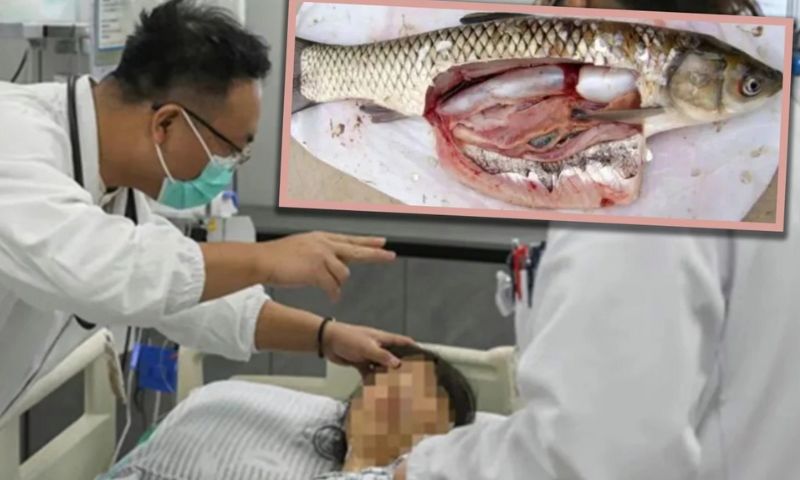
A middle-aged woman in eastern China landed in the intensive care unit (ICU) after swallowing a raw fish gallbladder in hopes of curing a headache – a decision that quickly turned dangerous and life-threatening. The case highlights the serious health risks tied to traditional folk remedies that lack scientific support.
The 50-year-old woman, known only by her surname Liu, lived in Jiangsu province. On the morning of December 14, 2025, she bought a 2.5 kg grass carp at a local market. Believing the fish’s gallbladder would clear internal “heat,” detoxify the body and relieve her persistent headache, she extracted it at home and swallowed it raw. Just two hours later, Liu began suffering from severe vomiting, diarrhoea and sharp stomach pain, alarming her family.
Her relatives rushed her to the Affiliated Hospital of Jiangsu University, where doctors diagnosed her with fish gallbladder poisoning and acute hepatic failure. These are serious conditions caused by toxic bile components in the gallbladder. Emergency treatment included plasma exchange therapy and continuous renal replacement therapy (CRRT), a form of slow blood purification used in critical cases. After five days in intensive care, Liu’s condition improved and she was discharged.
Medical experts say the toxins in fish gallbladders especially in species like grass carp and other common carp can be more toxic than arsenic, even in small amounts. Tests have shown that bile contains harmful compounds such as cyprinol sulfate, which can damage the liver, kidneys, heart and digestive system when ingested. Symptoms typically include vomiting, stomach cramps, diarrhoea, reduced urine output and in severe situations acute organ failure. Cases of poisoning have been documented in hospitals across China, India and Vietnam.
Doctors warn that fish gallbladders remain toxic whether eaten raw, cooked or soaked in alcohol, disproving common claims that preparation methods neutralise their harmful effects. One treating physician, Dr Hu Zhenkui, said gallbladder toxins can severely damage vital organs and noted that even small amounts might poison a person quickly. In larger quantities, the toxins can be fatal if medical care is not sought promptly.
The incident is not an isolated one. Similar poisonings have been reported in rural areas where folk remedies remain popular and medical guidance is limited. Traditional beliefs about ingesting animal organs for health benefits persist, despite a lack of evidence and strong medical warnings against such practices. Experts emphasise proper medical consultation for persistent symptoms rather than resorting to unproven and risky treatments.
Liu’s ordeal serves as a stark reminder that natural or traditional remedies are not always safe and that toxic substances can lurk in unexpected places. Awareness and public education remain key to preventing similar emergencies in the future.