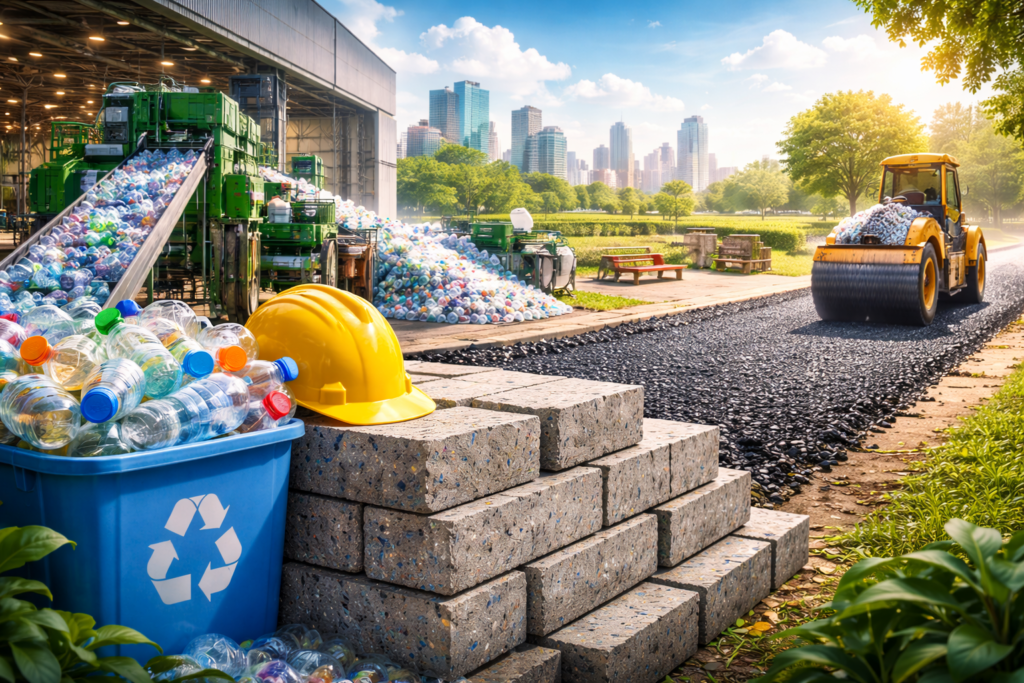
As environmental pollution and climate change accelerate worldwide, plastic recycling has evolved from a basic waste-management tool into a multi-billion-dollar global industry. Across continents, countries are converting plastic waste into roads, construction material, furniture, and reusable plastic — a transformation that Pakistan has now begun to replicate through initiatives such as Eco Bricks and government-backed recycling programmes.
How the World Recycles Plastic
In countries such as Germany, Japan, and South Korea, plastic bottles and packaging are recycled back into raw material used for manufacturing new products. Strict waste segregation laws, deposit-return systems, and advanced recycling plants have helped reduce landfill waste and reliance on virgin plastic.
Meanwhile, India and the Netherlands have pioneered the use of plastic waste in road construction. By mixing shredded plastic with bitumen, these countries have built stronger, more durable, and water-resistant roads, turning waste into long-lasting infrastructure.
In United States and the United Kingdom, recycled plastic is widely used to produce outdoor furniture, fencing, railway sleepers, and building components. African nations such as Kenya are even converting plastic waste into low-cost construction bricks, helping address housing shortages while reducing pollution.
Pakistan’s Entry: Eco Bricks and Recycling Push
Pakistan, one of the countries most vulnerable to climate change, has historically struggled with plastic waste management. However, a notable shift began in July last year, when the country started producing environment-friendly Eco Bricks for the first time.
These bricks are made by blending 15 to 20 percent plastic waste with cement, sand, and gravel. The Eco Bricks can be used in flooring and external boundary walls, offering a sustainable alternative to traditional construction materials while cutting down plastic pollution.
According to Pakistan’s Ministry of Climate Change and Environmental Coordination, the country generates 3.9 million tonnes of plastic waste annually. Much of it ends up being burned or dumped due to weak collection systems and limited recycling infrastructure, worsening air and environmental pollution.
Punjab’s Green Credit Programme
To address these challenges, Punjab has introduced multiple policies, including the Green Credit Programme, aimed at laying the groundwork for an emissions trading system. The initiative seeks to engage youth, students, women, and local communities in positive environmental action by encouraging recycling and sustainable practices.
As part of this effort, the government has partnered with a private company to recycle single-use plastic. From next month, locally manufactured recycling machines — developed using Chinese technology — will be installed at four major universities in Lahore, with plans to expand their placement to city markets.
Recycling as an Industry
The Federation of Pakistan Chambers of Commerce and Industry has urged the government to formally recognise plastic recycling as an industry and support it through policy and incentives. FPCCI notes that many countries earn billions from recycling, while Pakistan’s recycling sector already provides employment to nearly one million people.
Pakistan currently has over 200 recycling factories processing paper, plastic, and other waste. Yet, a report estimates that in 2020, the country generated 250 million tonnes of waste, with around 5 million tonnes of plastic going unrecycled due to lack of awareness and infrastructure.
Innovation from Within
Kashif Akhtar, founder of Eco Bricks, says the initiative was born out of necessity. “In Pakistan, most waste is burned because it is neither properly collected nor recycled,” she said. “We decided to convert waste into a usable product, and that’s how Eco Bricks were developed.”
She added that Eco Bricks have already been used in collaboration with the Capital Development Authority (CDA) at a memorial site near F-9 Park in Islamabad, demonstrating their practical viability.
The Road Ahead
Global experience shows that plastic recycling can simultaneously reduce pollution, create jobs, and support sustainable growth. Experts believe that by improving waste segregation, investing in recycling technology, and formally recognising recycling as an industry, Pakistan can follow the same path — turning plastic waste from an environmental threat into an economic opportunity.