Airlines across the world are increasingly feeling the financial impact of flight delays, airspace closures and airport suspensions, as geopolitical tensions and security incidents disrupt global travel routes.
Recent aviation disruptions including temporary airport shutdowns, drone incidents near airports and restricted airspace in parts of the Middle East and South Asia have forced airlines to reroute aircraft, delay flights and cancel services. Industry experts warn that if these disruptions continue, airlines could face significant financial losses in fuel costs, compensation payments and operational inefficiencies.
According to the International Air Transport Association (IATA), global airline operating costs have risen sharply in recent years due to supply chain disruptions and operational constraints.
“Operational disruptions increase costs across the entire airline system,” IATA said in its latest industry outlook, adding that airlines continue to face billions of dollars in additional expenses from delays and rerouting.
Rerouted flights increase fuel costs
One of the most immediate financial impacts of flight disruptions is higher fuel consumption.
When airlines are forced to avoid restricted airspace or hold aircraft in the air before landing, planes burn significantly more fuel than planned.
Aviation analysts say a rerouted long-haul flight can add hundreds of kilometres to the journey, increasing both fuel use and flight time.
Fuel is already the single largest operating expense for airlines. According to IATA data, fuel typically accounts for around 25 percent to 30 percent of airline operating costs.
With global oil prices remaining volatile due to geopolitical tensions, airlines face additional financial pressure when flights are delayed or diverted.
Read More: Flights Suspended at Dubai Airport After Drone Strike Sparks Fire
Delays trigger compensation and operational losses
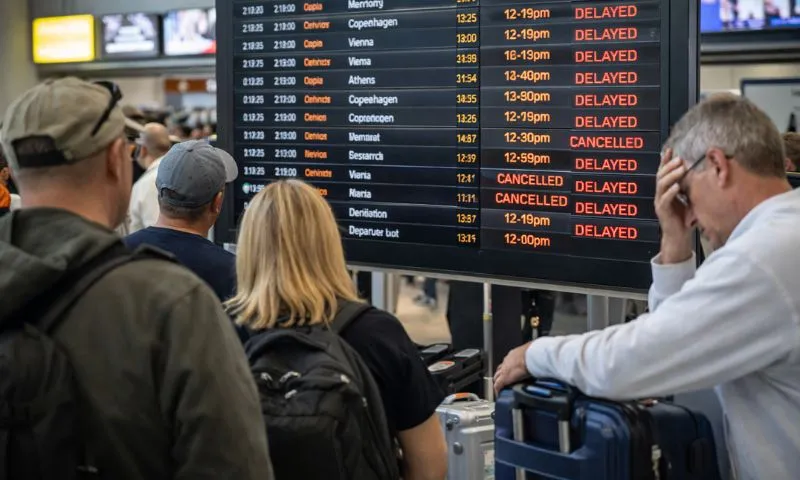
Flight delays and cancellations also trigger compensation obligations under international passenger protection rules.
Passengers affected by long delays may receive hotel accommodation, meals or financial compensation, depending on the country’s aviation regulations.
Aviation consulting firm Cirium notes that disruptions at major hubs can create a ripple effect throughout airline networks.
“When a major airport experiences operational disruption, the impact spreads across multiple flights because aircraft and crew schedules are tightly linked,” the firm said.
This means a single delayed flight can lead to multiple cancellations later in the day.
Cargo and supply chains also disrupted
Air cargo operations are also affected when flights are delayed or rerouted.
Cargo aircraft often carry high-value goods such as electronics, pharmaceuticals and medical supplies that depend on precise delivery schedules.
The International Air Transport Association has warned that repeated disruptions to key aviation corridors could slow global trade.
Air cargo represents a crucial part of airline revenue, especially for long-haul carriers.
Read More: Emirates Resumes Limited Flights After Middle East Airspace Reopens
Lessons from previous aviation crises
Past aviation disruptions show how costly large-scale interruptions can become.
For example:
The Iceland volcanic ash crisis in 2010 forced widespread European airspace closures and cost airlines an estimated $1.7 billion in revenue losses.
Airspace restrictions during the Russia-Ukraine war forced airlines to reroute flights between Europe and Asia, increasing travel time and fuel consumption.
The COVID-19 pandemic created the largest crisis in aviation history, with airlines losing more than $180 billion globally between 2020 and 2022, according to IATA.
Industry experts say even short-term disruptions can have long-lasting effects on airline finances and travel schedules.
Aviation industry monitoring situation closely
Airlines are now closely monitoring geopolitical developments and adjusting flight routes where necessary.
Many carriers are working with air traffic authorities to identify safe alternative routes while minimizing delays.
However, analysts warn that if airport closures and airspace restrictions continue, airlines could face another period of financial turbulence.
For an industry that depends on precise scheduling and high aircraft utilization, even small disruptions can quickly translate into significant financial losses.