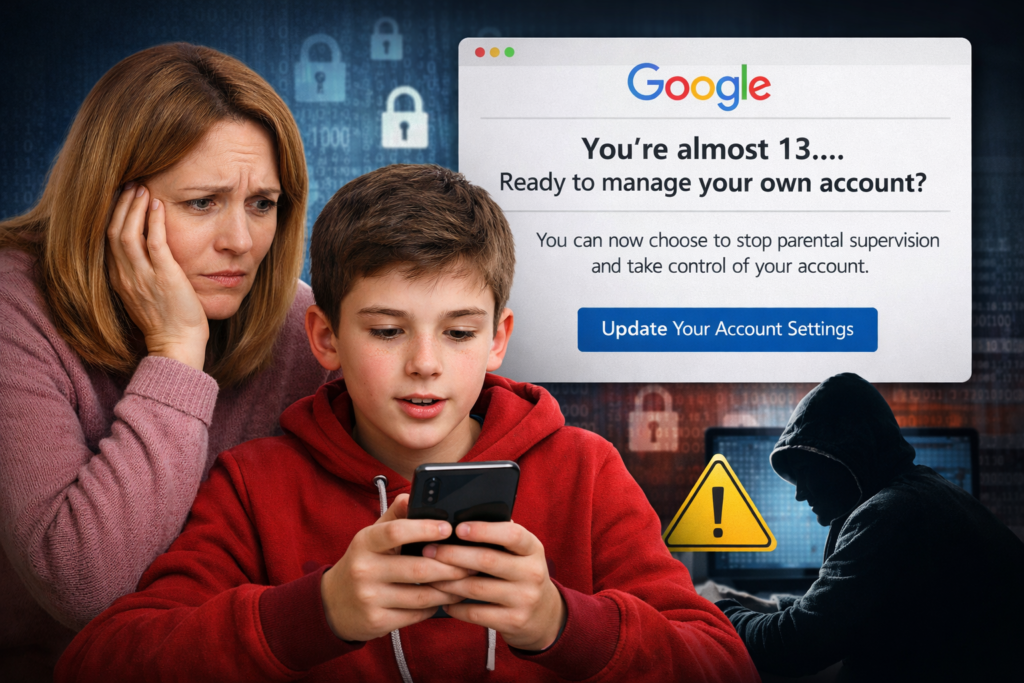
Parents around the world are raising serious concerns after Google began emailing children as young as 12 and 13 to inform them they can end parental supervision on their accounts. The controversy erupted after Melissa McKay, president of the Digital Childhood Institute, posted on LinkedIn that Google had messaged her child directly, telling him he was “almost 13” and eligible to remove parental controls from his Google account.
Under Google’s current policy, when a child reaches the age of 13 or the local applicable age of consent, the company sends an email notifying them that they can update their account settings. Children then get the choice to continue supervised settings or manage their own account. Parents also receive notice.
But McKay and other parents see a deeper problem. They argue that Google is not simply informing families of a policy change. Instead, they say the company is directly engaging with minors about autonomy over their digital life without requiring parental consent. McKay wrote, “A trillion-dollar corporation is directly contacting every child to tell them they are old enough to ‘graduate’ from parental supervision. The email explains how a child can remove those controls themselves, without parental consent or involvement.”
Critics describe this as more than a technical detail. They call it a reframing of family authority. One parent commented online that the email created tension at home. Their child asked: “Why don’t you trust me if Apple says it’s fine?” referring to a similar email her daughter received from another tech platform.
Some parents warn the move could shift how children view parental boundaries. Another voice on social media wrote that direct messaging to children “blurs a critical boundary between education infrastructure and commercial engagement.”
Child safety advocates also point to broader concerns about how parental controls work. Google’s Family Link service is meant to help parents monitor usage, set screen time limits, and manage content for minors.
But once a child gets the notification at 13, they can decide to stop supervision entirely, potentially removing protections like SafeSearch filters, app approvals, and location sharing.
The debate taps into larger issues of data privacy and children’s online safety, especially when tech companies take roles that traditionally belonged to parents. Critics have even called for government investigations into the practice. As of now, Google has not issued a public statement responding to these concerns.