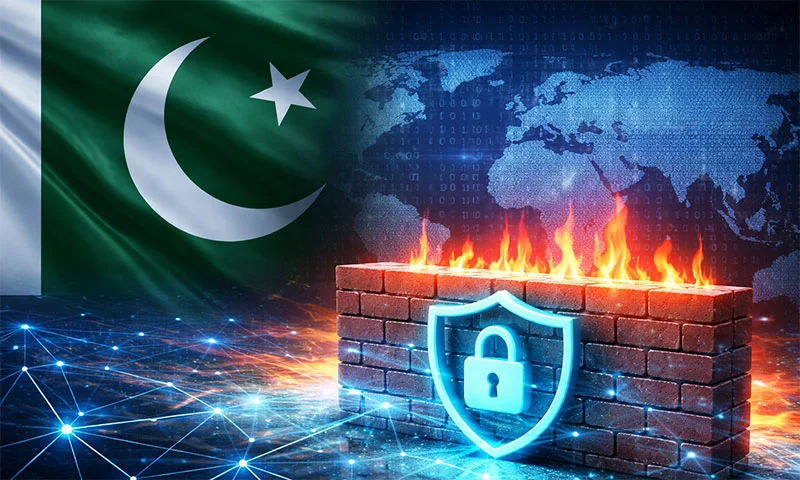
Reports have circulated that Pakistan’s internet firewall has been permanently shut down following widespread public reaction. Multiple verified sources confirm that the government had been in the process of installing a national internet firewall system to tighten online control and cybersecurity before these reports emerged.
What Is an Internet Firewall?
A firewall is a network security system designed to monitor and control incoming and outgoing internet traffic based on specified security rules. It acts as a barrier between a private internal network and the public internet.
Read More: Pakistan Sets 5G Auction Prices, Clearing Path for Faster Mobile Internet
Firewalls can filter malicious content, block certain websites, and protect systems from cyberattacks. They are widely used in enterprise networks to safeguard sensitive data and defend against unauthorized access.
Why Pakistan Installed a Firewall
In 2024, the Pakistan Telecommunication Authority (PTA) and the Ministry of Information Technology confirmed that the government was implementing a nationwide internet firewall. Officials described it as a cybersecurity upgrade to defend against increasing threats and to filter “propaganda and unwanted content.”
A top Pakistan IT official stated the firewall was meant to boost national cybersecurity and not intended to curb free speech, saying:
“It’s a system. It is not a physical wall… It will not curb anything.”
Why Public Concerns Arose
Digital rights groups and the tech industry raised serious concerns about the firewall’s potential to restrict access to online platforms, slow the internet, and hurt business operations. Experts warned that monitoring and filtering internet traffic could discourage international investment in Pakistan’s tech sector and reduce competitiveness.
Read More: Pakistan Sets March 10 for 5G Spectrum Auction to Transform Connectivity
The Pakistan Software Houses Association estimated the firewall could inflict up to $300 million in economic losses due to slower connections and disrupted digital services.
Where Similar Systems Exist
The most cited and comprehensive example of a national firewall is China’s “Great Firewall”, a combination of legislation and technology that blocks access to selected foreign sites and content. It checks data packets for sensitive keywords and then blocks access to sites like Google, Facebook, and Twitter within China.
Investigations have found that China has exported parts of its firewall technology to several nations, including Pakistan, Myanmar, Kazakhstan, and Ethiopia.
Other countries such as Russia, Iran, and Myanmar also deploy internet controls at various levels to restrict access or monitor content.
Why Reports of Shutdown Are Appearing
Following widespread public complaints about slower internet and difficulties accessing social media and online services, some social media accounts and online posts began claiming that Pakistan had shut down the firewall permanently. These claims reflect the transition phase of the project rather than an official policy reversal, and authorities have not yet released a formal statement confirming a permanent shutdown.
Read More: SBP Launches Cyber Shield to Protect Pakistan’s Financial Sector
Internet firewall projects often involve significant infrastructure and phased deployment, including testing and partial rollbacks if public impact becomes unmanageable or economic damage is high.
Pakistan’s internet firewall was introduced to bolster cybersecurity and content monitoring. Debate has intensified due to real economic impact and concerns over freedom of information. Global contexts show that firewalls can help national security but often at the cost of open internet access. The claims about its shutdown reflect ongoing adjustments to a project that has not yet been fully and officially discontinued by government authorities.