Pakistan is now bearing a heavy economic cost from climate change, with close to one percent of GDP lost each year to climate-related damages, key speakers said on Monday at the 4th Pakistan Climate Conference in Karachi. The event, hosted by the Overseas Investors Chamber of Commerce and Industry, brought together federal and provincial policy makers, climate experts and international development partners to discuss urgent climate action.
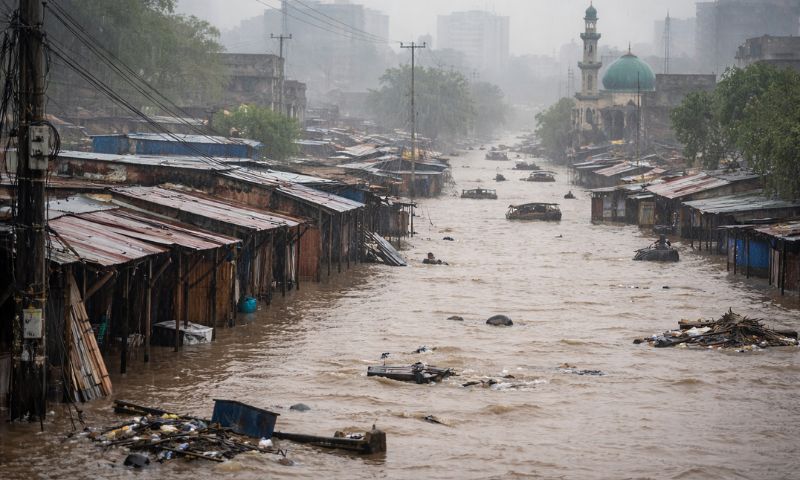
Federal Minister for Climate Change and Environmental Coordination Dr Musadik Masood Malik said Pakistan is on the frontlines of climate risk despite contributing less than one percent to global greenhouse gas emissions. According to him, record heatwaves reaching up to 53 degrees Celsius, widespread floods that displaced more than four million people, and rapidly melting glaciers show the gravity of the crisis. “From record 53°C heatwaves to floods that displaced four million people last year… climate losses costing nearly one per cent of GDP annually, this is an existential challenge,” he said.
The losses highlight how climate change now affects Pakistan’s economy beyond environmental concerns. Floods, intense heat, and erratic weather patterns disrupt agriculture, displace communities, and strain public finances. These effects compound long-existing economic challenges, such as slow growth and structural weaknesses.
Dr Malik highlighted Pakistan’s updated climate pledge under the Nationally Determined Contribution (NDC) 3.0, targeting a 50 percent emissions reduction by 2035. Achieving this goal, he said, will require major investment. He estimated that $565.7 billion is needed for climate resilience programs and urged climate finance that is sustainable, grant-based, and driven by the principle of climate justice.
Federal Minister for Finance and Revenue Senator Muhammad Aurangzeb echoed the need for urgent action, calling climate change “an existential threat” and stressing that Pakistan must shift from planning to bankable climate action projects that attract private capital. He said existing frameworks like the National Adaptation Plan and Climate Prosperity Plan need to be translated into investment-ready projects to mobilize funds.
International speakers also stressed integrated finance models to close the funding gap. Chongguang Yu (Charles), Regional Lead for Sustainable Finance at the United Nations Development Programme, urged for blended finance and risk-sharing mechanisms so private sector participation can scale.
Business leaders noted signs of momentum in Pakistan’s climate finance space. President OICCI Yousaf Hussain cited efforts such as Pakistan’s planned Green Panda Bond, enhanced public-private partnerships, and the finalization of a 10-year, $20 billion Country Partnership Framework with the World Bank as examples of progress.
The conference made clear that climate resilience and economic stability are now inseparable priorities for Pakistan, which must act swiftly to protect its people and economy from the escalating cost of climate change.