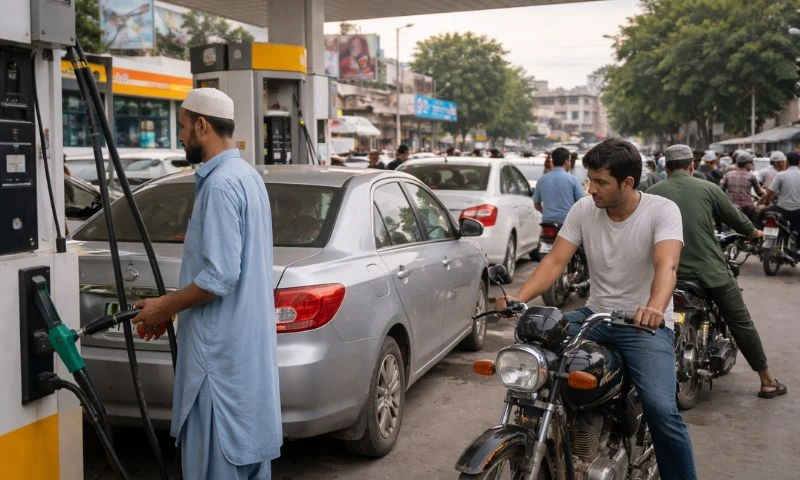
Millions of commuters in Pakistan faced fresh financial pressure this week after the government announced hikes in petrol and diesel prices, driving up the cost of everyday travel. The decision adds to a series of economic adjustments aimed at stabilizing government finances, but it also renewed concern among citizens already struggling with rising living costs.
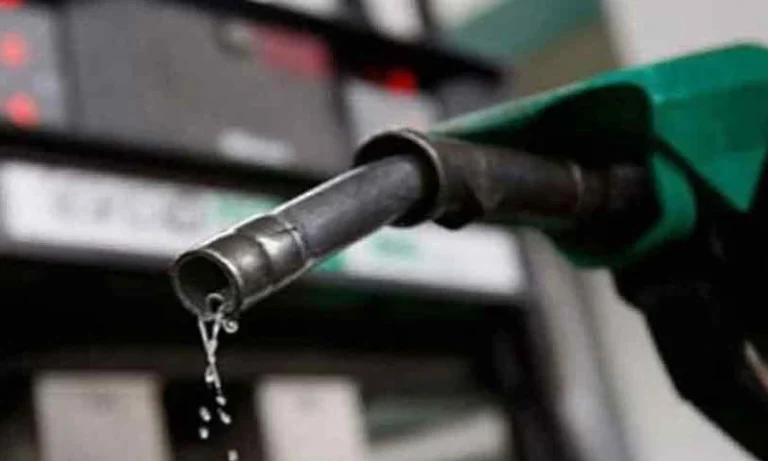
On February 15, 2026, the government increased petrol prices by Rs7 per liter and diesel by Rs9 per liter. This change made petrol cost Rs278 per liter and diesel Rs263 per liter in major cities, including Karachi and Lahore. The hike applies nationwide and takes effect immediately, affecting fuel stations and consumers from urban centers to rural communities.
Transporters and daily commuters reacted swiftly, with many warning that the added fuel cost would soon push up fares for buses, taxis, rickshaws, and ride-hailing services. A spokesperson for a national drivers’ association said that transport operators had no option but to adjust prices to maintain profitability. They cautioned that without government support, commuters could soon pay significantly more for trips they take every day.
Analysts point out that fuel price hikes often ripple through the economy. Higher petrol and diesel costs increase freight charges for goods, leading to potential price rises for food and essential items. A market expert explained that “fuel prices are a base cost for almost every product. When they go up, businesses adjust their pricing to absorb added expenses.” This effect typically hits low- and middle-income households the hardest.
The government said the fuel price adjustments are part of broader economic measures to manage fiscal pressures and honor agreements with international financial partners. In recent years, Pakistan has faced challenges balancing growth with spending, leading to tough policy decisions in sectors such as energy, taxation, and imports. Officials stated that the latest price review reflected global oil market trends and currency fluctuations.
Commuters shared their frustration on social media and at petrol pumps around the country. One office worker described the hike as “another blow,” saying daily travel costs had already eaten into monthly incomes. Another commuter added that if transport fares increase further, many workers might have to reconsider where they live and how they travel to jobs.
Economists say the timing of the hike is sensitive. With inflation remaining elevated and salaries not increasing in proportion, households could struggle to adapt. They are urging the government to introduce targeted subsidies or relief measures for vulnerable groups.
For now, the impact of the new fuel price increases is set to be felt at the pump and in commuters’ wallets across Pakistan. Many households are already calculating new budgets as the country adjusts to higher costs of running cars, motorbikes, and public transport vehicles.