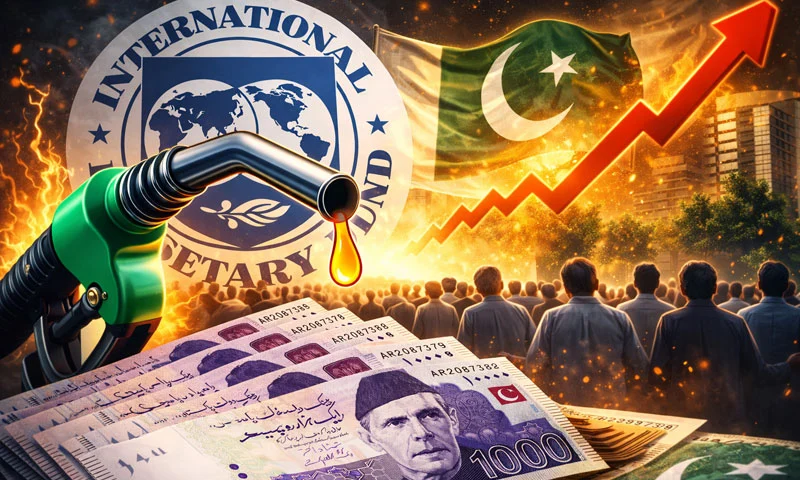
Pakistan is once again at a critical crossroads after the International Monetary Fund pushed the government to remove fuel price distortions. The demand has sparked a key question across the country: will fuel prices rise again, or does the government still have room to provide relief?
The answer is not simple. It depends on fiscal space, global oil trends, and political will. But experts agree on one thing. Tough decisions are unavoidable.
Limited Options for the Government
Pakistan currently has three main options, each with its own risks and consequences.
The first option is to fully pass on international fuel prices to consumers. This aligns with IMF conditions and helps stabilize the economy. However, it directly increases petrol and diesel prices.
The second option is to continue subsidies. This provides short-term relief but puts pressure on the national budget, increases fiscal deficit, and risks delaying IMF funding.
The third option is targeted subsidies. Instead of giving relief to everyone, the government can support specific groups like farmers, transporters, or low-income households.
Economists say the IMF strongly prefers the third option. One senior economic analyst explained that targeted subsidies are “the only sustainable middle path” because they protect vulnerable groups without damaging fiscal discipline.
Will Fuel Prices Increase Again?
Experts believe there is a high probability that fuel prices will increase in the coming months.
Pakistan imports most of its fuel, and global oil prices remain volatile due to geopolitical tensions. When combined with IMF conditions, this creates upward pressure on domestic prices.
Energy economist Dr Fahad Rauf says that if distortions are removed, “fuel prices will reflect actual market rates,” which means increases are likely unless global prices fall significantly.
Even if the government tries to delay hikes through subsidies, it can only do so temporarily. The current fiscal constraints limit how long relief can continue.
Can Pakistan Afford Subsidies?
The government has already stretched its financial capacity to provide fuel relief. Subsidies are costly and often funded through borrowing or reduced development spending.
According to financial experts, continuing blanket subsidies could widen the fiscal deficit and weaken Pakistan’s position in negotiations with international lenders.
A former finance ministry official noted that “every rupee spent on untargeted subsidies reduces space for health, education, and development.”
There is also the risk that prolonged subsidies could lead to delayed IMF disbursements, which Pakistan relies on to stabilize its economy and maintain foreign reserves.
Impact on Inflation and Daily Life
If fuel prices rise, the impact will be immediate and widespread.
Transport costs will increase, leading to higher prices for food and essential goods. Electricity costs may also rise due to fuel-based power generation. Businesses will pass on higher operating costs to consumers.
For the average household, this means higher monthly expenses and reduced purchasing power.
Economists warn that inflation could spike again, especially in urban areas where transport and utility costs are a major part of household spending.
Pressure on Agriculture and Industry
Diesel is critical for agriculture and transport. Any increase in diesel prices can directly affect farming costs, especially during sowing and harvesting seasons.
This could lead to higher food prices and put additional pressure on rural incomes.
Industries that rely on logistics and transportation may also face increased costs, which could slow economic activity.
The Case for Targeted Relief
Policy experts are increasingly recommending targeted subsidies as the most practical solution.
This approach involves identifying vulnerable groups and providing them with direct financial support instead of lowering fuel prices for everyone.
For example, farmers could receive diesel subsidies, while low-income households could get cash transfers through existing programs.
This ensures that relief reaches those who need it most while keeping overall spending under control. The upcoming federal budget will be crucial in shaping Pakistan’s fuel pricing strategy.
The government is expected to gradually reduce distortions, possibly through phased price adjustments rather than sudden hikes.
Analysts believe a hybrid approach is likely. Fuel prices may increase gradually, while targeted subsidies are expanded to protect vulnerable segments.
The challenge for policymakers is to strike a balance between economic stability and public relief.
A Difficult Trade-Off
Pakistan’s fuel pricing dilemma highlights a broader economic reality. Relief measures are politically necessary, but financial discipline is unavoidable.
As one senior policy expert put it, “There is no painless option left. The question is how to manage the pain.” For the public, this means preparing for potential price adjustments while hoping that targeted support measures can cushion the impact.