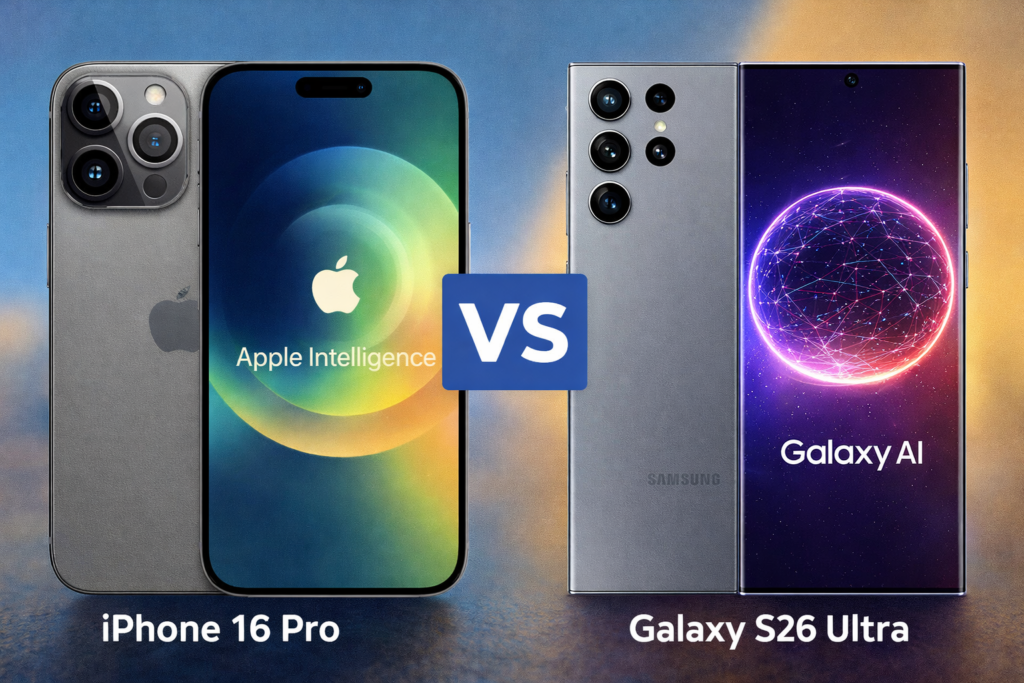
The iPhone 16 Pro and the (soon-to-launch) Samsung Galaxy S26 Ultra are chasing the same dream: a phone that feels less like a gadget and more like a smart partner. But they’re taking very different roads—especially on AI, cameras, and satellite features.
Apple’s pitch is “Apple Intelligence,” built into the iPhone 16 Pro’s A18-class platform and tied tightly to iOS. The biggest advantage is how smoothly it sits inside everyday tasks: writing help, smarter Siri moments, and optional ChatGPT support when you want deeper answers. Apple keeps this experience “ask-first,” so the phone doesn’t feel like it’s constantly showing off. That restraint may look boring, but it often feels more usable.
Samsung’s Galaxy S26 Ultra is shaping up to be the “AI power user” option. Samsung has pushed Galaxy AI hard across its recent Ultra phones, with features like cross-app actions and a privacy model that lets users control on-device vs cloud processing. Leaks also suggest Samsung is testing a major Bixby upgrade with Perplexity-style answers, which could make the assistant feel less behind. If that lands well, it’s a real step forward—not just a new label.
Now the cameras, where the debate gets spicy. The iPhone 16 Pro leans into “camera realism” through Apple’s computational pipeline and a triple-camera setup led by a 48MP main camera, plus a 48MP ultra-wide and a 5x telephoto. Apple also added “Camera Control,” which targets faster, more deliberate shooting. It’s the phone for people who want consistent skin tones, reliable video, and fewer surprise edits.
Samsung’s Ultra identity, meanwhile, is built on high-res hardware and aggressive AI processing. Recent Ultra models center on a 200MP main camera and Samsung’s ProVisual engine, aiming for punchier detail and stronger zoom-style flexibility. If the S26 Ultra sticks close to that formula—as rumors suggest—the real question becomes: will Samsung refine the “Ultra look” toward natural results, or double down on the dramatic style people either love or hate?
Satellite tech is another divider. Apple already offers Emergency SOS via satellite on iPhone 14 and newer models, and it has expanded satellite options beyond emergencies in supported regions. For the S26 line, reports point to improved satellite functionality coming, but it’s still not official.
So who’s innovating? Apple is polishing the experience until it disappears. Samsung is stacking features until the phone feels like a toolbox. In 2026, buyers may pick less on specs and more on which philosophy fits their life.