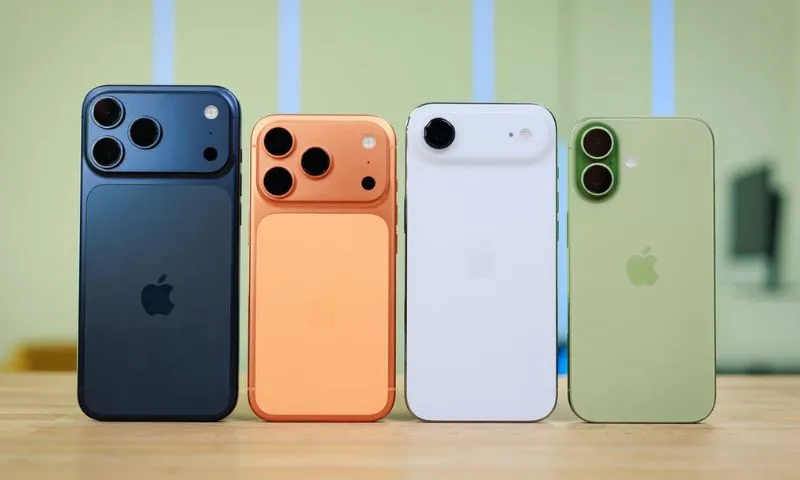
A new leak surrounding Apple’s upcoming iPhone 18 Pro series has sparked widespread excitement, with reports suggesting that the device could deliver the biggest battery upgrade in the company’s history.
According to a leak shared by tech insider account @ApplesClubs, the next-generation Pro model is expected to feature “even better battery life than the iPhone 17 Pro.”
The claim has quickly gained traction among tech enthusiasts, especially as Apple has historically focused on balancing performance with battery efficiency rather than simply increasing battery size.
Bigger battery capacity and efficiency gains
Early reports indicate that the iPhone 18 Pro Max could feature a battery capacity ranging between 5,100 and 5,200 mAh, making it the largest battery ever in an iPhone.
This represents a noticeable increase over the iPhone 17 Pro Max, which had an estimated capacity of around 5,088 mAh.
The standard iPhone 18 Pro is also expected to receive proportional battery improvements, ensuring better overall endurance across the lineup.
Experts suggest that this jump in capacity, combined with efficiency upgrades, could significantly extend real-world usage times for users.
New A20 Pro chip to boost performance and battery life
One of the key drivers behind the improved battery life is expected to be Apple’s next-generation A20 Pro chip.
The chip is rumored to be built using TSMC’s advanced 2nm process, which could deliver between 15 percent and 30 percent better power efficiency compared to the previous generation.
This improved efficiency is likely to translate into longer battery life, with some estimates suggesting the device could last up to 1.5 to 2 days under heavy usage conditions.
Additionally, Apple’s new in-house C2 5G modem is expected to further optimize power consumption and connectivity performance.
Under-display Face ID and design upgrades
Beyond battery improvements, leaks indicate that the iPhone 18 Pro series could introduce several design and hardware upgrades.
These include the possibility of under-display Face ID, which would eliminate the need for visible sensors on the screen and provide a cleaner display experience.
There are also reports of subtle design refinements, including new finishes and improved integration of hardware components, though Apple is expected to retain the familiar overall look of its flagship devices.
Camera and hardware enhancements
The iPhone 18 Pro lineup is also expected to bring significant camera improvements.
Leaks suggest features such as variable aperture technology, which would allow users to adjust how much light enters the lens, improving photography in different lighting conditions.
Other anticipated upgrades include better low-light performance, enhanced image sensors, and improved computational photography capabilities.
Early leaks but strong industry alignment
While these details are still based on early leaks, they align with multiple supply chain reports over recent months.
The Gulf News report notes that “it’s early days for 2026 devices,” but the consistency across leaks suggests that Apple is focusing heavily on endurance and efficiency improvements in its next flagship lineup.
Launch timeline and market expectations
Apple is expected to unveil the iPhone 18 Pro series in September 2026, following its traditional launch schedule.
The Pro models are likely to headline the lineup, while standard versions of the iPhone 18 may be released later, potentially in 2027, as part of a staggered rollout strategy.
Industry analysts believe that if these battery and performance improvements materialize, the iPhone 18 Pro could set a new benchmark for smartphone endurance.
Growing competition in premium smartphone segment
Apple’s focus on battery life comes at a time when competition in the premium smartphone market is intensifying.
Brands such as Samsung and Chinese manufacturers have already introduced devices with larger batteries and faster charging capabilities, pushing Apple to evolve its strategy.
By combining improved hardware efficiency with larger battery capacity, Apple appears to be aiming for a more balanced approach that enhances user experience without compromising design.