Insurance companies that provide coverage for ships, aircraft and political violence risks are preparing for potential losses as the conflict between Iran and the United States escalates across the Middle East. A recent analysis by Moody’s Ratings indicates that while risks are increasing, the global insurance industry is likely to absorb the financial impact unless the conflict becomes prolonged.
According to the report, insurers that specialize in marine, aviation and political violence coverage face a greater chance of large claims because military activity has disrupted transportation routes and raised security concerns across the region.
“Specialty insurers and reinsurers… face increased likelihood of severe events leading to outsized claims as a result of the Iran conflict,” Moody’s said. The agency also noted that insurers are benefiting from higher prices for certain types of coverage as companies rush to protect assets in the region.
Shipping routes face the greatest risk
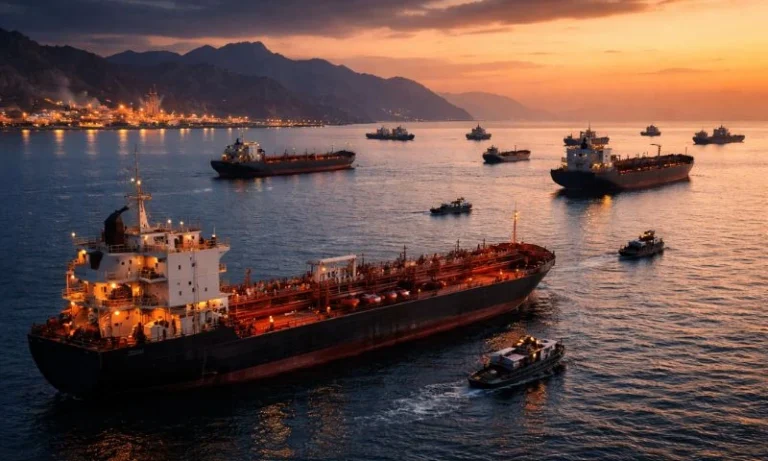
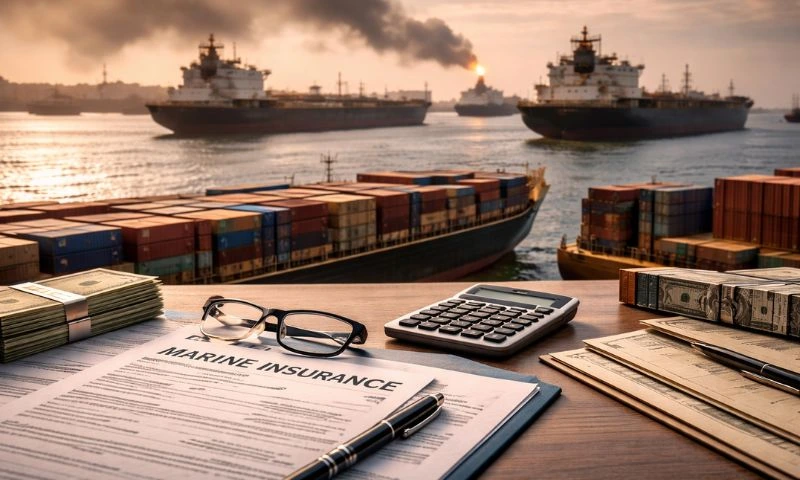
Marine insurers are expected to face the largest exposure because the conflict has severely disrupted shipping through the Strait of Hormuz, one of the most important maritime routes for global energy trade.
The waterway normally handles a large share of the world’s oil shipments. However, the conflict has sharply reduced traffic in the region. Moody’s cited data showing that only about five vessels per day passed through the strait during the first eight days of March, compared with a pre-conflict average of roughly 100 daily transits.
Insurers have responded quickly to the increased risk. On March 5, several marine insurance providers issued notices canceling or repricing hull and cargo war-risk policies that protect vessels against damage caused by acts of war.
One of the biggest concerns for insurers is the possibility that ships could become trapped if the conflict blocks shipping lanes for an extended period.
“War risk policies generally include ‘blocking and trapping’ provisions that allow a total loss claim after a prolonged period of detention,” Moody’s explained.
Historical examples such as the Iran-Iraq war and the Russia-Ukraine conflict show that such situations can trigger complex claims and legal disputes.
Aviation insurers also on alert
The aviation insurance sector faces a different but equally serious risk profile.
Airspace closures and missile activity across the region have increased the possibility of aircraft being damaged while parked at airports. Insurers are closely monitoring developments as tensions continue.
“Airspace closures and missile activity have increased the risk of damage to aircraft on the ground,” Moody’s said.
However, analysts say the current situation differs from the insurance crisis that followed the Russia-Ukraine conflict. In that case, nearly 400 aircraft worth more than $10 billion were stranded in Russia, leading to one of the largest aviation insurance disputes in history.
Demand surges for political violence insurance
Businesses operating in the Gulf region are increasingly purchasing political violence and terrorism insurance, often referred to as PVT cover.
These policies protect companies against damage caused by missile strikes, sabotage, terrorism and attacks on infrastructure. Demand has risen sharply as geopolitical tensions increase.
“Demand for this cover has been rising in response to the conflict, at significantly increased prices,” Moody’s said.
However, claims disputes may arise because many policies exclude acts of war while covering terrorism or civil unrest. Moody’s warned that the distinction between these categories is often contested.
“The distinction between war, terrorism and civil commotion is frequently contested,” the report noted.
Global insurers expected to withstand the shock
Despite the heightened risks, Moody’s believes that large global insurers and reinsurers are likely to manage the financial impact.
Their ability to absorb potential losses comes from diversified global portfolios, strict limits on exposure and extensive reinsurance protection that spreads risk across the industry.
Analysts say the insurance sector will continue to monitor developments closely as the geopolitical situation evolves. If the conflict escalates further or continues for an extended period, losses could rise significantly across several segments of the global insurance market.