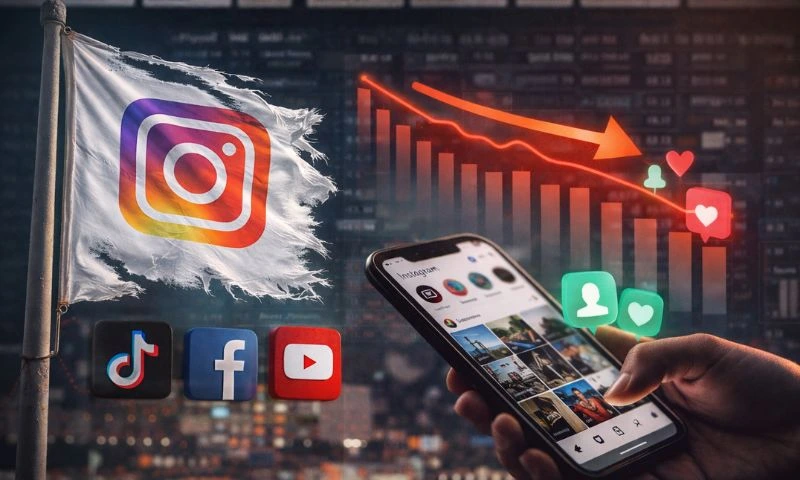
Instagram has long been a cornerstone of social media marketing. Recent industry data, however, suggests a major shift in how effective the platform is for organic growth and brand engagement in 2026. A new benchmark report shows organic reach on Instagram continuing to slow, leading many marketers to question whether the platform is still worth heavy investment.
According to the Emplifi Social Media Benchmarks Report, brands are growing fastest on TikTok, while organic reach on Instagram and Facebook continues to shrink. The slowdown is most noticeable across all post types, including photos, carousels, and Reels.
Organic Reach Declines, TikTok Surges
Instagram and Facebook still boast huge user bases, but their organic reach is diminishing as platforms favour content that drives strong engagement signals such as shares, saves, and watch time. This change means brands without large advertising budgets or strong content engagement struggle to show up in users’ feeds.
Meanwhile, TikTok’s algorithm continues to reward engaging, short-form content regardless of existing follower counts. This dynamic lets even smaller brands gain visibility quickly. For marketers who rely on organic traction rather than paid ads, TikTok’s model appears more inviting and equitable.
A separate benchmark study finds Instagram’s overall engagement has tightened. In 2025, engagement dropped about 24% year-on-year, with follower growth slowing across brand accounts of all sizes. Carousels and Reels now dominate interactions, but even these formats no longer guarantee reach without strategic planning.
Changing Engagement Patterns
Marketing analysts note that audiences are interacting differently on Instagram, with more emphasis on meaningful engagement such as comments and messages. A recent analysis shows drops in simple likes and passive interactions. Instead, shares, saves, and deeper conversations now matter more for the platform’s algorithm.
These changes align with evolving content consumption behaviours. As users scroll across platforms like TikTok and YouTube Shorts, Instagram is adapting by requiring more compelling content to trigger algorithmic boosts. Simple posts or one-off visuals often fail to gain traction without strong signals early after posting.
Platform Role Shifts in 2026
Despite these shifts, Instagram is far from obsolete. Large user numbers — around three billion monthly active users globally — still give the platform powerful reach potential, especially for target audiences under 45.
Industry reports describe a changing social media marketing funnel in 2026. TikTok now often plays the discovery role, sparking interest through viral content, while Instagram is increasingly seen as the conversion platform where users research products and make purchase decisions. YouTube frequently serves as the final validation step before a purchase.
In this new ecosystem, brands find they must adapt strategies rather than abandon platforms. Instagram remains vital, particularly for community building, product showcases, and visual storytelling. But relying solely on Instagram for growth is no longer a safe assumption.
What Marketers Need to Do
Experts recommend that marketers focus on meaningful engagement over vanity metrics like follower counts. Creating content designed to spark shares, saves, comments, and direct interactions helps content cut through tightening organic reach.
Short-form video formats such as Reels remain central to Instagram’s algorithm, but brands must craft compelling hooks and deliver value quickly. Emphasis on content quality, topic clarity, and audience relevance will help sustain visibility.
In summary, Instagram is not dead for marketers in 2026, but its role has evolved significantly. Organic reach has tightened and competition for attention is fiercer than ever. Smart strategies will combine platform strengths, diversify channels, and focus on deep engagement rather than sheer volume.