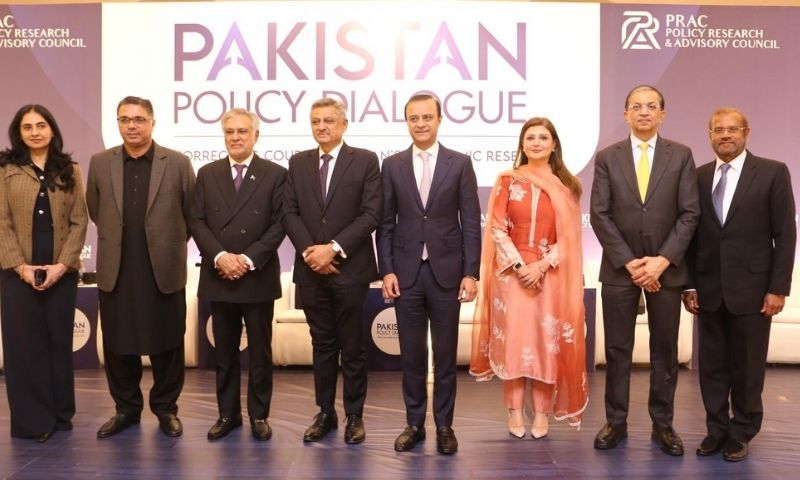
Islamabad witnessed a strong call for policy stability and economic confidence as Deputy Prime Minister and Foreign Minister Senator Muhammad Ishaq Dar addressed the Pakistan Policy Dialogue: “Correcting Course: Pakistan’s Economic Reset.” Speaking as chief guest, Dar emphasized that Pakistan’s economic revival depends on continuity, institutional strength, and governance reforms that extend beyond political cycles.
“Resetting and correcting course is about strengthening the foundations of the economy itself,” Dar said. “This requires responsible governance, consistent policies, and institutions that operate with continuity beyond political cycles.” He stressed the need for a technology-enabled approach to governance to improve public service delivery and ensure policies translate into measurable outcomes.
Highlighting Pakistan’s diplomatic outreach, Dar said, “All diplomatic efforts are geared towards helping business boost exports and create mutual partnerships based on economic interests.”
The Dialogue brought together senior policymakers, business leaders, and development experts at a critical moment for Pakistan’s economy. The event was organized by the Policy Research and Advisory Council (PRAC) in collaboration with the Corporate Pakistan Group (CPG) and Nutshell Group, with the Ministry of Commerce and TDAP as founding partners. Bank Alfalah and BankIslami supported the Dialogue as platinum and gold partners.
The inaugural session, “Resetting Pakistan’s Economic Direction,” featured key cabinet members and economic thinkers. Federal Minister for Planning Ahsan Iqbal stressed the importance of productivity, exports, and long-term development. “Compared to 1947, Pakistan has progressed, but globally it still lags behind peers,” he noted, calling for a future-focused approach rooted in education, health, and political stability.
Finance Minister Senator Muhammad Aurangzeb outlined reform priorities, saying, “Achieving sustainable growth for a USD 3 trillion economy requires addressing rapid population growth and climate risks.” He also highlighted the need to formalize emerging sectors like crypto and blockchain to harness youth-driven innovation.
Climate Change Minister Dr. Musadik Malik called for broader inclusion, stating, “Until you democratize capital and empower new entrants, nothing will change.” Adviser to the Prime Minister Muhammad Ali underscored privatization, pointing to strained public resources and lack of inclusion as key challenges.
Former SBP Governor Dr. Ishrat Husain urged a shift toward services exports, saying technology has changed global growth patterns, while PRAC Chairman Muhammad Younus Dagha highlighted recent macroeconomic gains and warned that future resilience depends on human capital and AI-ready skills.
Panel discussions focused on digital inclusion, green growth, and macroeconomic competitiveness, with speakers advocating cashless payments, climate financing tools, and tariff reforms. The closing session emphasized collaboration between the state and private sector, with business leaders calling for structural reforms to sustain 5–6% annual growth.
The Dialogue concluded with consensus on strengthening partnerships to support Pakistan’s economic reset through evidence-based policy and long-term vision.