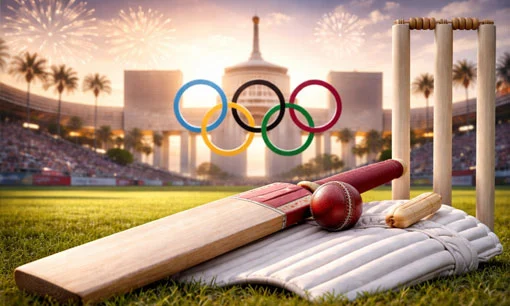
Cricket’s return to the Olympic Games after more than a century is already generating global excitement, with strong ticket demand, a fast-paced T20 format and a tightly contested qualification pathway shaping what could become one of the standout events of Los Angeles 2028.
Organisers and the International Cricket Council have confirmed that the tournament will feature six teams each in the men’s and women’s competitions, a compact structure designed to fit the Olympic schedule while maintaining competitive intensity. Matches are set to be played between July 12 and July 29 at a purpose-built venue in Southern California.
Early interest has been significant, with fans across cricket-playing nations registering for tickets in large numbers. Entry-level prices are expected to start from accessible ranges, while premium packages could rise sharply due to high demand, reflecting the sport’s massive global following.
Ticket demand surges as cricket returns to Olympics
The reintroduction of cricket, last seen at the Olympics in 1900, has triggered a surge in ticket demand, particularly from South Asia, the United Kingdom and Australia. The inclusion of the T20 format has been a key factor behind the excitement, offering shorter, high-intensity matches that align with the Olympic model.
Organisers have adopted a phased ticketing system, allowing fans to register in advance before purchasing access is granted. Analysts say marquee fixtures, especially involving top-ranked teams, could become some of the most sought-after events of the Games.
The Olympic movement is also banking on cricket to attract new audiences and boost global viewership, particularly in regions where the sport dominates television ratings and digital engagement.
T20 format and six-team structure
The tournament will be played in the T20 format, where each team faces 20 overs, ensuring matches are completed within a few hours. This format has been widely credited with transforming cricket’s global appeal over the past decade.
According to the structure outlined for LA28, the six participating teams will be divided into groups, followed by knockout rounds culminating in gold and bronze medal matches.
Officials believe the format will deliver high-scoring games and fast results, making it easier for new audiences to engage with the sport while maintaining competitive balance.
Qualification pathway raises competition stakes
The qualification process, however, has emerged as one of the most debated aspects of cricket’s Olympic return. The ICC has proposed a continent-based system aimed at ensuring global representation, with one team each from Asia, Africa, Europe, Oceania and the Americas, alongside the host nation United States.
The sixth and final spot will be decided through a global qualifying tournament, adding an extra layer of competition.
This model has raised concerns among some cricketing nations, as it prioritises regional representation over global rankings. Under current projections, top teams such as India, Australia, England and South Africa are expected to qualify through their respective regions, while others may face uncertainty despite strong performances.
Pakistan and New Zealand, for example, could face a tougher path due to the one-team-per-region rule, highlighting the challenges of balancing inclusivity with merit in a limited six-team tournament.
As preparations for LA28 continue, the combination of high ticket demand, a fan-friendly format and an intense qualification race underscores cricket’s growing global footprint. The coming months will be crucial in determining which teams make the final cut and whether the sport’s Olympic return can live up to its billing as a global spectacle.