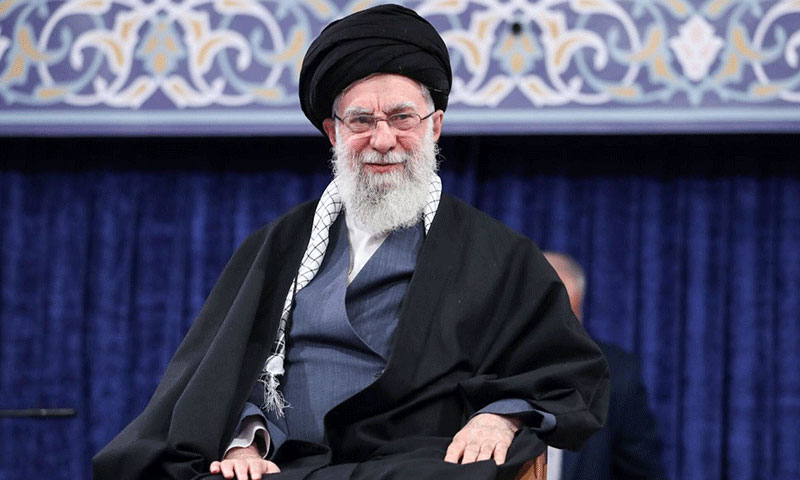
Ayatollah Ali Khamenei rose from modest roots in the eastern Iranian city of Mashhad, where he was born to a religious family on April 19, 1939. Early on, he received Islamic education and memorised the Quran before studying philosophy and theology in the major Shiite seminary city of Qom. His early exposure to religious teachings and activism helped shape his lifelong involvement in politics and clerical leadership.
In the early 1960s, Khamenei joined the movement against Shah Mohammad Reza Pahlavi. His activism led to multiple arrests by the shah’s intelligence service, SAVAK, and periods of exile. He played a key role in organising protests that culminated in the 1979 Islamic Revolution, which toppled the monarchy and brought clerical rule to Iran.
Rise to Power and Presidency
Following the revolution, Khamenei quickly ascended within the new political establishment. He served in multiple positions, including deputy defence minister, Tehran Friday Prayer leader, and later as president of Iran from 1981 to 1989. During his presidency, he navigated the country through the destructive Iran-Iraq War, emerging as a dominant political figure.
In 1981, a bomb attack left him badly injured and permanently impaired his right arm. This early brush with assassination marked the beginning of his long and controversial career in Iran’s highest ranks. After the death of Ayatollah Ruhollah Khomeini in 1989, Iran’s Assembly of Experts appointed Khamenei as the Supreme Leader — a decision that required amendments to the constitution because he did not hold the highest clerical rank at the time.
Supreme Leader: Authority and Influence
As Supreme Leader, Khamenei became the most powerful figure in Iran, with authority over the armed forces, judiciary, foreign policy and major state institutions. He held ultimate control over the Islamic Revolutionary Guard Corps (IRGC), which played a critical role in domestic and regional affairs. His decisions outweighed those of presidents and parliament, making him a central figure in national and foreign policy.
Under his leadership, Iran’s foreign policy focused on opposition to the United States and Israel, backing allied militias and forming the so-called “axis of resistance” that included groups like Hezbollah and Hamas. Internally, he suppressed dissent and protests, including the significant 2009 Green Movement and mass demonstrations in 2022 following the death of Mahsa Amini.
Domestic Challenges and Controversies
Critics argued that Khamenei’s rule became increasingly authoritarian, marked by crackdowns on reformist movements, restrictions on personal freedoms and suppression of political opposition. Widespread protests over economic hardship in 2025 also challenged his leadership, reflecting deep social discontent. Nevertheless, he maintained tight control through his loyal network within the clerical establishment and security forces.
Khamenei’s Role in Iran’s Nuclear Ambitions
Khamenei was pivotal in shaping Iran’s nuclear strategy. While he approved the 2015 Joint Comprehensive Plan of Action (JCPOA), a nuclear deal with world powers, he remained skeptical of full engagement with the West. After the U.S. withdrew from the agreement, he adopted a more defiant posture and supported advancing the nuclear program.
Death and Legacy
On February 28, 2026, Khamenei was reportedly killed in a joint U.S.-Israeli military operation that struck his compound and other key locations in Iran. Iranian state media confirmed his death and announced 40 days of national mourning, underscoring his symbolic status in the Islamic Republic. His passing leaves a power vacuum at the heart of Iran’s political system, with the future direction of the regime uncertain.
Khamenei’s life and rule spanned the formative decades of the Islamic Republic, deeply shaping its identity, governance, military posture and regional influence. His legacy remains contested, seen by supporters as a steadfast defender of sovereignty and by critics as a symbol of repression and rigid theocratic rule.