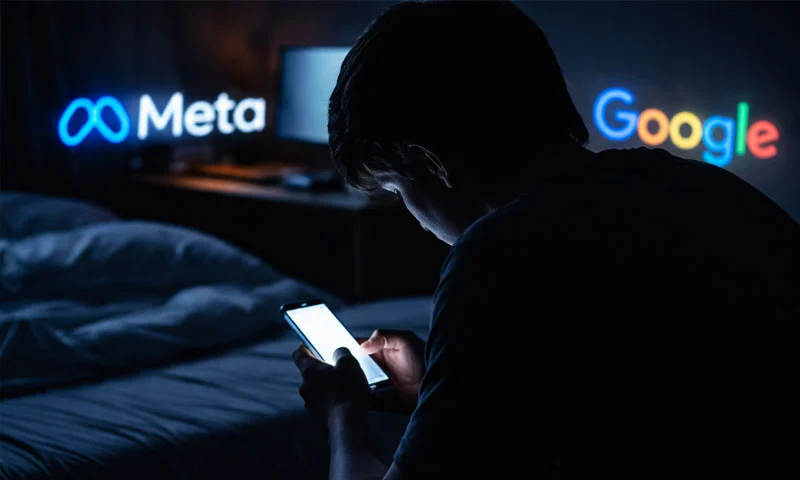
In a landmark ruling, a US jury has found Meta and Google liable for designing social media platforms that contributed to harm among young users. The case focused on Instagram and YouTube, which were accused of using features that encourage excessive and addictive use among children.
The lawsuit was brought by a young woman who claimed she became addicted to these platforms at an early age. She told the court that prolonged use led to serious mental health issues, including anxiety, depression and body image problems.
Millions Awarded in Damages
The jury awarded millions of dollars in damages to the plaintiff. Reports indicate that Meta will bear a larger share of the compensation, while YouTube will also contribute.
The court ruled that the companies failed to provide adequate warnings about the risks associated with their platforms. It also found that their design choices played a significant role in the harm experienced by the user.
Case Focuses on Platform Design Not Content
One of the most important aspects of the case was its focus on product design rather than user-generated content.
Lawyers argued that features such as infinite scrolling, autoplay videos and constant notifications were deliberately created to keep users engaged for long periods.
This approach allowed the case to bypass traditional legal protections often used by tech companies under US law.
Part of a Wider Legal Battle Against Big Tech
The case is part of a growing wave of lawsuits against major technology companies, including Meta, YouTube, TikTok and Snap. Thousands of similar cases are currently pending in US courts.
Earlier, TikTok and Snap reached settlements in related cases before the trial began.
Legal experts say this ruling could set a major precedent and influence future litigation. Some observers have compared the situation to past legal battles against the tobacco industry.
Companies Deny Allegations and Plan Appeal
Both Meta and Google have denied wrongdoing and said they will challenge the verdict. A spokesperson for YouTube said the claims are “simply not true” and stressed that providing a safe experience for young users remains a priority.
Meta has also argued that multiple factors contribute to mental health issues and that its platforms are only one part of a broader picture.
Growing Concerns Over Children’s Online Safety
The ruling comes amid increasing global concern about the impact of social media on children. Studies and lawsuits have highlighted links between heavy social media use and issues such as sleep disruption, anxiety and poor self-image.
Governments around the world are now considering stricter regulations, including age restrictions and stronger safety measures for young users.
A Turning Point for Social Media Regulation
This case is widely seen as a turning point in how courts view the responsibility of tech companies.
By focusing on design and user engagement strategies, the ruling may reshape how platforms operate in the future. It also signals growing pressure on Big Tech to take stronger steps to protect children from potential harm online.