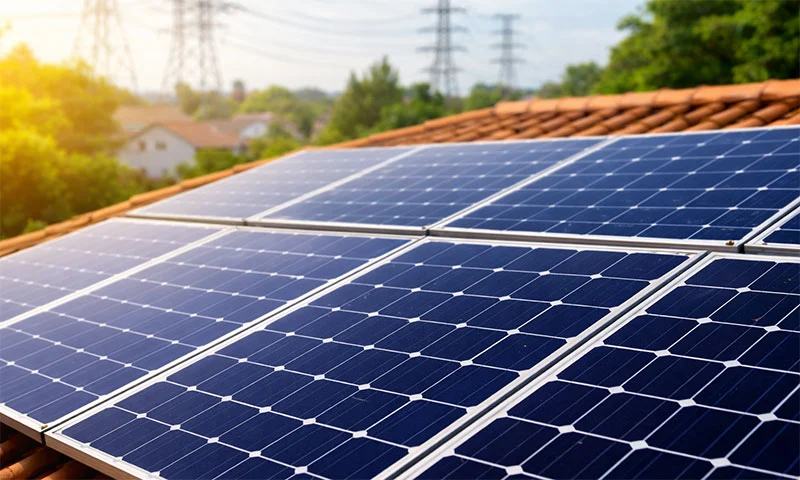
Islamabad: Prime Minister Shehbaz Sharif has ordered the Power Division to challenge NEPRA’s newly notified rooftop solar regulations, after a wave of criticism from lawmakers and solar consumers who say the changes weaken the financial case for investing in solar. The prime minister directed officials to file a review petition and ensure “every possible safeguard of the existing consumer contracts,” according to the Prime Minister’s Office.
What NEPRA changed and why it triggered backlash
NEPRA’s new Prosumer Regulations effectively end the one to one net metering model and shift solar users to a net billing structure for future arrangements. Under the framework reported by multiple outlets, the buyback for exported solar units is expected to drop sharply, while contract tenure is reduced from seven years to five. Critics also argue the policy shifts capacity payment burden onto solar consumers, while distribution companies continue to sell power at prevailing consumer tariffs.
NEPRA and government officials have defended the overhaul as a response to rising rooftop solar penetration and the need to protect the state-run grid’s finances. Dawn reported the regulator revised terms for all existing and future net metered users on the stated logic of managing solar growth and protecting an expensive and inefficient network.
The core dispute between NEPRA and solar consumers
At the heart of the dispute is a fundamental question about who should bear the fixed costs of Pakistan’s power system, particularly capacity payments to independent power producers and the maintenance of the national transmission and distribution network. These fixed costs remain payable regardless of how much electricity is consumed from the grid.
Solar adopters argue that they invested heavily in rooftop systems based on a stable and government-backed net metering framework that allowed them to export excess electricity at near retail rates. Many households and businesses calculated their investment payback periods on that structure. They contend that sudden policy changes that reduce export compensation or alter contract terms effectively extend the recovery period of their investment and undermine policy certainty.
On the other hand, NEPRA’s position, as reflected in regulatory discussions and official statements, is that the rapid expansion of rooftop solar has reduced electricity purchases from the grid by higher-income consumers. When these consumers buy fewer units, distribution companies collect less revenue through per unit charges. However, the system’s fixed obligations, especially capacity payments and network costs, remain unchanged. As a result, regulators argue that the burden shifts to consumers who do not have solar installations, particularly lower and middle-income households.
According to official data cited in media reports, around 466,000 consumers are currently registered under net metering arrangements. Meanwhile, more than 37 million domestic consumers depend entirely on grid electricity. The government has expressed concern that without regulatory adjustments, non solar consumers may end up subsidizing the fixed costs of the system.
The prime minister addressed this imbalance in a high-level meeting, stating that the interests of both solar investors and ordinary grid users must be protected. He directed the Power Division to ensure that existing contractual commitments are safeguarded while also examining the broader financial sustainability of the electricity sector.
Energy experts say the real issue lies in Pakistan’s high capacity payments and structural inefficiencies in the power sector. They argue that instead of penalizing rooftop solar growth, policymakers should focus on reforming the overall tariff structure, improving distribution company efficiency, and modernizing grid planning to accommodate distributed generation.
Analysts also warn that if rooftop solar becomes financially unattractive, future private investment in renewable energy could slow down. At the same time, they caution that unchecked cost shifting could create political and economic pressure on non solar consumers who are already facing rising electricity bills.
In short, the dispute is not just about net metering versus net billing. It is about balancing energy transition goals, protecting consumer rights, and maintaining the financial stability of Pakistan’s power sector.
What happens now after PM intervention
The immediate next step is the review petition before NEPRA. Reporting from Tribune and Hum English indicates existing customers are expected to remain protected until their contracts expire, after which distribution companies may terminate agreements or migrate users to the new regime.
Expert Analysis: Inflation Pressure, Fixed Charges and the Risk of Grid Defection
Energy analysts say the timing of NEPRA’s solar policy overhaul is critical. The decision comes at a moment when electricity tariffs in Pakistan have already surged due to fuel adjustments, capacity payments and structural reforms under IMF backed programs.
Reuters quoted Ahtasam Ahmad, founder of Renewables First, who said the policy shift “adds to the compounding effect of inflation which we have experienced post 2022.” He warned that any reduction in solar export compensation or increase in fixed charges will ultimately feed into household cost pressures, especially for middle income consumers who adopted rooftop solar as a hedge against rising power bills.
Experts argue that rooftop solar installations have grown rapidly over the past three years largely because consumers were seeking protection from volatile electricity pricing. Net metering allowed households to offset expensive grid units with self generated power. If that financial advantage weakens, the economic rationale for new solar investments may decline.
Reuters also cited energy consultancy Arzachel, which warned, “Excessively high fixed charges risk driving consumers toward full grid defection, undermining long term system stability.” Grid defection refers to consumers disconnecting from the national grid entirely and relying on standalone solar plus battery systems. Analysts caution that if high fixed costs make partial grid use unattractive, wealthier consumers may choose to exit the system altogether.
This scenario creates a structural challenge. If higher paying consumers reduce or eliminate grid consumption, the remaining cost burden shifts to a smaller base of users. That can trigger a cycle of rising tariffs and further departures, often described in energy economics as a utility death spiral.
At the same time, some policy experts note that Pakistan’s power sector carries heavy fixed obligations in the form of capacity payments to independent power producers. These payments must be made regardless of actual electricity consumption. Regulators argue that when rooftop solar reduces unit sales, distribution companies struggle to recover these costs through existing tariff structures.
Energy economists say the long term solution lies not in discouraging solar adoption but in redesigning tariff models. They suggest separating network charges from energy charges, improving efficiency in distribution companies, and gradually integrating distributed generation into formal grid planning.
The debate therefore extends beyond net metering versus net billing. It touches on inflation management, energy transition goals, fiscal sustainability and social equity within Pakistan’s electricity market.