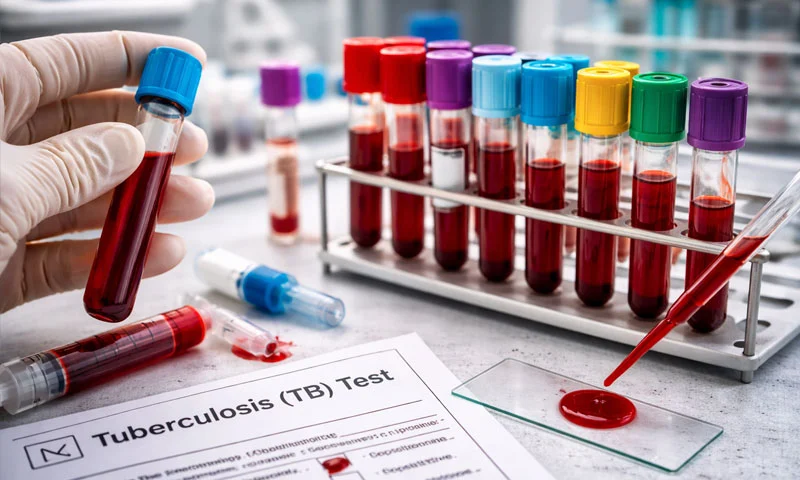
A new blood test capable of detecting active and infectious tuberculosis is being seen as a major breakthrough in the fight against one of the world’s deadliest diseases. Unlike traditional methods, the test can identify whether a person has active TB, the stage at which the disease is contagious and dangerous.
Experts say this development could significantly improve early detection and help prevent the spread of tuberculosis, especially in high-burden countries like Pakistan, India and Bangladesh.
How the New Blood Test Works
The test works by analyzing how the immune system responds to specific tuberculosis proteins. When a small blood sample is exposed to these proteins, the test measures the body’s reaction to determine whether the infection is active.
Unlike older blood tests such as the interferon gamma release assay, which only detect exposure to TB bacteria, the new method identifies antibodies linked specifically to active disease. This allows doctors to distinguish between patients who are currently sick and those who were exposed in the past but are not contagious.
Why Current Tests Fall Short
Existing diagnostic tools, including the TB skin test and standard blood tests, have a major limitation. They cannot differentiate between latent TB and active TB.
Latent TB means the bacteria are present in the body but inactive, causing no symptoms and posing no risk of spreading. Active TB, on the other hand, is the dangerous form that spreads through coughing, sneezing or close contact.
Experts note that a large portion of the global population carries latent TB, making it difficult to identify who actually needs urgent treatment.
Clinical Trials Show Promising Results
The new blood test has already shown strong performance in clinical trials involving more than 600 participants. Researchers found that it was effective in detecting pulmonary TB, which accounts for the majority of cases, as well as harder-to-diagnose infections in children and in organs outside the lungs.
One researcher described the results as highly encouraging, saying the test performed “surprisingly well” across different patient groups.
A Game Changer for Developing Countries
Tuberculosis remains a major global health challenge, with over 10 million new cases reported each year and millions of deaths worldwide.
The burden is particularly high in developing countries, where access to advanced diagnostic tools is limited and delays in detection often lead to further spread of the disease.
Experts believe that a simple and accurate blood test could transform TB control efforts by enabling faster diagnosis, earlier treatment and better tracking of infectious cases.
If approved for widespread use, the new test could become a key tool in global health strategies aimed at eliminating tuberculosis. Researchers are now working to expand its availability and adapt it for routine clinical use.
The development also reflects a broader push toward innovative diagnostics that are faster, more accurate and easier to deploy in resource-limited settings.
With tuberculosis continuing to pose a serious threat worldwide, the ability to quickly identify active cases could prove critical in reducing infections and saving lives.