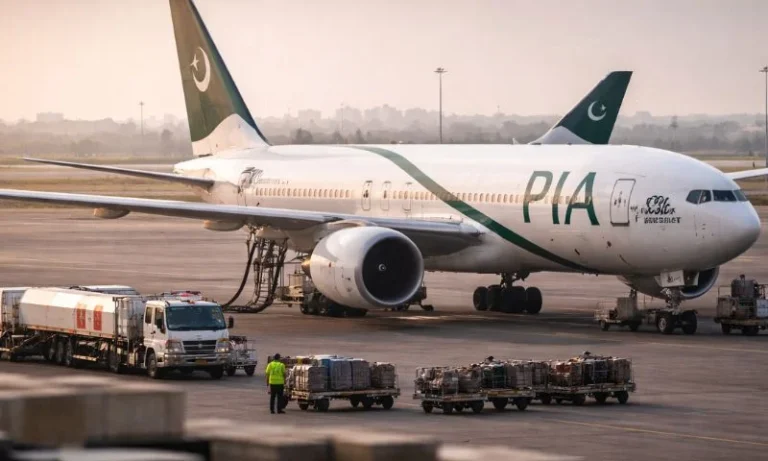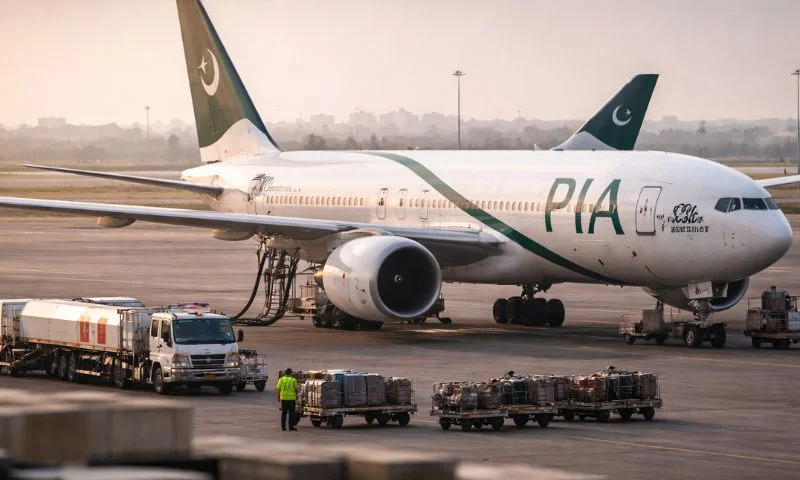
Pakistan International Airlines continues to face serious operational challenges even as plans for privatization and fleet expansion move forward, with only 18 aircraft currently operational, highlighting the gap between policy ambitions and on-ground realities.
The figure was shared by Arif Habib, chairman of the Arif Habib Consortium, during an interaction with industrialists at the Korangi Association of Trade and Industry (KATI) in Karachi, where he outlined the current state of the national carrier. The limited number of operational aircraft has significantly constrained the airline’s capacity, affecting flight schedules, route coverage and overall service reliability.
The disclosure comes at a time when the government is pushing ahead with efforts to privatize the airline, positioning the move as a long-term solution to its financial and operational struggles. However, analysts say the current situation suggests that structural issues within the airline cannot be resolved through ownership changes alone.
Limited fleet, mounting pressure
PIA’s fleet constraints have long been a source of concern. While the airline owns more aircraft on paper, a large number remain grounded due to maintenance issues, financial limitations and delayed overhauls. As a result, the airline is operating at a fraction of its potential capacity.
The reduced fleet has forced PIA to cut back on several routes, particularly international destinations, limiting its competitiveness against regional and global carriers. Industry experts note that an airline’s profitability is closely tied to fleet availability, utilization rates and network strength, areas where PIA continues to lag.
Arif Habib also indicated that there are plans to gradually expand the fleet, with long-term targets suggesting an increase to around 60 aircraft. However, he acknowledged that achieving this goal would take time and sustained investment.
Expansion plans yet to translate into reality
Separately, officials within the airline have pointed to plans for near-term expansion. According to recent developments, PIA is looking to induct around eight additional aircraft in the coming year as part of its restructuring efforts.
Despite these announcements, aviation experts caution that fleet expansion alone will not address the airline’s deeper challenges. Issues related to governance, financial management, operational efficiency and regulatory compliance continue to weigh heavily on its performance.
The privatization process, which is expected to bring in new investors and management practices, is seen as a step in the right direction. However, potential buyers are likely to closely assess liabilities, workforce size and operational constraints before committing to any deal.
The airline’s history of accumulated losses and dependence on government support further complicates the path forward. Analysts say meaningful reform will require a combination of financial restructuring, operational overhaul and strategic direction.
For now, the contrast between expansion plans and the current operational fleet underscores the scale of the challenge. While privatization may offer a pathway to recovery, the immediate reality remains that PIA is operating with limited resources in a highly competitive aviation market.