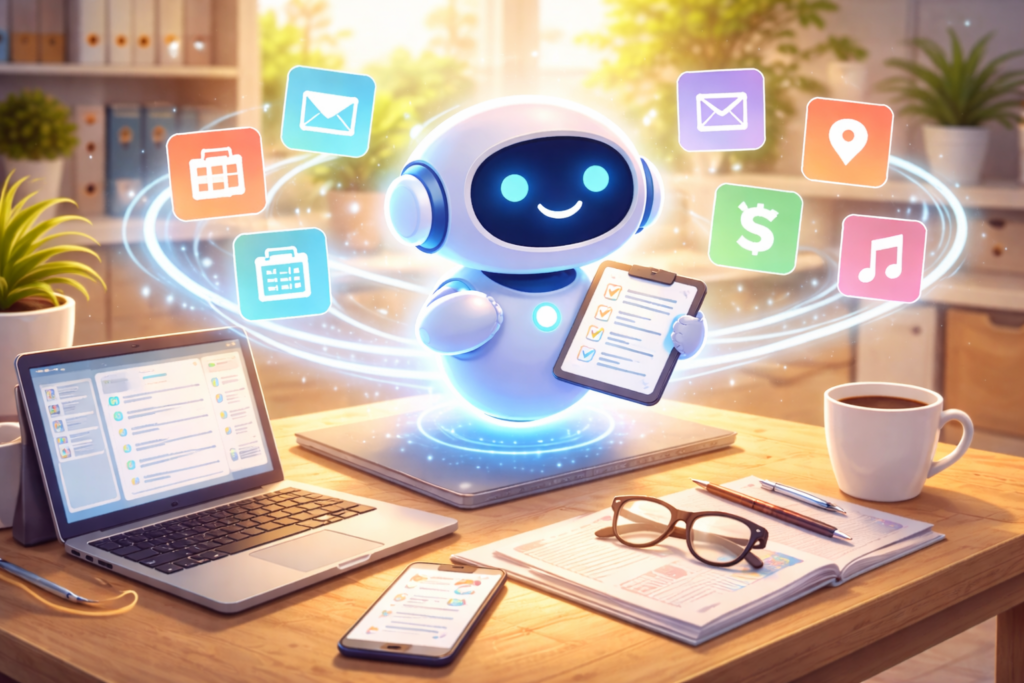
OpenAI is preparing to redefine what people expect from artificial intelligence, with plans to turn ChatGPT into something far more powerful than a question-answering tool. By 2026, the company envisions ChatGPT functioning as a personal “super assistant” that actively helps users manage their lives, rather than simply responding to prompts.
The strategy is being driven by Fidji Simo, who oversees OpenAI’s applications division. In a recent post, Simo described a future in which ChatGPT becomes deeply aware of users’ goals, remembers important context over time, and plays an ongoing role in helping people move forward in their personal and professional lives.
Rather than operating as a standalone chatbot, the next generation of ChatGPT is expected to behave more like a smart digital partner. It could track long-term objectives, adapt to individual preferences, and offer timely suggestions instead of waiting for instructions. OpenAI’s broader ambition is to make the assistant feel less transactional and more supportive—something users rely on regularly, not just when they need quick answers.
Today, ChatGPT is commonly used for writing help, explanations, and basic productivity tasks. OpenAI wants to expand that role so the system can assist with planning work, organising daily responsibilities, learning new skills, and managing personal projects over extended periods. The company believes this shift will make AI more practical and meaningful in everyday life.
Collaboration is also expected to be a key focus. OpenAI is exploring features that allow shared conversations and teamwork, enabling users to work together more effectively with AI support. Improvements are also planned in areas such as education, writing, health-related guidance, shopping decisions, and personal finance—fields where consistent assistance can make a real difference.
Businesses stand to benefit as well. OpenAI is positioning ChatGPT as a productivity tool for offices, where it could help draft documents, analyse information, support coding tasks, and reduce routine workloads. In this vision, ChatGPT would act like a digital colleague that understands workflows and adapts to organisational needs. Developers will be encouraged to build new services and tools around these capabilities.
However, the plan comes with challenges. Advanced AI systems require significant resources, and OpenAI must ensure that the added intelligence translates into clear, practical value. Simo has acknowledged that turning cutting-edge AI into products people are willing to pay for is complex, but critical for the company’s future.
If OpenAI succeeds, ChatGPT’s role could shift dramatically over the next few years. By 2026, it may no longer feel like just another app on a screen, but a constant digital companion—one that helps users stay organised, focused, and productive across all aspects of life.