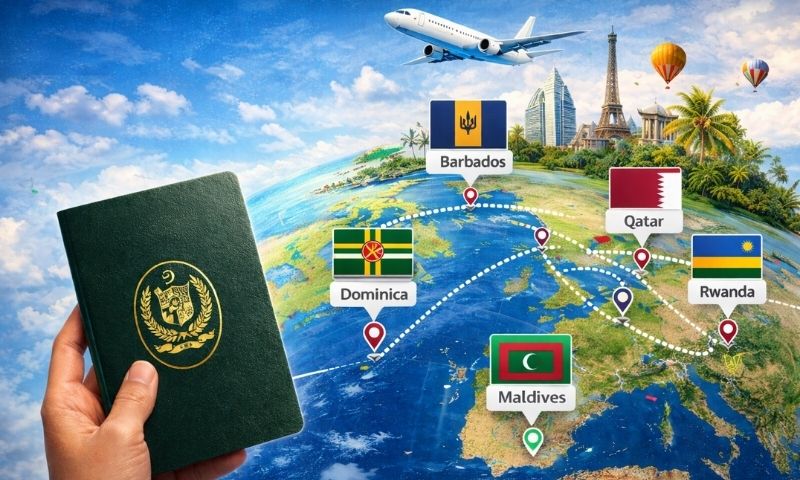
Pakistan’s passport has climbed up the global travel rankings in 2026, offering its citizens greater freedom to explore the world — albeit still limited compared to many nations. According to the latest Henley Passport Index 2026, Pakistan now ranks 98th worldwide, tied with Yemen, and provides visa-free, visa-on-arrival, or eTA access to 31 destinations across the globe.
The Henley Passport Index measures the travel freedom that citizens of each country enjoy based on how many countries they can enter without a visa beforehand. Pakistan’s ranking improved from 100th last year, reflecting diplomatic efforts and new bilateral agreements aiming to boost international mobility for its citizens.
Despite rising in rank, the Pakistani passport remains among the lower-tier global travel documents. Countries like Iraq (99th), Syria (100th) and Afghanistan (101st) rank just below it, while powerful passports such as Singapore’s top the list with access to 192 destinations.
The expanded list of destinations offers Pakistanis a wider range of travel opportunities. Visa-free access allows entry without any prior documentation, while visa-on-arrival (VOA) and electronic travel authorization (eTA) options let travelers obtain entry permits on arrival or online before departure.
Some of the visa-free countries include Barbados, Dominica, Haiti, Micronesia, Montserrat, Rwanda, St. Vincent and the Grenadines, Trinidad and Tobago, and Vanuatu. Meanwhile, destinations offering visa on arrival include Burundi, Cambodia, Cape Verde Islands, Comoro Islands, Djibouti, Guinea-Bissau, Madagascar, Maldives, Mozambique, Nepal, Niue, Palau Islands, Qatar, Samoa, Senegal, Sierra Leone, Timor-Leste, and Tuvalu.
Experts say a passport’s strength is often tied to a country’s diplomatic relations, political stability, and global reputation. While Pakistan’s improved ranking shows positive momentum, travel freedom still lags behind many neighboring countries. For example, India ranks 80th with access to 55 visa-free destinations, and Bangladesh climbs to 95th with 37 destinations.
For many Pakistanis, this expanded access translates into easier travel for vacations, business trips, and cultural exchanges. Caribbean beaches, African safaris, and South Asian island escapes are now more accessible than in previous years. However, long-haul travel to Europe, North America, and much of East Asia often still requires advance visas, posing a hurdle for students, professionals, and families alike.
As global mobility trends evolve, Pakistani authorities and diplomats are expected to continue efforts to strengthen travel ties. Citizens looking to make the most of this improvement should stay updated on official visa rules and destination entry requirements, which can change frequently.