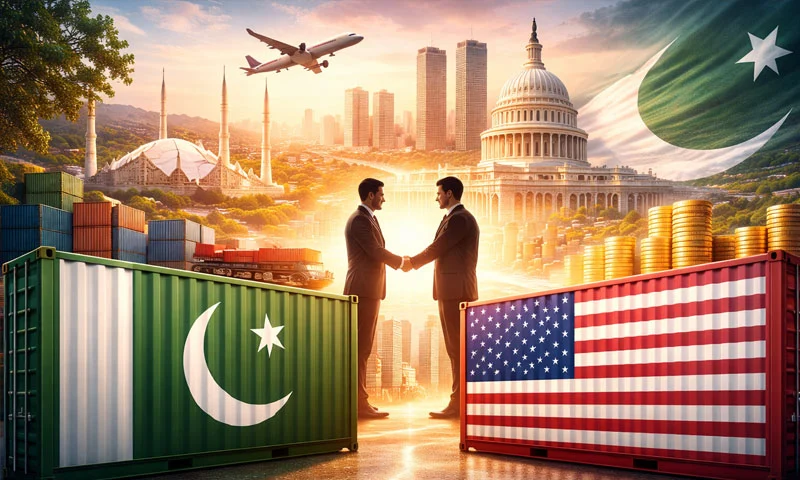
Pakistan’s Finance Minister Senator Muhammad Aurangzeb led a high-level delegation to Washington, DC, for intensive discussions with US Commerce Secretary Howard A. Lutnick aimed at enhancing bilateral trade and investment ties between the two countries. The meetings reflected both sides’ desire to expand economic cooperation beyond traditional areas and to explore new opportunities for mutual growth.
The talks, held at the US Department of Commerce, brought together senior officials from Pakistan’s commerce and finance ministries, the Pakistani Ambassador to the United States, and key American counterparts. Both delegations discussed ways to strengthen trade linkages, address market access issues, and attract greater US investment into the Pakistani economy.
A Focus on Investment and Emerging Sectors
During the meeting, Aurangzeb and Lutnick highlighted promising sectors for collaboration, including information and communications technology (ICT), mining, minerals and energy, where both nations see significant growth potential. Aurangzeb expressed Pakistan’s interest in drawing US firms into these areas, saying the partnership could benefit from the US’s technological expertise and capital resources.
Aurangzeb also appreciated the role of the US Chamber of Commerce in organising the upcoming US-Pakistan Trade and Investment Forum scheduled for March 31, 2026. He expressed hope that the office of the US Commerce Secretary would participate in the event, which is expected to attract leading companies and investors from both countries.
The discussions build on months of ongoing negotiations and high-level engagements. Last year, Pakistan and the United States concluded a landmark trade deal aimed at reducing reciprocal tariffs, particularly on Pakistani exports, and broadening access to US markets. Officials described the agreement as a major step forward in economic cooperation, with potential to spur investment in energy, mining, IT and digital sectors.
Economists say enhancing Pakistan-US trade ties could help reduce trade imbalances, create jobs, and boost exports of value-added products. The US remains one of Pakistan’s largest trading partners, with thousands of US companies already doing business in Pakistan or looking for opportunities in its large consumer market.
Reform Agenda and Economic Stability
Aurangzeb has repeatedly emphasised that continued economic reforms in taxation, energy and trade policy are central to making Pakistan a more attractive destination for foreign investment. Previously, he noted that both sides agreed to expand engagement beyond immediate trade issues and focus on longer-term investment opportunities that could be “a real game changer” for Pakistan’s economy.
The Pakistani delegation’s visit coincides with broader efforts to strengthen strategic ties with the United States as part of a reset in diplomatic and economic relations. Recent visits by senior Pakistani officials have addressed issues ranging from joint investment projects to regional stability and security cooperation.
The high-profile meetings in Washington signal both countries’ commitment to deepening economic partnership. Observers expect that the momentum generated by these talks will carry through to the upcoming trade forum at the end of March, potentially laying the groundwork for expanded bilateral investment and enhanced market access.