Pakistan Railways has announced an increase in passenger and freight train fares after the government sharply raised petrol and diesel prices across the country. The decision reflects the growing financial pressure on the transport sector as fuel costs continue to rise.
According to railway officials, the new fare structure will come into effect from March 9 and will apply to all passenger and cargo train services nationwide. However, passengers who have already booked tickets before the announcement will continue to travel at the previously issued fares.
The development follows a major jump in petroleum prices that has affected transportation costs across Pakistan.
Economy and AC Class Fares Increased
Pakistan Railways confirmed that economy class ticket fares have been increased by 5 percent, while air conditioned classes will see a 10 percent rise in fares.
In addition, freight train charges have been raised by 20 percent, a move expected to increase the cost of transporting goods across the country.
A spokesperson for Pakistan Railways said the fare adjustment became unavoidable due to the surge in diesel prices, which significantly increased operational costs for train services.
Despite the hike, the department said it will continue to absorb part of the additional expenses related to passenger train operations in order to reduce the burden on travelers.
Record Fuel Price Hike Behind the Decision
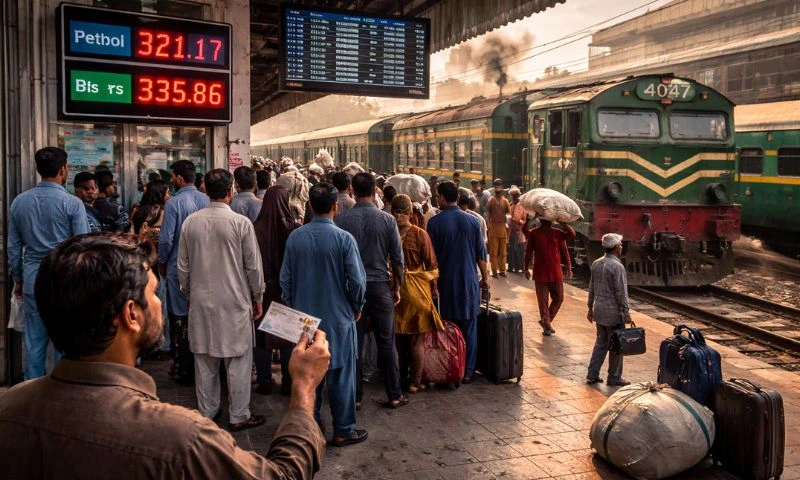
The fare increase comes just a day after the government announced one of the largest fuel price increases in Pakistan’s history. Petrol and high speed diesel prices were raised by Rs55 per litre, pushing petrol prices to Rs321.17 per litre and diesel prices to Rs335.86 per litre.
Officials say the surge was driven by rising global oil prices and disruptions in energy supply caused by escalating tensions in the Middle East.
Since Pakistan relies heavily on imported oil, particularly shipments passing through the Strait of Hormuz, international market fluctuations have a direct impact on domestic fuel prices and transport costs.
Rising Fuel Costs Affect Entire Transport Sector
The increase in train fares is part of a broader rise in transportation costs across the country. Following the fuel price hike, transporters in many cities have raised fares for buses, vans, and long distance travel services.
Residents in several cities have reported higher costs for daily commuting, school transport, and the transportation of goods. Shopkeepers say the cost of transporting fruits, vegetables, and other items has also increased significantly.
Experts warn that higher freight charges could push up the prices of essential goods as transport costs form a major part of supply chains.
Pakistan Railways and Its Operational Challenges
Pakistan Railways, the state owned rail operator, manages a network of nearly 7,800 kilometres of track and hundreds of stations across the country, connecting major cities such as Karachi, Lahore, Quetta and Peshawar.
Fuel remains one of the biggest expenses for the railway system, as locomotives rely heavily on diesel. Rising fuel prices therefore directly affect the cost of running trains and maintaining services.
Officials say the latest fare adjustment is intended to help the railway department manage increasing operational expenses while continuing to provide passenger and freight services nationwide.
As global oil prices remain volatile, transport costs in Pakistan are expected to remain under pressure in the coming weeks.