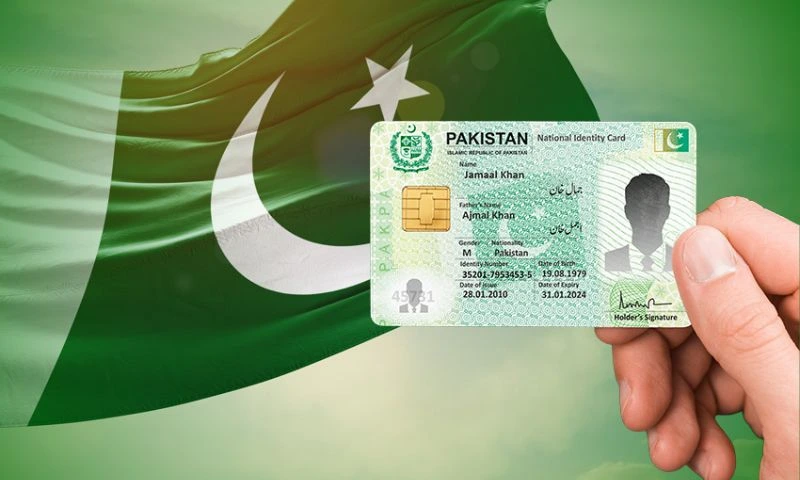
Pakistan has taken a major step toward modernising its identity infrastructure with the launch of a QR-powered National Identity Card under the federal government’s “One Nation – One Identity” framework. The move, announced through official amendments in the National Identity Card Rules, 2002 and Pakistan Origin Card Rules, 2002, aims to replace outdated formats with a unified, secure, and digital-first identity system.
What’s Changing in Pakistan’s ID System
In a notification published in the official Gazette on February 24, 2026, the government introduced key reforms to Pakistan’s identity management system. These reforms were notified through S.R.O. 330(I)/2026 and S.R.O. 331(I)/2026 and formally published ahead of the public announcement.
Under the new rules, the Quick Response (QR) code has been given legal status as a security and authentication feature on national identity documents. The QR code is a secure, machine-readable two-dimensional barcode that stores encoded identity information and can be scanned for rapid verification. This is a major departure from the previous system that relied on separate chip-enabled and non-chip cards.
Officials say the new architecture allows verification both offline and online and aligns with Pakistan’s National Data Exchange Layer, which is central to the government’s digital governance agenda. This integration promises faster service delivery, reduced manual checks, and a lower risk of fraud or impersonation.
Unified Card Format for All Citizens
Previously, Pakistan’s identity ecosystem consisted of two parallel formats: chip-enabled Smart NICs and non-chip CNICs. Under the new reforms, citizens will carry a uniform card, eliminating this dual-system approach. This standardisation will make identity verification more consistent across different sectors and institutions.
The rules also empower the National Database and Registration Authority (NADRA) to adopt “QR codes or any other technological feature” in the future. By authorising this flexibility in law, the system can evolve with emerging verification technologies without constant legal amendments.
Stronger Security and Fraud Controls
The overhaul brings stricter anti-fraud measures. Once an identity card is suspended under the new rules, all associated verification and authentication services are automatically halted. This prevents misuse of suspended credentials across both digital platforms and institutional services.
Biometric authentication has also been strengthened. The updated legal framework explicitly recognises fingerprints and iris scans as formal biometric authentication modalities, marking a shift toward multi-modal identity verification. This change aligns with earlier biometric expansions introduced to Pakistan’s identity system.
Senior Citizen Facilitation
A notable citizen-centric reform is the issuance of lifetime-valid identity cards for citizens aged 60 and above, whether they reside in Pakistan or abroad. These cards will carry a distinct senior-citizen logo, removing the frequent renewal requirements that older citizens previously faced.
Broader Digital Identity Context
The launch of the QR-based system comes amid wider digital transformation efforts. For example, Khyber Pass, a digital identity initiative by the Khyber Pakhtunkhwa government, uses QR codes to link citizens with public services online, reducing paperwork and enhancing convenience.
These reforms reflect a broader push toward digital governance in Pakistan, one that includes expanding online public services and strengthening data interoperability across government systems.
What This Means for Pakistan
The QR-powered ID system is expected to make identity verification faster, safer, and more reliable. It will support digital services across government departments, banks, and regulated sectors. By standardising identity documentation and embracing digital features, Pakistan is laying the foundation for a more secure and efficient digital identity ecosystem.