A new government-backed push for cashless transactions has stirred concern among traders and small business owners across Pakistan. Market associations in major cities such as Karachi, Lahore and Islamabad say the proposed rules could force vendors to adopt digital payment systems before they are ready, creating financial strain and compliance challenges.
The Pakistan Remittance Initiative and the State Bank of Pakistan are promoting cashless transactions to modernise the economy and reduce the cash economy’s share. Officials believe that digital payments will improve transparency, broaden tax bases, and curb illicit financial flows. However, many traders fear the pace of implementation and cost burden attached to new systems.
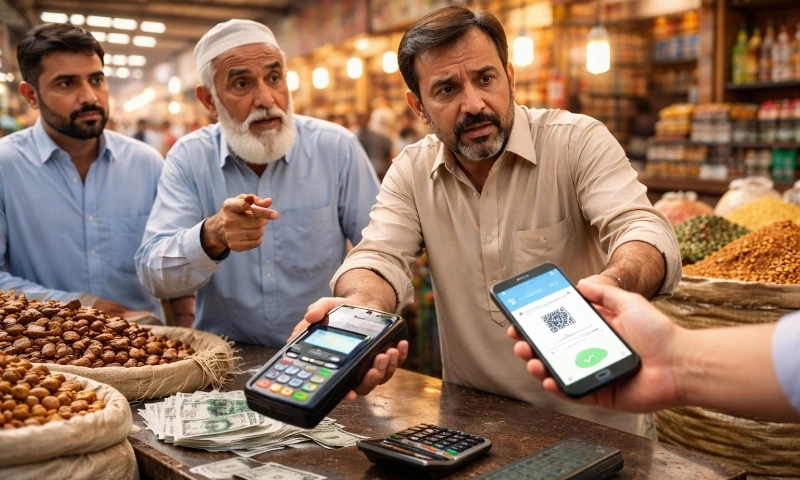
During recent discussions, representatives from the All Pakistan Anjuman-e-Tajiran raised several objections. They pointed out that a large number of small shops and street vendors lack reliable internet access and often operate on thin profit margins. One trader from Lahore said that “small businesses cannot bear extra transaction fees or penalty costs” that come with electronic payment devices. Traders also highlighted power outages and weak mobile internet in rural areas as major hurdles.
Officials have been clear about the benefits of digital payments. The Finance Ministry claims that cashless systems can attract investment, boost efficiency, and enable real-time financial data for economic planning. In other countries such as India, digital wallets and Unified Payments Interface (UPI) systems have transformed how consumers pay for everyday goods, spurring growth in the digital economy and reducing reliance on physical currency.
Pakistan’s digital finance ecosystem has been expanding gradually. Services like Easypaisa, JazzCash and bank mobile apps are widely used for bill payments, transfers and purchases. Telecom providers report significant quarterly increases in new enrollments for mobile wallets. During the last fiscal year, digital transactions in Pakistan crossed record levels, driven partly by pandemic-era behaviour shifts and increasing smartphone penetration.
Despite growth in digital adoption, barriers remain. Many rural regions have limited tech infrastructure, and financial literacy levels vary significantly. Traders also caution that the government must offer incentives rather than penalties if it expects broad acceptance. Some small business groups are calling for training programs, subsidised payment devices, and lower service charges to ease the transition.
Consumer advocates have voiced support for cashless options, especially among younger, tech-savvy buyers. They argue that digital payments are safer, faster and more convenient. Some analysts also say that expanding cashless payments can reduce corruption by creating transparent records and minimising unaccounted cash flow.
The government has yet to publish final regulations, and it remains unclear whether compliance deadlines will be adjusted to accommodate trader concerns. Authorities say discussions with stakeholders are ongoing and that any rollout timeline will consider the capabilities of smaller enterprises.