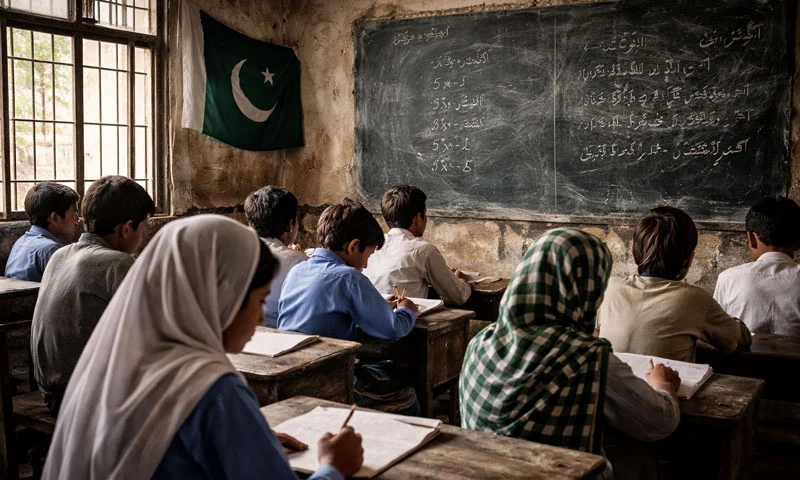
Pakistan continues to rank lowest in South Asia in literacy, a position that education experts warn could have serious long-term consequences for the country’s economy, governance, and social cohesion. According to a recent assessment by the Free and Fair Election Network (FAFEN) based on official government data, Pakistan’s literacy rate stands at 63 percent, despite modest gains over the past six years.
The figures show only a marginal improvement from 60 percent in 2018–19, highlighting what FAFEN describes as slow and insufficient progress for a country with a population exceeding 240 million. In contrast, neighbouring South Asian countries have moved faster: Maldives reports literacy above 98 percent, Sri Lanka 93 percent, India 87 percent, and Bangladesh 79 percent.
Gender and Regional Disparities Widen the Gap
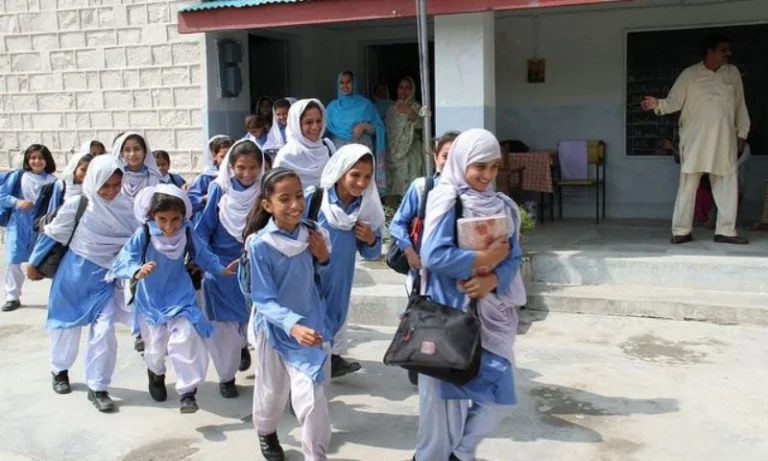
The literacy crisis is compounded by deep gender and provincial divides. While 73 percent of men in Pakistan are literate, the figure drops to 54 percent for women, underscoring persistent barriers to girls’ education. Regional inequalities are equally stark, with Punjab recording a literacy rate of 68 percent, while Balochistan lags at 49 percent, according to FAFEN’s review of Pakistan Social and Living Standards Measurement (PSLM) data.
Although literacy among youth aged 15–24 has reached 77 percent, adult literacy remains largely stagnant. Experts caution that this imbalance limits workforce productivity and weakens Pakistan’s ability to transition toward a knowledge-based and digital economy.
Why Experts Are Alarmed
Education specialists say low literacy directly affects democratic participation, economic growth, and social mobility. Mudassar Rizvi, Secretary-General of FAFEN, warned that stagnant literacy levels pose a structural threat to Pakistan’s future.
“Persistent low literacy undermines informed civic participation, limits economic opportunity, and weakens democratic accountability,” Rizvi has stated while discussing FAFEN’s findings.
Pakistan’s constitution, under Article 25-A, guarantees free and compulsory education for children aged five to sixteen. The country is also a signatory to the UN Sustainable Development Goals, which commit it to achieving universal literacy and quality education by 2030 — targets experts say now appear increasingly difficult to meet.
What the Government Can Do
Education policy experts stress that improvement requires consistent political commitment, not short-term programmes. Priorities include increasing public education spending, improving teacher recruitment and training, addressing out-of-school children, and expanding adult literacy initiatives, particularly for women.
Experts also emphasize better coordination between federal and provincial governments to ensure education reforms are implemented uniformly, rather than remaining policy statements on paper.
A Development Crossroads
Pakistan’s literacy challenge is more than an education issue — it is a national development emergency. Without faster progress, millions will remain excluded from economic opportunity, limiting Pakistan’s competitiveness in the region and beyond.